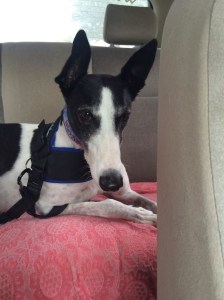
Greyt Vinny and his beds

As Izzy is a greyhound, I like the description of all the beds and their construction. Most dogs will benefit from a comfy bed, particularly as they get older.

COAZY Old Crafter's avatarone ear up! , ... and other stuff!

Greyhounds are boney dogs. They have very little fat or padding. Therefore they need a soft spot to lay. None of the greyhounds that have shared my life would be caught dead laying on a bare floor of wood or tile. There must be at least a rug between them and the hard floor. However, just a rug is rather insulting to a greyhound.

Our Vinny has multiple beds, just count them, . . .
I let our first greyhound sleep on the bed with me at night. This is not a mistake I made the second time. When greys take their share of the bed, they most always stretch out their full length and spread their legs across the bed. There is no curling up in a cute ball for a greyhound, no sirree. Even in a king size bed you are likely to find yourself on the very…

View original post 301 more words

Awareness of the human-animal bond and how it impacts pet care

The Human Animal Bond Research Initiative (HABRI) Foundation partnered with Cohen Research Group to conduct an online survey of 2,000 pet owners, which had a margin of error of plus or minus 2.2%.

This is the first survey of its kind to explore how pet owners’ knowledge of the health benefits of the human-animal bond impacts pet care and welfare. The survey also looked for generational differences among pet owners on this subject.

img_0743

Key findings are as follows:

There is strong awareness of the health benefits of pet ownership

  • 71% of pet owners have heard about scientific research on the human-animal bond that demonstrates pet ownership can help improve physical or mental health in people
  • 88% of pet owners were aware that pets reduce stress
  • 86% of pet owners were aware that pets reduce depression
  • 84% of pet owners were aware that pets reduce anxiety
  • 81% of pet owners were aware that pets increase our sense of well-being
  • 80% of pet owners were aware that pets help with conditions like PTSD in war veterans
  • 68% of pet owners were aware that pets support healthy aging
  • 65% of pet owners were aware that pets help with conditions like autism
  • 60% of pet owners were aware that pets improve heart health
  • 56% of pet owners were aware that pets help with conditions like Alzheimer’s disease
  • 47% of pet owners were aware that pets support child cognitive development and reading skills
  • 45% of pet owners were aware that pets support classroom learning
  • 32% of pet owners were aware that pets help prevent child allergies

The majority of pet owners have personal experience with the health benefits of pets.

  • 74% of pet owners reported mental health improvements from pet ownership
  • 75% of pet owners reported a friend’s or family member’s mental health has improved from pet ownership
  • 54% of pet owners reported physical health improvements from pet ownership
  • 55% of pet owners reported a friend’s or family member’s physical health has improved from pet ownership
  • 83% of baby boomers and 82% of greatest/silent generations reported more personal experience with mental health improvements from pets than millennials (62%) and generation X (72%)

The more pet owners learn about scientific research on the benefits of the human-animal bond, the more likely they are to take actions to improve pet health.

When educated on the scientific research on the health benefits of pets:

  • 92% of pet owners are more likely to maintain their pet’s health, including keeping up with vaccines and preventative medicine
  • 89% of pet owners are more likely to take their pet to the vet for regular check-ups
  • 88% of pet owners are more likely to provide their pets with high-quality nutrition
  • 62% of pet owners are less likely to skip visits to the veterinarian
  • 51% of pet owners (78% of millennials) are more likely to purchase pet health insurance

Knowledge of the scientific research on the benefits of the human-animal bond improves animal welfare.

When educated on the scientific research on the health benefits of pets:

  • 89% of pet owners are more likely to take better care of their pets
  • 75% of pet owners are more likely to microchip a pet to ensure it can be found if lost or stolen
  • 74% of pet owners are less likely to give up a pet for any reason

In addition:

  • 77% of pet owners believe that pets benefit from the human-animal bond as much as people
  • 80% of pet owners who were aware of the health benefits of pets reported spending most of the day or a big part of their day with their pets, compared to 71% of pet owners who were unaware

Knowledge of the scientific research on the benefits of the human-animal bond boosts pet ownership.

When educated on the scientific research on the health benefits of pets:

  • 87% of pet owners are more likely to recommend a pet to a friend or family member
  • 81% of pet owners are more likely to get another pet in the future (if the one they have now passes away)
  • 49% of pet owners (74% of millennials) are more likely to get an additional pet
  • 57% of pet owners that currently reported having multiple pets are more likely to get yet another pet

Veterinarians are trusted resources for scientific information on the human health benefits of pets and have an opportunity to further strengthen their relationships with pet owners, especially millennials.

  • Virtually all pet owners (97%) have a favorable opinion of their veterinarian
  • 66% of pet owners (77% of millennials) would have a more favorable view of their veterinarian if they discussed the health benefits of the human-animal bond with them
  • 61% of pet owners (74% of millennials) would be more likely to visit their veterinarian if they discussed the health benefits of the human-animal bond with them
  • 25% of millennials always talk to their veterinarians about the health benefits of pet ownership, more than generation X (16%), baby boomers (6%), or greatest/silent generation (4%)

Doctors can also benefit from increased communication on the human-animal bond.

  • 88% of pet owners agree doctors and specialists should recommend pets to patients for healthier living
  • 65% of pet owners would have a more favorable view of a doctor who discussed the health benefits of the human-animal bond with them
  • 59% of pet owners would be more likely to visit a doctor who discussed the health benefits of the human-animal bond with them

Pet owners believe society should be more pet friendly and should act on the scientific research that shows pets improve human health.

  • 93% of pet owners agree the government should provide service animals to veterans with PTSD
  • 69% of pet owners (83% of millennials) agree the government should help make it more affordable to own a pet
  • 84% agree health and life insurance companies should give discounts for owning a pet
  • 87% would be more likely to buy products from pet-friendly businesses
  • 58% of pet owners (74% of millennials) agree employers should consider allowing employees to bring pets to work

Pets are family

  • 98% of pet owners agree that their pet is an important part of their family
  • 95% of pet owners could not imagine giving up their pet for any reason

Source:  HABRI

2 entertaining dog commercials

These two commercials, for Doritos and Amazon Prime, do a great job in using dogs to sell their products.  They certainly got my attention!

Kathleen Crisley, specialist in dog massage, rehabilitation and nutrition/food therapy, The Balanced Dog, Christchurch, New Zealand

Changes in Skin “Microbiome” During Canine Atopic Dermatitis Could Lead to Antibiotic-Free Therapies

Atopic dermatitis (AD), a chronic inflammatory skin condition and the most common form of eczema, is estimated to afflict as much as 10 percent of the U.S. population, and is much more common now than it was 50 years ago. Veterinary clinical estimates also show that approximately 10 percent of dogs have atopic dermatitis.

How AD arises isn’t yet fully understood, but a study from researchers from the Perelman School of Medicine at the University of Pennsylvania and Penn’s School of Veterinary Medicine, have uncovered important insights about the association of AD in dogs compared to humans. The study appears online in the Journal of Investigative Dermatology.

atopy

To a greater extent than mouse models, canine AD shares important features of the human version. For example, in both humans and dogs AD has been linked to abnormal blooms of Staphyloccocus bacteria on the skin – mostly Staphyloccocus aureus in humans, and Staphyloccocus pseudintermedius in dogs.

In the study, the research team, comprised of veterinary dermatologists, microbiologists, pathologists, and primary scientists, tracked the bacterial populations, or “microbiomes,” on dogs’ skin, and key properties of the skin’s barrier function during an occurrence of AD, and again after standard treatment with antibiotics. During the flare, researchers observed a sharp decrease in the diversity of the skin bacterial population as certain bacterial species proliferated, along with a decrease in the skin’s protective barrier. With antibiotic therapy, both measures returned to normal levels.

“In both canine and human atopic dermatitis we hypothesize there is a similar relationship among skin barrier function, the immune system, and microbes, even if the individual microbe species aren’t identical,” said senior author Elizabeth A. Grice, PhD, an assistant professor of Dermatology and Microbiology at the Perelman School of Medicine at the University of Pennsylvania. “The hope is that insights gained from this study and others like it will enable us one day to treat this condition by altering the skin’s microbiome without antibiotics.”

Thirty-two dogs (15 with canine AD, and 17 without) from Penn Vet’s Ryan Hospital were enrolled in the study. On three occasions – first during AD flares in the affected dogs, then after 4-6 weeks of targeted antibiotics, and finally 4-6 weeks after treatment concluded – the team took swabs from several areas of skin on the affected dogs. They surveyed the microbiomes of these samples by amplifying and sequencing copies of a key bacterial gene whose DNA sequence is distinct for different bacterial species.

Samples from the dogs with ongoing AD had almost ten times the proportion of Staphylococcus species, compared to the control dogs. Corynebacterium species also rose, as they typically do in humans with AD. A standard measure of the diversity of the dogs’ skin microbiomes also decreased sharply, indicating that the abnormal bacterial proliferation – chiefly from S. pseudintermedius – had crowded out other, harmless or potentially beneficial bacterial species.

At the second visit, immediately following completion of antibiotic therapy, the abundance of Staphyloccocus and Corynebacterium on the skin of affected dogs and the diversity of their skin microbiome had returned almost to the levels seen in the control dogs. Those measures remained largely the same in the third visit, after antibiotic therapy was finished.

Impairment in the skin’s ability to work as a “barrier” to keep moisture in and harmful bacteria out is considered a possible factor in triggering or advancing AD. Under the guidance of Elizabeth Mauldin, DVM DACVP, DACVD, an associate professor of Dermatopathology in Penn’s School of Veterinary Medicine, the researchers also tested skin barrier function in the dogs at each of their three visits. Results showed that the low-bacterial-diversity state of AD flares – corresponding to lesions of AD on the skin – correlated with impairments in the skin barrier, as indicated by a standard test of the water loss rate through the skin (TEWL).

“We don’t know if the bacterial overgrowth is weakening the skin’s barrier function or a weakening of the barrier is enabling the bacterial overgrowth, but we do know now that they’re correlated, and that’s a novel finding,” Grice said.

The research team is now conducting further studies of the microbiome in canine atopic dermatitis, in particular to determine how antimicrobial therapy promotes bacterial resistance.

“This investigation is a prime example of the One Health approach to research, a recognition that we’re dealing with the same disease processes in animals and in humans,” said lead author Charles Bradley, VMD, DACVP, a lecturer and dermatopathologist of pathobiology in Penn’s School of Veterinary Medicine. “The findings highlight the importance of dogs as a model for human dermatitis and help lay the groundwork for new therapeutic strategies, for example involving microbiome transplants to compete with the harmful bacterial overgrowth, as an alternative to antibiotic therapy.”

Source:  University of Pennsylvania media release

Pet therapy can combat homesickness

The expression dog is man’s best friend might have more weight in the case of first-year university students suffering from homesickness, according to a new UBC study.

The study shows that animal-assisted therapy can help students combat homesickness and could be a useful tool in lowering post-secondary drop-out rates.

homesickness-research-photo

John Tyler Binfet, seen with his dog Frances, conducted a study on the effect of pet therapy on homesickness. Binfet runs the Building Academic Retention Through K’9s (B.A.R.K.) program at UBC’s Okanagan campus. Credit: UBC

“Transitioning from high school to university can prove to be a challenge for many first-year students,” says Assistant Professor John Tyler Binfet of UBC’s Okanagan campus.

“Given that students who experience homesickness are more likely than their non-homesick cohorts to drop out of university, universities have a vested interest in supporting students during their first-year transition.”

In the study, 44 first-year university students who self-identified as homesick were given a survey to measure levels of homesickness, satisfaction with life and connectedness with campus. Half of the students completed eight weeks of dog therapy, while the other half were informed that their sessions would begin in eight weeks’ time. Dog therapy included 45-minute weekly sessions involving small group interactions with the dogs and handlers, and engagement with other first-year students participating in the study.

Following the initial eight-week session, participants in both the treatment group and the non-treatment group completed the survey again.

Participants who completed the eight-week program experienced significant reductions in homesickness and greater increase in satisfaction with life. Participants reported that sessions “felt like they were at home chatting with friends who brought their puppies.” While the non-treatment group reported an increase in their feelings of homesickness.

According to a 2009 report conducted for B.C. Stats, students who left post-secondary happy were almost twice as likely to have felt a sense of belonging compared to students who left unhappy. Students who left university unhappy were almost twice as likely to say they did not feel a sense of belonging on campus.

A total of 29 per cent of students who dropped out cited more interactions and friendships with other students as a factor that would have influenced their decision to stay longer.

While further study is needed, a university’s ability to influence campus connections could be a useful tool in lowering drop-out rates in first-year students, says Binfet.

“Many first-year university students face the challenge of integrating into their new campus community,” says Binfet. “Homesick students are three times more likely than those who manage their homesickness to disengage and drop out of university.”

“Moving to a new city, I did not know anyone at the university and became very homesick and depressed,” says UBC Okanagan student Varenka Kim. “I was mainly secluded in my dorm room and did not feel like I belonged here. Coming to animal assisted therapy sessions every Friday gave me a sense of purpose and kept me enthusiastic about life.”

Source:  University of British Columbia media release

Saving the whole family

As the Northern Hemisphere enters its hurricane season, it’s a useful time to review your plans for disaster preparedness regardless of your location in the world.

In New Zealand, as our seismic activity continues to make the news, it’s important to be ready regardless of season.  Things like refreshing your stored water supply, for example.  And if you don’t have a bottled water supply, get one!  This includes storing enough water for 3 days for you and your animals.

The American Veterinary Medical Association (AVMA) distributed this video last year.  It outlines the things you need as a pet parent and not just things for dogs.  I have clients on lifestyle blocks with horses, for example.  Although I don’t know much about horse care, I can certainly understand the need to have harnesses and a trailer ready for evacuation.

The video mentions how to make a temporary dog tag out of a luggage tag. This may work for larger dogs, but is impractical for small breed dogs.

What I prefer is to have an old dog registration tag in my emergency kit.    It’s been covered with a blank label and I have a pen in the kit.

If we had to evacuate to a temporary location, I will write our contact details on this temporary tag.

I’m also a supporter of micro chipping, which is compulsory for dogs in New Zealand.

Kathleen Crisley, specialist in dog massage, rehabilitation and nutrition/food therapy, The Balanced Dog, Christchurch, New Zealand

Blue Dog for President

Forget Trump.  Forget Clinton.  Vote Blue Dog for President.

The  Rodrigue Studio in New Orleans will be exhibiting artworks including portraits of Ronald Reagan and Bill Clinton along with many other Blue Dog  works by George Rodrigue.

Blue Dog for President was originally exhibited in 1996 at Union Station in Washington DC.

Sadly, George Rodrigue passed away in December 2013 after a long battle with cancer.

Lucky for us that his Blue Dog works live on.

Kathleen Crisley, specialist in dog massage, rehabilitation and nutrition/food therapy, The Balanced Dog, Christchurch, New Zealand

The 9/11 rescue dog memorial

September 11th is a date that will be forever remembered for the loss of life in the worst act of terrorism ever experienced on United States soil.  While the victims and first responders have been honored in many ways, the search and rescue dogs have not.

Until now.

In the city of West Orange, New Jersey, there is a new statue that pays homage to the 350 search and rescue dogs who worked at the World Trade Center and Pentagon.  Made of bronze and weighing 5,000 pounds, it sits on a granite base.  The official dedication was held on 17 August 2016.

9_11 dog statue

In a media statement marking the dedication, Newark Public Safety Director Anthony Ambrose said, “Search dogs covered 16 acres of land at Ground Zero covered with metal and debris, and went where humans could not go.  This is a fitting way to remember how many families gained some sort of closure because of the work by dogs.”

The statue was funded through corporate donations.  It is located in the park in New Jersey where many residents gathered to witness the horror of the World Trade Center attacks, fire and collapse on September 11, 2001.

9_11 dog statue with plaque

Source:  NJ.com

Is my dog in pain?

One of the questions I get asked fairly often by clients is ‘how do I know if my dog is in pain?’

The month of September is Animal Pain Awareness Month.  The International Veterinary Academy of Pain Management has created this one-page poster to help pet owners.

The only thing I would add is that once you have a veterinary diagnosis of your pet’s condition, then it is useful to seek out complementary therapies like massage and laser that can help with pain management.

Kathleen Crisley, specialist in dog massage, rehabilitation and nutrition/food therapy, The Balanced Dog, Christchurch, New Zealand

IVAPM-Pet-Pain-Awareness-Month-Poster-2016

Source:  International Veterinary Academy of Pain Management

Gambling wolves take more risks than dogs

Would you rather get 100 euros for certain, or have a fifty-fifty chance of receiving either 200 euros or nothing? Most choose the first, as humans tend to be “risk-averse”, preferring a guaranteed pay-off over the possibility of a greater reward. It is thought that the human preference for “playing it safe” has evolved through natural selection: when you live precariously, like our remote ancestors, losing all your food reserves might be catastrophic, while adding to them might not make much difference to your chances of survival.

Wolf pups

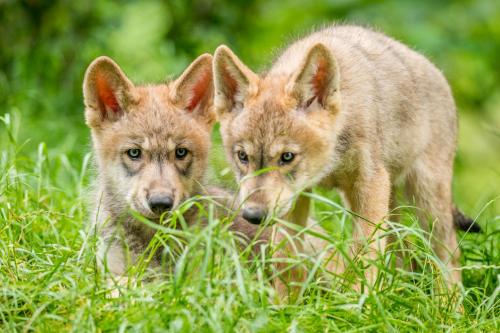
Etu and Ela, two wolf pups at the Wolf Centre Photo credit: Rooobert Bayer

Here, in one of the first studies on risk preferences in animals other than primates, scientists show that wolves are consistently more prone to take risks when gambling for food than dogs. When faced with the choice between an insipid food pellet and a fifty-fifty chance of either tasty meat or an inedible stone, wolves nearly always choose the risky option, whereas dogs are more cautious.

“We compared the propensity to take risks in a foraging context between wolves and dogs that had been raised under the same conditions,” says Sarah Marshall-Pescini, a postdoctoral fellow at the Messerli Research Institute at the Veterinary University of Vienna and the Wolf Science Centre, Ernstbrunn, Austria, the study’s first author. “We found that wolves prefer the risky option significantly more often than dogs. This difference, which seems to be innate, is consistent with the hypothesis that risk preference evolves as a function of ecology.”

The study was done at the Wolf Science Centre, Ernstbrunn, Austria, a research institute where scientists study cognitive and behavioral differences and similarities between wolves and dogs. Here, wolves and dogs live in packs, under near-natural conditions within large enclosures.

Marshall-Pescini let each of 7 wolves and 7 dogs choose 80 times between two upside-down bowls, placed side-by-side on a movable table-top. The animals had been trained to indicate the bowl of their choice with their paw or muzzle, after which they would receive the item that was hidden beneath it.

The researchers had taught the wolves and dogs that beneath the first bowl, the “safe” option, was invariably an insipid food pellet, while beneath the second bowl, the “risky” option, was either an inedible item, a stone, in a random 50% of trials, and high-quality food, such as meat, sausage, or chicken, in the other 50%. As a control, the side for the “safe” and “risky” option changed between trials, but the animals were always shown which side corresponded to which option; whether they would get a stone or high-quality food if they chose the “risky” option was the only unknown. Rigorously designed control trials confirmed that the animals understood this rule, including the element of chance.

Wolves are much more prone to take risks than dogs, show the results. Wolves chose the risky option in 80% of trials, whereas dogs only did so in 58% of trials.

The researchers believe that dogs evolved a more cautious temperament after they underwent an evolutionary shift from their ancestral hunter lifestyle to their present scavenger lifestyle, which happened between 18,000 to 32,000 years ago when humans first domesticated dogs from wolves. Previous research has suggested that species that rely on patchily distributed, uncertain food sources are generally more risk-prone. For example, chimpanzees, which feed on fruit trees and hunt for monkeys, are more risk-prone than bonobos, which rely more on terrestrial vegetation, a temporally and spatially reliable food source.

“Wild wolves hunt large ungulates — a risky strategy, not only because hunts often fail, but also because these prey animals can be dangerous — whereas free-ranging dogs, which make up 80% of the world’s dog population, feed mostly by scavenging on human refuse, a ubiquitous, unlimited resource. So dogs no longer need to take risks when searching for food, and this may have selected for a preference to play if safe,” concludes Marshall-Pescini.

Source:  EurekAlert! media statement