Tag Archives: dogs

Dogs on the Hollywood Walk of Fame

Along a stretch of about 15 blocks of Hollywood Boulevard in Hollywood, California is the Hollywood Walk of Fame.   Stars are embedded in the pavement to honor achievements in the entertainment industry and are a major tourist attraction for anyone visiting Hollywood.

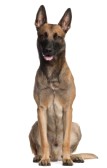
Three members of the Walk of Fame are canines:  Rin Tin Tin, Lassie and Strongheart (a canine star of silent films).

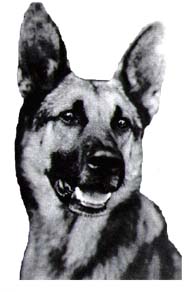
Strongheart was a German Shepherd that was born in 1917 and lived until 1929.  He starred in a number of films including White Fang and was sadly injured on a movie set when he was burned by a studio light.  The burn became tumorous and was responsible for his death.

Strongheart, an early canine star in Hollywood

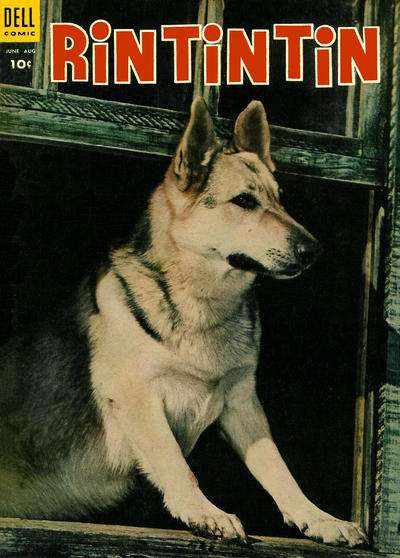
Rin Tin Tin, another German Shepherd, is probably more well known.  The first Rin Tin Tin was born in 1918 and featured in 26 films for Warner Brothers studios.  There have been many successors to the first Rin Tin Tin and the dog has featured in comic books and other memorabilia.  You can learn lots more by visiting his official web site.

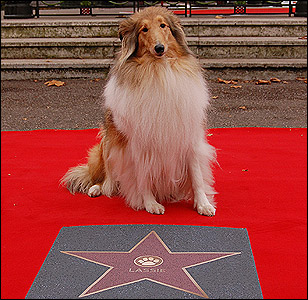
Most dog lovers will know about Lassie, a Collie dog who starred in Lassie Come Home in 1943.  The film was based on a novel that was published several years earlier.    Lassie was played by a dog named Pal.  Lassie went on to feature in a television programme, comic books, animated films, radio and other children’s books.  Like Rin Tin Tin, there have been a number of Lassies over the years.  Lassie also has an official web site.

Lassie on the Hollywood Walk of Fame

If you are visiting California, why not honour the dog stars of Hollywood by visiting them on the Walk of Fame?

Doggy quote of the month for January

“I’ve caught more ills from people sneezing over me and giving me virus infections than from kissing dogs.”

– Barbara Woodhouse


Your dog, personal trainer

I just had to share this poster which I purchased from SPARC (Sport and Recreation.  It sums up one of the great benefits of dog ownership:  more exercise.

It has been said “If your dog is overweight than you are not getting enough exercise.”  Dogs need daily exercise and, in my case, I walk with Daisy twice per day.  Walking is excellent weight-bearing exercise, which helps keep bones strong which is a particular concern of many women as they age and are at risk of osteoporosis.

Get out there with your dog today and enjoy some quality time and exercise too!

Is your dog right-pawed or left-pawed?

Research shows that dogs can have a paw preference and it is fairly easy for you to test your own dog.

In 2006, a researcher, Dr Nick  Branson, found that the way a dog uses its paws was an indicator of how it reacted to noise.  Dogs without a clear paw preference were more likely to be reactive to noises such as thunderstorms and fireworks.  He presented his findings at the annual conference of the Australian Veterinary Association in 2007.

Dr Branson was quoted as saying,:

“It seems possible that dogs that do not favour one side or the other may be prone to experience intense emotional responses to a broad range of stimuli. Animals with lateralised functions may be able to transfer attention from disturbing stimulus more successfully.”  (Source:  News Nine)

Now, if you want to know how to test your dog for their dominant paw,  here’s how – just follow these tests as demonstrated by Ellie Mae on YouTube:

Paw Justice 2012 calendar competition

The  folks behind the Paw Justice campaign have come up with another creative way to help raise funds for education about animal abuse in New Zealand.

For $25.00, you can enter two photos of your dog in the Paw Justice 2012 calendar competition.   If you want to enter more photos, you can pay an additional $5.00 for each additional group of two photos submitted.

The grand prize winner will see their pet:

  • featured on the 2012 Paw Justice calendar
  • immortalised in a pet portrait commissioned just for you
  • replicated in a soft toy mascot for Paw Justice that will be sold in stores

All entrants will receive a copy of the Paw Justice 2012 calendar.

What are you waiting for?  Just click on the Paw Justice logo above and it will take you directly to the photo competition page.  Good luck!

Doggy quote of the month for July

“If there are no dogs in Heaven, then when I die I want to go where they went.”

–  Will Rogers, actor and cowboy

Providing for your dog in your will

News has broken this week that Trouble, the Maltese previously owned by Leona Helmsley (‘The Queen of Mean’), died in December.  Helmsley left a US$12 million trust fund when she died in 2007 for the care of Trouble.  This amount was later reduced to US$2 million when relatives challenged the will.

If you are thinking about providing for your dog in your will – there is a right way and wrong way to do it.

Right way:  Check into the regulations in your area about establishing trust funds for the benefit of your pet’s care and open the trust fund now, making regular contributions.   Make sure you nominate someone to care for your dog after you have died, using the funds in the trust.

If pet trusts are not allowed in your area, you need to nominate a carer for your dog and then leave them money to support your dog’s care.

Wrong way:  Don’t leave money to your dog in your will.  Whether we like it or not, dogs are considered property and this status means that they cannot inherit money.  The money you leave to your dog will likely be re-distributed to other beneficiaries.

Here’s a good (and brief) article about providing for your dog in your will.

Kathleen Crisley, Fear-Free certified professional and specialist in dog massage, rehabilitation and nutrition/food therapy, The Balanced Dog, Christchurch, New Zealand

The surfing dogs of Hawaii

I have just returned from a short holiday in Maui to celebrate my mother’s 80th birthday.   I hadn’t even arrived on Maui when I knew this trip was ‘meant to be’.  The cover story of Hana Hou, the magazine of Hawaiian Airlines, was about dogs who surf!

Read the story, with pictures,  about Buddy Surfing today.

Kathleen Crisley, specialist in dog massage, rehabilitation and nutrition/food therapy, The Balanced Dog, Christchurch, New Zealand

Dog imports to New Zealand

Did you know that approximately 3,100 dogs are imported into New Zealand per year?

New immigrants bring their dogs into the country; breeders also import dogs to add to their bloodlines, and individuals import dogs as pets or show dogs.

MAF had to put changes to dog importation rules on hold last month because there was an application for an independent review.   Proposed changes that are now on hold include introduction of a quarantine for dogs coming from Britain and the Irish Republic  (currently these dogs are allowed into the country without quarantine as long as they have lived 6 months in these areas).

Read about the conflict over MAF’s intention to change the rules in this Otago Daily Times article.

Kathleen Crisley, specialist in dog massage, rehabilitation and nutrition/food therapy, The Balanced Dog, Christchurch, New Zealand

Four dogs in Time’s top 10 heroes list

Time magazine has issued a list of its Top 10 Heroic Animals, with four dogs amongst them including the Japanese dog who refused to leave its injured friend in the aftermath of the tsunami  (seem my post on the loyalty of one dog to another).

The other dogs on the list are Trakr, a Canadian police dog who in a six-year career found more than $1 million in contraband.  In September 2001, he worked at the wrecked World Trade Center and found the last survivor at the site.  After two days of working at the Center, Trakr collapsed from smoke inhalation and exhaustion and returned to Canada to recuperate.

Stubby was a stray dog who was adopted by Private J. Robert Conroy who  named him Stubby because of  his short tail.  Private Conroy’s regiment were training for World War I and the dog was allowed to stay because he boosted morale.  Stubby learned a modified salute where he put his right paw on his right eyebrow.   The dog traveled with the regiment to France, surviving gas attacks and providing an early warning when gas was coming.  He served in 17 battles.

The fourth dog on the list is Togo.  In 1925, the town of Nome, Alaska was struck by diptheria.  Because Nome was so isolated, planes and ships could not get the serum there and a decision was made for multiple sled dog teams to relay the medicine across the land.  Togo was the sled dog who did most of the work, facing winter storms, a journey of 200 miles that included a swim through the ice floes in Norton Sound.

The other animals on the list include two horses, two cats, one pigeon and one dolphin.  Read the full stories here.

Kathleen Crisley, specialist in dog massage, rehabilitation and nutrition/food therapy, The Balanced Dog, Christchurch, New Zealand