After a long and busy week, it’s time to clear the emails from the inbox and find something funny to make me laugh…
Found something! It’s called the Sad Dog Diary. I hope you enjoy it too!

After a long and busy week, it’s time to clear the emails from the inbox and find something funny to make me laugh…
Found something! It’s called the Sad Dog Diary. I hope you enjoy it too!
As a woman with a long history of enjoying life with canine company, I found this article, by Tatjana Soli, particularly good.
What do you think?
Posted in dog ownership, Dogs
Tagged canine company, dog ownership, dogs, New York times, partnerships, Tatjana Soli
Okay, New Zealanders and other Antipodeans – summer is just around the corner and we are already experiencing clear, warm and sunny days.
And every year, sadly, dogs die from heat stress because their owners decided to leave them in a parked car ‘just for a few minutes.’
This video by Dr Ernie Ward illustrates just how quickly the temperature in a car increases in hot weather. Imagine what is is like for a dog that can’t open the door and escape the heat!
It is best to leave your dog at home during summer if you have to make any stops and ensure that you use your car’s air conditioner to keep your dog comfortable when driving.
Pay attention to the thermometer that Dr Ward uses. You can clearly see the temperatures in Celsius on it, although he talks in degrees Fahrenheit
Posted in dog care
Tagged Dog, Dr Ernie Ward, Ernie Ward, heat, heat stress, heat stroke, parked cars, summer, sunny days, warm and sunny days
I find that many of my clients don’t understand the terms ‘acute’ and ‘chronic’ when working with their veterinarian. To manage a range of health conditions, it’s really important to differentiate between the two words.
If a problem is acute, its symptoms appear, change or worsen rapidly.
If a problem is chronic, the condition worsens or changes over a period of time.
Acute vs chronic – look out for these terms when working with your dog’s healthcare team!
Posted in dog care
Tagged acute, acute health condition, chronic, chronic health condition, health conditions, veterinarian
It’s been a while since I blogged about some pet-friendly accommodation. But this one really got my attention because it offers luxury breaks for dogs. The venues do not accept human visitors so I guess technically this operation is about boutique kenneling for dogs, but who cares?
The Paw Seasons offers three luxury accommodation options for UK-based dogs.

At Long Ashton in Bristol the dogs can relax on a dog sofa in the conservatory or on the variety of soft beds in the kitchen. Dogs are also welcome in the office (study)

The Alderton in Wiltshire features a resident Golden Retriever, 2 retired horses and ducks and chickens who are carefully fenced off for safety

Hawkesbury Common, near Badminton in Wiltshire has restricted vehicle access, making it the perfect country retreat for your dog
The Paw Seasons offers a shuttle service from London and points along the M4; free shuttle service is available for Bristol International Airport and the operators will also look after your car while you are away.
Rates per dog range from £30 – £50 depending on the season.

As a dog gets older, it is common that they will experience a loss of eyesight or visual acuity. I have found that many owners assume that their dog has cataracts but a more common problem is nuclear sclerosis.
Nuclear sclerosis, which is also called lenticular sclerosis, is a condition that causes the pupils of the eyes to look cloudy and often blue-gray in colour. Nuclear sclerosis isn’t painful and it comes upon the dog gradually. At some point you will notice that your dog isn’t seeing well at night and their peripheral vision may also be limited.
Such is the case with my Daisy. We have stairs that go from our house to the outside garden and I noticed that she would stop dead at the top of the stairs because she couldn’t see the steps in the dark. It made sense that, although I could turn a light on in the house, the lighting in the garden wasn’t as easy.
Then I found the PupLight, the lighted dog collar. Although marketed most strongly for people who walk their dogs at night and need to be visible to traffic, I decided to give it a try…
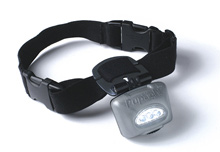
The PupLight
It’s been great! Just what we needed. I can clip the collar on before letting Daisy out at night and she can see the steps, and all the irregularities in the garden. And she adjusted to its use very well.
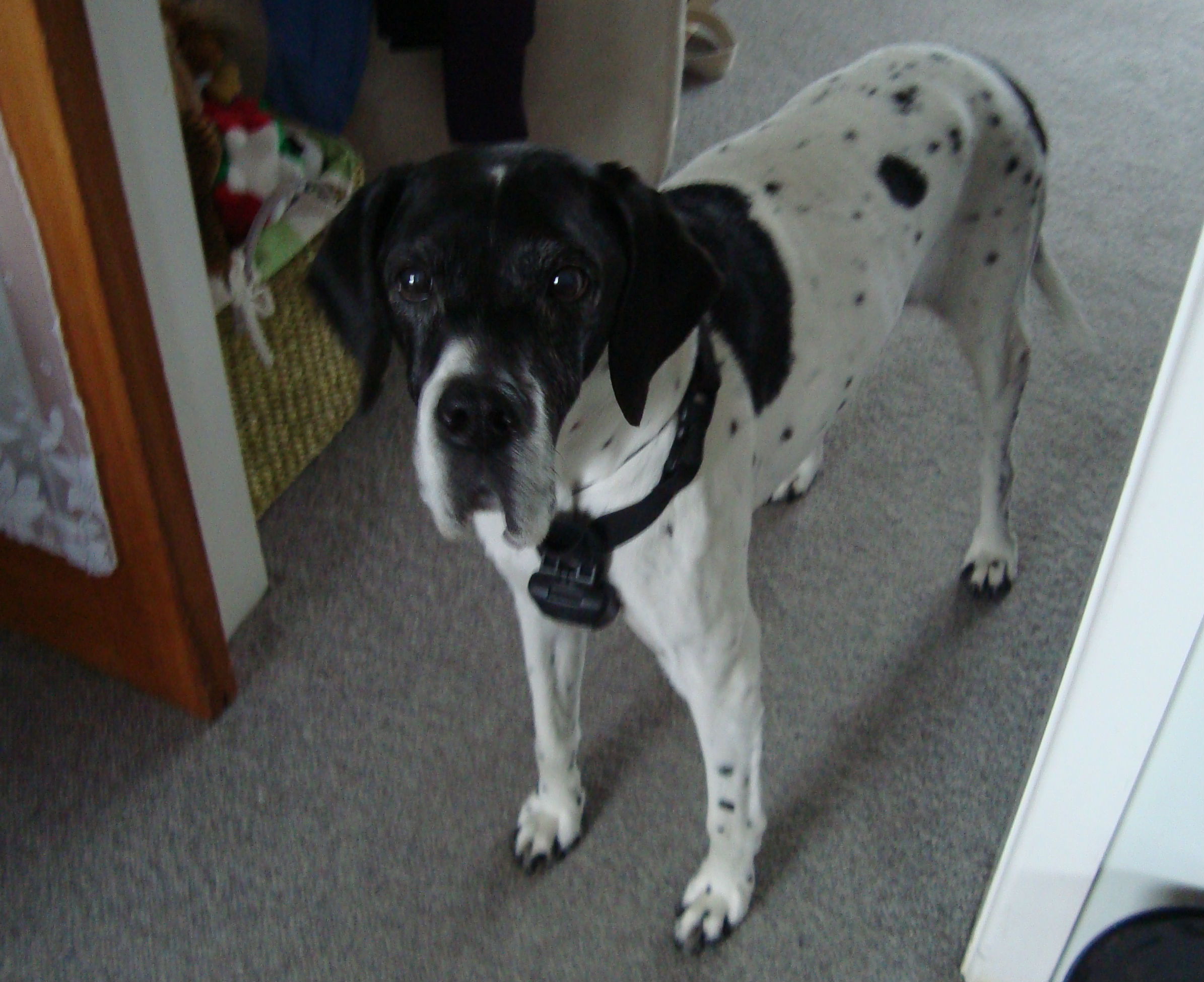
Daisy shows off her PupLight dog collar
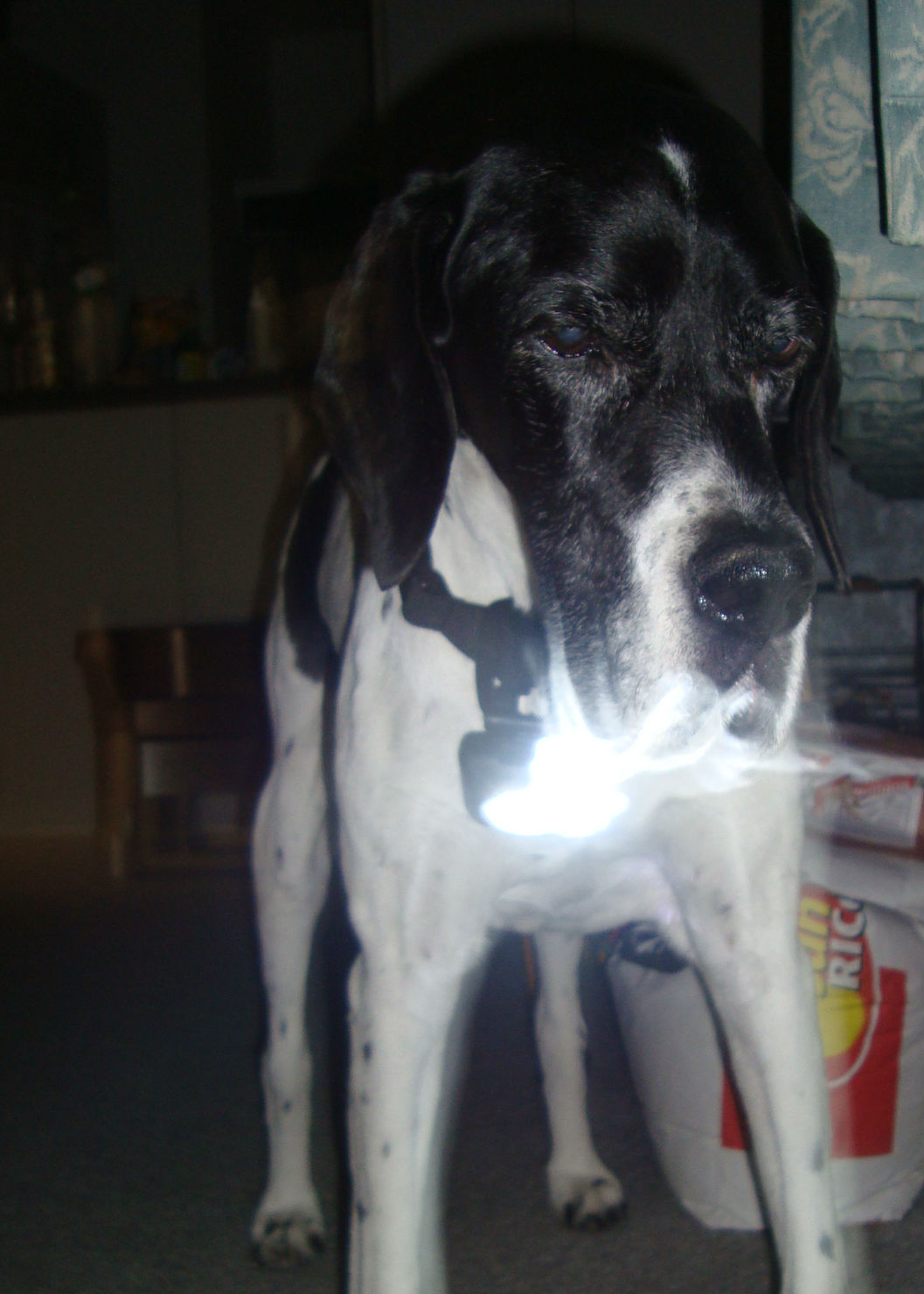
The PupLight’s bright light makes it much easier for Daisy to see at night
Bottom line: Highly recommended product, particularly for senior dogs
Note: This product endorsement is entirely my own and was not paid for by the PupLight company or its retailers.
Posted in dog care, products for dogs
Tagged degeneration, elderly dogs, eyesight, nuclear sclerosis, Puplight, senior dogs
My heart belongs to the Boston Red Sox. Always has, always will.
The shine of their 2013 World Series win hasn’t come off yet (after all, it’s not even been a week!) However, at this point I would like to remind everyone that the Golden Retriever puppies predicted the Red Sox win on Jimmy Fallon.
Dogs have an intuition that we are only beginning to understand!
Kathleen Crisley, specialist in dog massage, rehabilitation and nutrition/food therapy, The Balanced Dog, Christchurch, New Zealand
Posted in Dogs, Humor/humour
Tagged Boston Red Sox, Jimmy Fallon, Red Sox, World Series
Whether your dog wags on the right side or the left means something – to other dogs and to observant humans…

Photo Credit: Siniscalchi et al.
Research by an Italian team has shown that dogs, like humans, have asymmetrically organized brains, with the left and right sides playing different roles. The team has published their research in the journal Current Biology.
The research team had already found that dogs wag to the right when they feel positive emotions (upon seeing their owners, for instance) and to the left when they feel negative emotions (upon seeing an unfriendly dog, for example). That biased tail-wagging behavior reflects what is happening in the dogs’ brains. Left-brain activation produces a wag to the right, and right-brain activation produces a wag to the left.
The latest research, however, shows that the direction of tail-wagging means something to other dogs. While monitoring their reactions, the researchers showed dogs videos of other dogs with either left- or right-asymmetric tail wagging. When dogs saw another dog wagging to the left, their heart rates picked up and they began to look anxious. When dogs saw another dog wagging to the right, they stayed perfectly relaxed.
Researcher Giorgio Vallortigara of the Center for Mind/Brain Sciences of the University of Trento says that the direction of tail-wagging a clear indication of right or left brain activation and could have many applications, such as determining state of mind during a visit to the vet.
So now that you know about this research, think about the wags on these dogs and what are they trying to say?
Posted in research
Tagged behavior, behaviour, brain activation, canine behavior, Current Biology, dog behavior, tail wagging








 DoggyMom.com