Author Archives: DoggyMom.com

OCD – dogs and humans are not that different

The structural abnormalities in the brains of dogs suffering from canine compulsive disorder (CCD) are similar to the abnormalities found in humans suffering from obsessive compulsive disorder (OCD) according to new research.

A collaboration between veterinarians at the Cummings School of Veterinary Medicine at Tufts University and researchers at the McLean Imaging Center at McLean Hospital, in Belmont, Massachusetts have published their findings in Progress in Neuro-Psychopharmacology & Biological Psychiatry.

The study involved 16 Doberman Pinschers, 8 with CCD and 8 without.  Dogs with CCD engage in repetitious and destructive behaviors such as flank- and blanket-sucking, tail chasing, and chewing,  whereas people with OCD tend to have repetitious behaviors that interfere with their daily life.

Here’s a video of a German Shepherd with CCD engaging in a circling behavior:

“While the study sample was small and further research is needed, the results further validate that dogs with CCD can provide insight and understanding into anxiety disorders that affect people.  Dogs exhibit the same behavioral characteristics, respond to the same medication, have a genetic basis to the disorder, and we now know have the same structural brain abnormalities as people with OCD,” said Nicholas Dodman, BVMS, DACVB, professor of clinical sciences at the Cummings School of Veterinary Medicine at Tufts University.

It should be noted that the research also provides insight into dog behavior and management.  In some cases, a dog labelled as ‘bad’ or ‘destructive’ may actually have a biological basis for their problems.

Source:  TuftsNow media release

Saying goodbye – a special tribute

When Kaiser, a two-year old German Shepherd member of the Plymouth, Massachusetts Police Department, was struck suddenly by severe kidney disease, it was decided to end his suffering.

On Friday, members of the Department gathered to give Kaiser a final salute as he entered the vet’s office.

photo courtesy of the Plymouth Police Working Dog Foundation

photo courtesy of the Plymouth Police Working Dog Foundation

Officer Jamie Lebretton, Kaiser’s handler, told followers on the Foundation’s Facebook page that  ‘ I feel privileged to have had a front row seat to witness his bravery and heroic actions while serving the people of Plymouth and my brothers and sisters in blue.  Out of love and respect for Kaiser, and with the input from our excellent vet, trainer, and family, I have made the heart wrenching decision to end Kaiser’s suffering. ‘

Kaiser was laid to rest at the Angel View Pet Cemetery in Middleborough.  He joined the police dog squad at the age of 5 months in 2011 and is gone too soon.

The care and love shown for Kaiser is just another story of so many – stand up and be proud that we love and bond with our dogs!

Baseball goes to the dogs

I’ve already blogged about the Major League Baseball (MLB) games that are dog-friendly (link here), but did you know that many MLB clubs are cashing in on the popularity of dogs by offering branded gear?

Yes – it’s true.  Gone are the days when t-shirts were only for human fans.  Now you can buy a range of doggy products when you go to the ball park (or buy online).

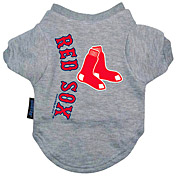
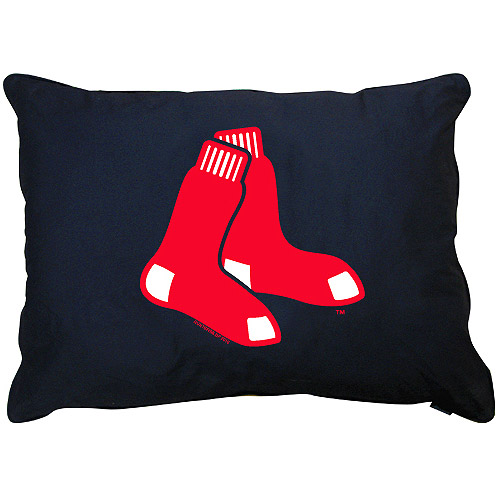
For example, my hometown team – the Boston Red Sox – offer a range of Red Sox branded gear.  Here’s a selection:

Dog t-shirt

Dog t-shirt

Red Sox dog bed

Red Sox dog bed

Feed bowls

Feed bowls

Collar and leash

Collar and leash

Dog vest harness

Dog vest harness

Pink dog cap

Pink dog cap

Dog toys

Dog toys

Now…if we can only convince the Red Sox to have a dog-friendly game, life would be perfect!

North American dogs and families – a television opportunity

The Premiere National Wildlife Network is currently seeking animals in need of transport for a new limited series shooting this summer.

The network is seeking uplifting stories about animals being relocated, rescued or perhaps even joining the family on vacation.

This new series will follow a prominent animal transport company as they go about their day-to-day jobs moving everything from Pugs to Alpacas.

The series will feature a variety of animals, from small moves to transporting complete farms.

If you, or someone you know fits the bill, please email Jamie Carroll at jcarrollcasting@gmail.com

Pukka’s Promise

Pukka's Promise coverIf I had to choose a byline for this book review, it would be ‘Ted Does It Again.”

Author Ted Kerasote has delivered another great dog book following the success of Merle’s Door which I have previously reviewed.

This book, inspired in part by the large volume of correspondence Ted received after releasing Merle’s story, documents Ted’s extensive research into the health of dogs and the factors that may determine longevity.   So many ‘dog people’ contacted Kerasote asking variations of the same question  – ‘why don’t our dogs live longer?’  And since Ted felt the same way, he did what any professional journalist would do – he asked lots of questions.

In Pukka’s Promise -The Quest for Longer-Lived Dogs, Ted tackles subjects including nutrition, the politics behind the pet food industry, and what diet is right for dogs.  Ted lays out the facts about raw food and commercial diets, the concerns about grains  and whether they are appropriate for dogs and a favourite topic of mine – variety in the diet.

Because Kerasote observes his dog so well, he realises that there are times when Pukka (pronounced PUCK-ah) rejects the food that is laid before him.  Pukka lets Ted know that he prefers something else one day when he follows him into the pantry.  Having rejected raw lamb, Pukka readily accepts some dried elk chips.  Ted then listens more often to what Pukka would like for his meals noting, “Today I do not want sardines, I want chicken.  Yes, I do love elk, but this evening I prefer dried elk.”

And just as he did in Merle’s Door, this communication between Kerasote and Pukka is not contrived nor do these moments come across as a story book type of anthropomorphism.  Kerasote is a keen observer and dog aficionado.  When he listens or hears Pukka, it’s because he understands what his dog is trying to tell him and translates it into words.  Few authors could achieve this in such a natural way.

An example of the communication between Ted and Pukka comes when Ted is frustrated by Pukka’s excessive barking.  Dog trainers should be prepared that Ted’s solution doesn’t come from clicker training or positive reinforcement, although Ted tries these things.  Ted’s solution is a direct result of understanding dog behaviour and putting that knowledge to good use.  It helps that Ted can communicate in dog.   Enough said; you’ll have to read the book for the ending of this tale.

Kerasote covers a range of health topics including vaccinations, the history of the ‘annual vaccination’ recommendation, and the latest research on why over-vaccinating is a concern.  A good message to take away from reading the book is to enquire with your vet about having your dog ‘titered’ to determine the amount of immunity they still have from previous vaccinations.

Still other issues that are tackled in a thorough way are the effects of neutering and alternatives to the traditional spay/neuter operation that may help our dogs retain the health-preserving effects of their natural sex hormones.  Kerasote also questions the spay/neuter philosophy in a constructive way and whether you agree with his conclusions or not, he does lay out the facts very well.

Another topic that I hold dear is the issue of cancer and the simple message – if you find a lump on your dog, don’t let anyone (including your vet) tell you to ‘wait and see.’  Some lumps, if caught early and tested, can be removed before the disease takes over the comparatively small body of a dog.  Take heed!

As a backdrop to the book’s hard facts, we also get to enjoy a wonderful story about Ted’s search for another dog and his choice of Pukka.  Once Pukka’s is on the scene, we share some of their adventures.

My only criticism of this book is its lack of photos.  Other than the cover photo of Pukka, we don’t get to enjoy any photos of Pukka, Ted, or their other dog friends (A.J., Burley and Goo) nor any of the great scenery from Ted’s camping and hunting trips with Pukka.  I don’t think photos would have detracted from the contents and scope of the book, but I guess that’s the publisher’s decision.

With 49 pages of references, this is a thoroughly researched book that took five years to complete.  Add it to your book collection and refer back to it as the basis for a conversation with your vet (your dog will love you for it).

Well done, Ted!  What are you cooking up for us next?

Dog eat dog

Actor Zachary Quinto is currently appearing worldwide in Star Trek:  Into Darkness.   He also appears in a lesser known short film called Dog Eat Dog, which is based on his search for an adopted dog in Los Angeles.

Says Quinto, “The story of the film is an exaggerated account of how I eventually found my rescue dog Noah, but it still reflects a bit of the reality I faced when I was looking to adopt a shelter dog.”

Sit back for the next 13 minutes and enjoy the film!

The USA’s first permanent evacuation center (for animals)

Did you know that the USA has an evacuation center to cater for animals?

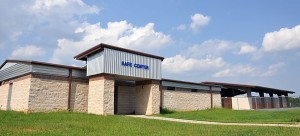
The Georgia State Animal Facility for Emergencies Center (S.A.F.E. Center) is the nation’s first permanent evacuation center for animals.  It recently opened at the Fort Valley State University. The 7,800-square-foot facility contains 105 dog cages, 84 cat cages, stalls for 30 horses plus pastures available for livestock.  It can be activated at short notice in the event of an emergency.

The S.A.F.E. Center

The S.A.F.E. Center

The facility is intended to temporarily house animals rescued from large-scale abuse cases, natural disasters, terrorist attack, as well as household pets whose owners are fleeing due to emergency evacuations.  The Georgia location is ideal for southern state communities that may be fleeing large hurricanes during hurricane season via the interstate highway system.  The University offers the services of an on-site school of veterinary medicine.

Through fundraising, the center is equipped with oxygen masks that can be used on dogs, cats, ferrets, rabbits, guinea pigs, birds and other animals.  Used for resuscitation, these masks could help during emergency surgeries as well as to help animals exposed to toxic fume releases.

The dog of the Mary Rose

The Mary Rose, vice-flagship of Henry VIII’s war fleet, had been in service for 34 years when she went into action against the French in the battle of the Solent in Portsmouth Harbour.   The year was 1545.  On the second day of the conflict, the Mary Rose turned to starboard and sank rapidly.

Among the 500 crew that perished in the sinking was the captain’s dog, a whippet-terrier cross whose job it was to hunt down the rats that were on board the ship.  The dog’s remains were found close to the door of the captain’s quarters, suggesting that it had been trapped inside when the ship sank.

The ship’s remains were preserved by the silt and clay of the harbour.  The ship was discovered in 1971 and excavated during the period 1979 to 1982, when many artifacts were saved and preserved.  The hull of the ship was raised in 1982.

The Mary Rose is now a museum in Portsmouth, England where on one side you can view the hull of the ship and on the other, you can observe the preserved contents of the ship, including the skeleton of the master’s dog, laid out as if in mirror image to the ship’s hull.

The museum’s gift shop sells a 37 cm tall stuffed dog- affectionately named ‘Hatch’, a replica of what the captain’s dog probably looked like.

You can buy Hatch at the Mary Rose gift shop for  £ 25.00

You can buy Hatch at the Mary Rose gift shop for £ 25.00

Doggy quote of the month for June

“Never, never be afraid to do what’s right, especially if the well-being of a person or animal is at stake.  Society’s punishments are small compared to the wounds we inflict on our soul when we look the other way.”

–  Martin Luther King Jr.

Lose the shoes (housekeeping for dog owners)

According to Consumer Reports on Health (March 2013), a significant portion of the dirt, pesticides and pollutants in people’s homes are carried in from outside on shoes and pet paws.

They recommend leaving your footwear at the door and wiping your dog’s feet when they come inside to keep substances that may cause illness off the floor and carpets of your home.

dog with slipper