Author Archives: DoggyMom.com

Do sterilized dogs live longer?

New research from the University of Georgia suggests that neutering procedures could add to the length of a dog’s life and alter the risk of specific causes of death.

Looking at a sample of 40,139 death records from the Veterinary Medical Database from 1984-2004, researchers determined the average age at death for intact dogs—dogs that had not been spayed or neutered—was 7.9 years versus 9.4 years for sterilized dogs.

These figures may seem low considering how many pets live much longer, but the researchers noted that the life spans would be lower than those seen more widely because their sample was taken from dogs seen at teaching hospitals (so other things would have been going on and the study population would have had more sick animals).

The researchers stand behind their results – that the difference between neutered and intact is real.

Dr. Kate Creevy, an assistant professor of internal medicine at the College of Veterinary Medicine. “The question that raises is why would you die younger if you have offspring?”

For the first time, researchers have been able to measure costs of reproduction in terms of the actual causes of death, finding that the causes of death differed between sterilized and intact dogs. Dogs who had undergone a gonadectomy (a spay or castration) were more likely to die from cancer or autoimmune diseases. Those in the sample who still had functional reproduction systems at death were more likely to die from infectious disease and trauma.

“Intact dogs are still dying from cancer; it is just a more common cause of death for those that are sterilized,” said Jessica Hoffman, a UGA doctoral candidate in the Franklin College of Arts of Sciences who co-authored the study.

Some of the reproductive hormones, particularly progesterone and testosterone, she said, could suppress the immune system, explaining why there is an increased risk of infection among dogs that have been sterilized.

The full journal article, published in PLoS One, can be viewed here.

Source:  University of Georgia media statement

The ‘miracle’ of weight loss

I caught up with an acquaintance this week who had asked me a while ago for a recommendation of a vet who could give her a second opinion on her dog’s heart condition.  Her Chihuahua was on many different medications for heart problems and she was not happy with her health or progress.

So I asked her how things were going…and she told me that she had managed to get her dog off all medications.

The miracle cure?  ‘We’ve taken one kilo (2.2 pounds) off of her’

Wow.  A Chihuahua is a very small dog and so a kilo of extra weight is definitely classed as obesity.  Here’s what an obese Chihuahua looks like:

An obese Chihuahua

An obese Chihuahua

It is in your dog’s best interest to manage their weight and keep it in the healthy range.  This is usually achieved with a combination of exercise and a proper diet.

Obesity shortens lives!

Luther and Ruthie go to Boston

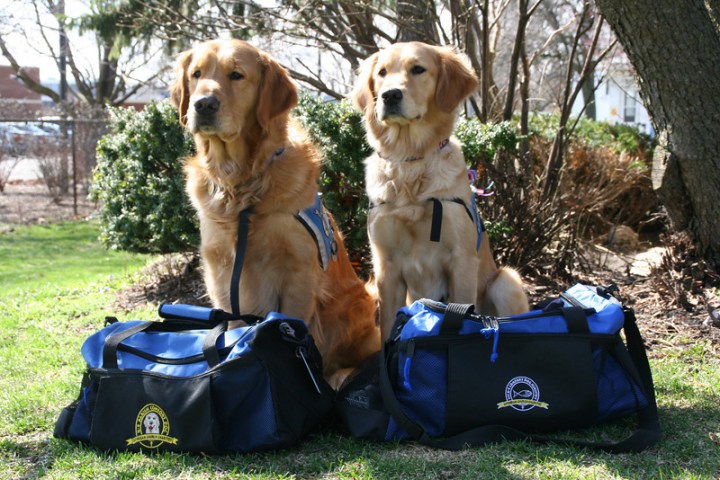
Luther and Ruthie are two comfort dogs provided by Lutheran Church Charities

Luther and Ruthie are two comfort dogs provided by Lutheran Church Charities

Golden Retrievers trained as comfort dogs have arrived in Boston to help with the traumatised survivors of the Boston Marathon bombings.

Just as they did in Newtown, Connecticut last year, the dogs and their handlers will visit with survivors and their families to engage them in conversation, to give them a hug and a cuddle and to provide comfort.

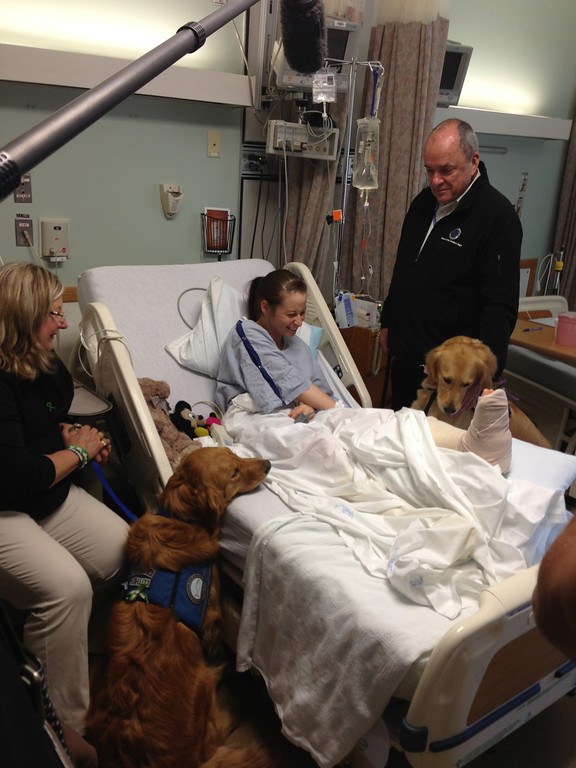
Luther and Ruthie visit with a survivor before surgery for a leg injury (courtesy Lutheran Church Charities)

Luther and Ruthie visit with a survivor before surgery for a leg injury (courtesy Lutheran Church Charities)

The comfort dogs show us (again) the special skills that dogs have to provide solace and they also prove that dogs can be socialised and trained to enter public places without causing problems.  The volunteers from Lutheran Church Charities give of their time freely.

Thank you!

Comfort dogs in Boston

To Boston, with love

For all our friends and family in Boston, this Boston Terrier is for you – we are thinking of you and join you  in your grief.

boston-terrier-dogs

Anatomy 101: brachycephalic dogs

I was at a lunch last week and I was talking about brachycephalic dogs.  One fellow asked, ‘brachy what?’

Brachycephalic dogs are dogs with a short muzzle and generally flat face.   “Brachy” means “shortened” and “cephalic” means “head.”

These features make them very cute. But, this head structure doesn’t leave a lot of room for the nasal passages and palate, which are parts of the anatomy that help breathing.

Most of us who either own a brachycephalic dog or who have seen one at the dog park or elsewhere can identify the ‘brachy snort’ – the sound of a dog that is struggling to breathe.

We all know that dogs help to control their temperature on hot days through panting.  Unfortunately, brachycephalic dogs are inefficient panters and so these dogs are more susceptible to heat stroke.  They are generally not good outdoor dogs during summer because of this.

Some dogs also suffer from brachycephalic airway syndrome.  This syndrome is actually a group of upper airway abnormalities.  Brachycephalic syndrome is also known as congenital obstructive upper airway disease and in extreme cases, a veterinary surgeon may do surgery to help correct the abnormalities.

The abnormalities associated with the syndrome include:

  • stenotic nares, which are nostrils that are narrowed
  • elongated soft palate, which is a soft palate that is too long for the mouth and so the length partially blocks the entrance to the back of the throat
  • a hypoplastic trachea, an abnormally narrow windpipe
  • nasopharyngeal abnormalities,  the bone in the dog’s nasal cavity grows incorrectly and this can stop air flow.  This bone helps direct airflow and also helps with heating and humidifying inhaled air.

Because of their breathing difficulties, a brachycephalic breed must be fit and trim no matter what their life stage.  Obesity is a real threat to these dogs.

Since breathing difficulties become worse with strenuous exercise, it’s critically important to balance the dog’s caloric intake with their exercise and look for small opportunities to exercise the dog without causing stress.

Common brachycephalic dog breeds include:

·         English Bulldog

·         Pug

·         Shih Tzu

·         Pekingese

·         Boston Terrier

·         Cavalier King Charles Spaniel

·         Shar Pei

·         Lhasa Apso

Good golly, Miss Molly

Andrew Neil, co-host of the BBC’s This Week, has started bringing his Golden Retriever, Miss Molly, to the set.  She’s sat on the sofa next to guests on the late-night political commentary programme.  She even had a snooze in the lap of guest David Starkey.

Miss Molly naps in David Starkey's lap (photo courtesy of the BBC)

Miss Molly naps in David Starkey’s lap (photo courtesy of the BBC)

Taking Miss Molly to the set opens up a whole new category of dog-friendly workplaces and it’s great to see the dog welcomed onto a televised show.  In my opinion, it helps to create awareness of dog-friendly workplaces.

Photo courtesy of the BBC

Photo courtesy of the BBC

Neil has suggested that Miss Molly might become a bit of a fixture on the show, although not a permanent one. “We probably broke every health and safety rule in the book but she is very well-behaved.”

Miss Molly roams around the set as guests are interviewed (photo courtesy of the BBC)

Miss Molly roams around the set as guests are interviewed (photo courtesy of the BBC)

Source:  The Independent

Pet obesity at the molecular level

A University of Illinois research team led by Professor Kelly Swanson has published research which describes how nutrients and biological compounds in foods can affect gene expression in animals.

The research will help to understand the underlying reasons for obesity in pets.  Professor Swanson explains that obesity has its roots in the domestication of dogs.  Because dogs no longer hunt or compete for their food and are speyed or neutered (so not having to mate),  the typical dog has much smaller energy requirements than its forefathers.

The research team explains that when more energy (food) is consumed than is required, it is stored as fat in the adipose tissue (fat tissue).  Adipose tissue secretes more than 50 substances known as adipokines, which are cell-signaling molecules that are involved in metabolism, immunity and inflammation.

In obese dogs, levels of the adipokine leptin increases while the levels of the  adipokine adiponectin decreases.

The researchers aim to study obesity at the molecular level, so they can help to prevent it happening.

Source:  University of Illinois media statement

Image

A dog’s last will and testament

A dog's last will and testament

Protecting the paws of the canine cop

Police dogs in Berlin, Germany have been outfitted with neoprene boots that stop broken glass and other objects from injuring a dog when it is working.

The tailor-made shoes cost €80 (roughly NZ$120).

Police dog in boots

When the shoes were trialled, the police found that there was a reduction in the number of injuries at high-risk events (which include such things as football games and public riots).

police dog wearing shoes

The idea of dogs wearing protective footwear isn’t new.

The City of Duesseldorf outfitted its police dogs in 2008.

Sources:

The Times

Metro

National Greyhound Adoption Month

April is National Greyhound Adoption Month in the USA.

Although Greyhound racing is increasingly banned in many parts of the country, breeders continue to produce large numbers of the dogs for the racing industry.  And when these dogs are too old to race, or not good earners at the track, their days are numbered…

Murray is a Greyhound currently up for adoption through Greyhounds as Pets

Murray is a Greyhound currently up for adoption through Greyhounds as Pets

Greyhound rescue groups around the globe need more adoptive homes for retired racing Greyhounds.  And they are prepared to get creative in their promotions.  Here’s a great ad from The Greyhound Project:

In New Zealand, a petition has been presented to the Green Party in Parliament to investigate the Greyhound industry.  Read about that initiative in my earlier (January 2013) posting.

If you are interested in adopting a Greyhound, please do some homework about whether this breed is for you.  Rescue groups are interested in finding forever homes for these beautiful dogs and have lots of information to help you make a decision.

SOME GREYHOUND TRIVIA

  • The greyhound is the only dog mentioned by name in the Bible. King James Version, Proverbs, 30:29-31
  • Greyhounds can reach speeds of 45 miles(72km) per hour
  • Greyhounds became the first European dog in the New World when they accompanied Christopher Columbus on his second expedition, which set sail from Spain in September 1493