Podcast: Interview with the Integrative Animal Health Collective (May 2025)

The business of dog massage (click to view video)

Greyhound Massage and Stretching Online Course

-
Recent Posts
Categories
- animal welfare (199)
- boarding facilities (4)
- complementary therapies (5)
- dog adoption (43)
- dog books (63)
- dog breeds (139)
- dog care (439)
- dog nutrition and labelling (53)
- dog ownership (149)
- dog quotes (192)
- dog-friendly accommodation (34)
- dog-friendly shops (19)
- dog-friendly workplaces (28)
- Dogs (1,320)
- dogs and families (10)
- dogs and holidays (46)
- dogs and mourning (22)
- dogs in advertising (37)
- ethics and pet rights (6)
- Humor/humour (37)
- lost dogs (2)
- products for dog lovers (15)
- products for dogs (17)
- regulation (5)
- research (485)
- special dogs and awards (223)
- special needs (13)
- statistics and surveys (4)
- Teddy's journey post-amputation (12)
- Uncategorized (49)
-
Join 1,203 other subscribers
-
Copyright
-
Copyright © Kathleen Crisley, The Balanced Dog Ltd and DoggyMom.com, 2010-2026. Unauthorized use and/or duplication of this material without express and written permission from the author is strictly prohibited. Some attributed content, excerpts and links may be used, provided that full and clear credit is given to Kathleen Crisley, DoggyMom.com with specific direction to the original content. Where information has been sourced from a third party, please quote the original source.
‘Like’ us on Facebook
Archives
Rated Top Dog Mom blog by FeedSpot

Read the Canine Corner in NZ Dog World Magazine

Blogorama
RSS Links
OnTopList.com – A directory of blogs
Author Archives: DoggyMom.com
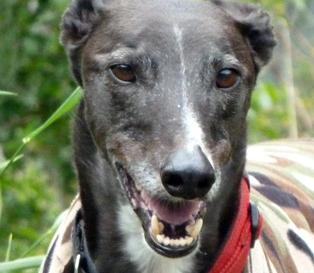
ImageInvestigating the NZ Greyhound racing industry
The Greyhound Protection League in New Zealand claims that there are over 10,000 greyhounds unaccounted for in the country at present, with a further one thousand unaccounted for annually. You can sign a petition that requests that the relevant Ministers use their statutory powers to conduct an independent investigation into New Zealand’s greyhound racing industry, and that this information be made publicly available.
By signing this petition, you ask for an independent investigation that makes public:
- The number of greyhounds bred and imported annually for the racing industry
- The number of greyhounds retired annually through the Greyhounds as Pets scheme, other agencies or privately*
- The number of injuries which occur annually in all racing-related activities (such as training, trialing, and competing)
- The number of greyhounds euthanased annually due to race-related injuries
- The number of greyhounds euthanased annually for other reasons (and what these reasons are).
*Private rehoming can typically fall into two categories: household pets or breeding stock for pig hunting. As the welfare implications of greyhounds as pig hunting stock may be significantly different than those of a household pet, it would be prudent to define whether a “private adoption” is for the purpose of hunting stock or pet.
Interested? SIGN HERE.
Posted in animal welfare, dog breeds
Tagged Greyhound, Greyhound Protection League, greyhounds as pets, investigation, New Zealand, pig hunting
Dog hair on my sweater…no wait a minute
I often have dog hair on my sweaters. But dog hair sweaters?
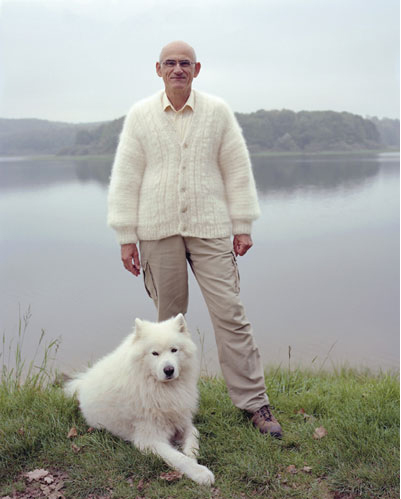
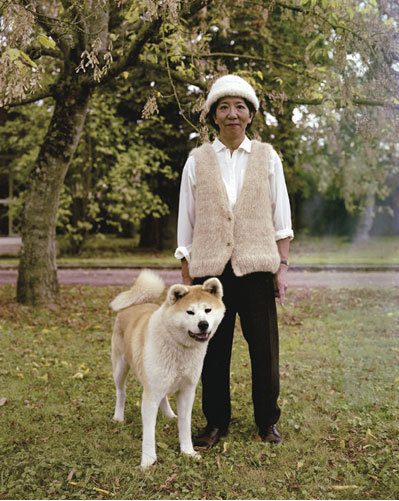
Yes – it’s true. You can have a sweater (jumper) made of dog hair. Dog hair is a natural fibre and, after washing and spinning, it can be made into yarn for knitting of garments. Once washed, it doesn’t retain a dog odor.
For some dog lovers, having garments made from their dog’s fur is a novel way of re-using the hair. Many find it a consolation when their dog passes to have a garment made from their dog’s hair.
These photos of people wearing dog hair sweaters were taken by photographer Erwan Fichou in his series entitled Dogwool.
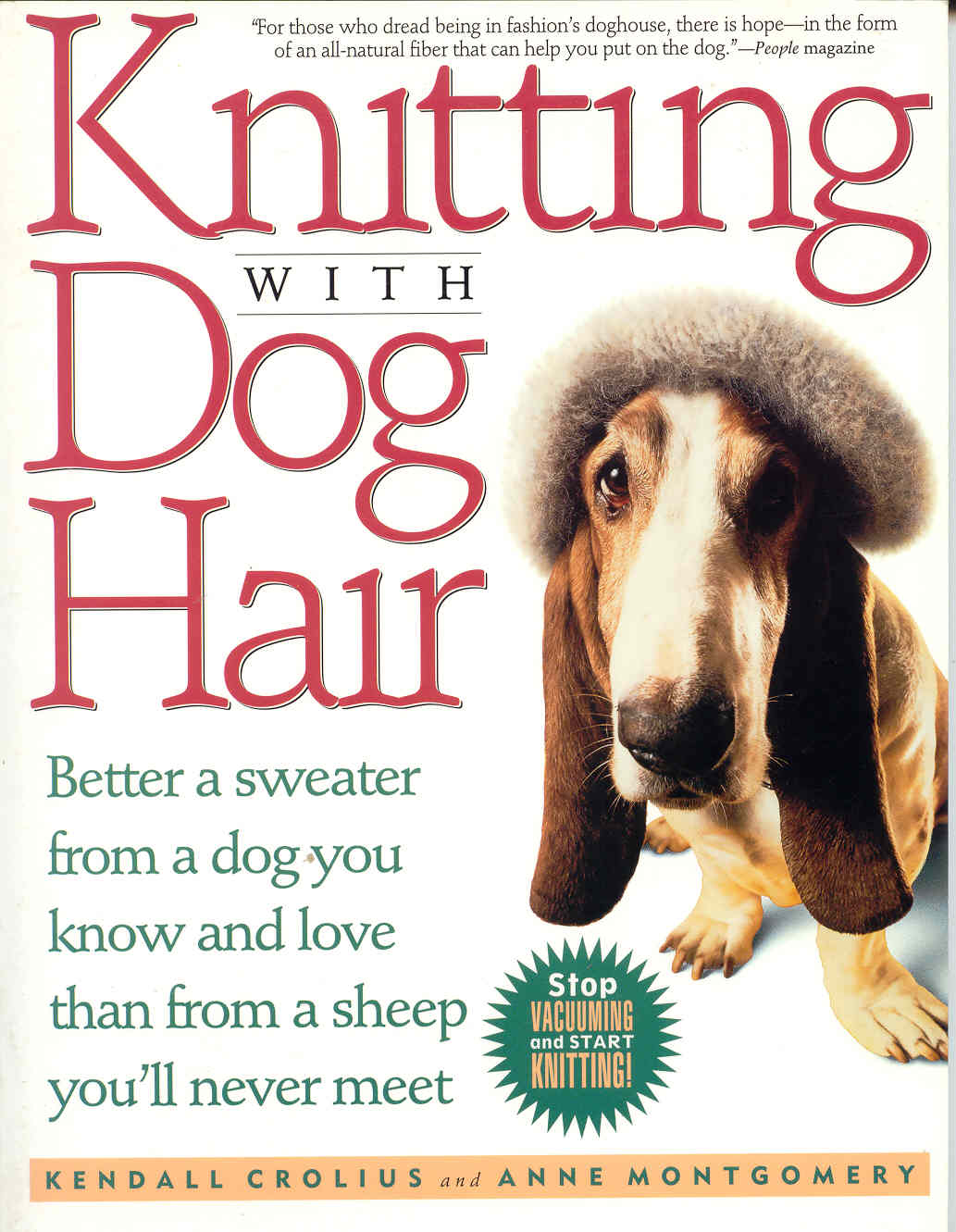
If you’re interested in finding out how you can collect and use your dog’s hair, the woman to speak to is Kendall Crolius. She’s the author of Knitting With Dog Hair.
This YouTube video takes you through the sweater-making process.
Like the book says…if you’re interested, stop vacuuming and starting knitting! (I’m not really sure I want to get into this particular hobby)
Posted in Dogs
Tagged crafts, dog hair sweaters, erwan fichou, Kendall Crolius, knitting, knitting with dog hair, photographer, spinning, sustainability
I didn’t want to say anything…
Most of my regular readers know that I work as a canine massage therapist and helping elderly dogs and those recovering from injuries is very rewarding for me. Many of my clients use massage for their dogs as a way of staving off the need for non-steroidal inflammatory drugs (NSAIDs), or at least to keep the dosages of these drugs as low as possible.
So here’s a wee story of something that happened to me this week.
I was working on a dog who I have been seeing for 18 months. He’s a lovely Labrador and he is starting to have the aches and pains of old age. With a regular 5-weekly regime of massage, he’s been pain free.
Because I know this boy well, I could pick up that he was tight through his hind legs – a muscle called the biceps femoris. When I said ‘he’s tight down here’ to his owner, she replied, ‘I didn’t want to say anything…I wanted to see if you’d notice.’
This happens fairly often. Some people like to test me to see if I actually know what I’m doing (some owners remain doubtful about complementary therapies) but most of the time it is because owners doubt if the changes they observe are real. When you live with someone with a chronic health condition and see them on a daily basis, it is often hard to pick up changes in their condition.
In this case, it was the latter. This lady wasn’t confident that she was really seeing her dog running stiffly. He was tight, but was moving freely when he left after his massage.
Success for the week!
What’s the lesson here? It’s unrealistic to expect a massage therapist to ‘solve’ a dog’s problem in a single visit. Dogs have to get used to the therapist and massage is a new experience for them. So, the first visit is usually a time when they aren’t as relaxed because they are uncertain.
Because I keep notes on every massage session, I can refer back to these to track a dog’s condition. This is no different than what your vet does. When I am familiar with a dog and their unique characteristics, I’m much better able to pick up changes and act swiftly to help.
Please consider your dog’s therapist as a member of your healthcare team and part of your dog’s preventative healthcare regime. It’s much better than the ‘ambulance at the bottom of the cliff.’
The critical period of socialization
Doctoral research by evolutionary biologist Kathryn Lord at the University of Massachusetts Amherst suggests that different behaviors between puppies and wolves are related to their critical period of socialization, when they have their first sensory experiences.
Lord studied responses of seven wolf pups and 43 dogs to both familiar and new smells, sounds and visual stimuli, tested them weekly, and found they did develop their senses at the same time. Whilst puppies and wolves have a critical four-week period for socialization, the difference is in the timing.
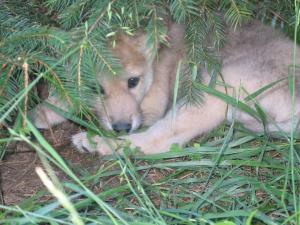
Wolf and dog pups begin walking and exploring without fear when the socialization window is open and they will retain familiarity throughout their lives with those things they contact. After the window closes, new sights, sounds and smells will elicit a fear response.
By making observations, Ms Lord confirmed that both wolf pups and dogs develop the sense of smell at age two weeks, hearing at four weeks and vision by age six weeks on average.
The difference in timing of the socialization period is stunning. Dogs begin the socialization period at four weeks, while wolves begin at two weeks. This, says Lord, is the reason for different paths of development.
When wolf pups start to discover their world, they are still blind and deaf at age two weeks. “No one knew this about wolves, that when they begin exploring they’re blind and deaf and rely primarily on smell at this stage, so this is very exciting,” says Lord.
Dog pups only begin to explore and walk after all three senses, smell, hearing and sight, are functioning. Overall, “It’s quite startling how different dogs and wolves are from each other at that early age, given how close they are genetically. A litter of dog puppies at two weeks are just basically little puddles, unable to get up or walk around. But wolf pups are exploring actively, walking strongly with good coordination and starting to be able to climb up little steps and hills.”
Details of this research are published in the journal Ethology.
Posted in research
Tagged Amherst, Ethology, puppies, socialisation, socialization, University of Massachusetts, wolves
A dog’s breakfast
When someone says something is a ‘dog’s breakfast’ – it’s not usually a compliment.
That’s because the term means any kind of mixture or smorgasbord of cast-off foods that was cobbled together and fed to the dog. This could have been items that were destined for the garbage, or perhaps a meal that was going to be fed to the humans in the household, but went badly wrong.
Well, in our household, the dog’s breakfast is cooked specifically for her. Today, it was cranberry treats – our newest recipe. (Like many dogs, Daisy’s main meal is in the evening – but a little something in the morning keeps her blood glucose levels where they should be and ensures she feels like the rest of the family.)
The dog at the Presidential Inaugural Parade
The dog won’t be Bo…it’ll be this (not so little) fellow:

Independence, a dog balloon proudly wearing a Canine Companions assistance dog vest, will appear in the parade on January 21st.
Independence will be the mascot for Canine Companions for Independence on their float in the 57th Presidential Inaugural Parade on Monday, January 21st.
Canine Companions will have 132 marchers from 14 states, with nationwide participation including assistance dog teams, volunteer puppy raisers, National Board Members and staff.
“Canine Companions is honored to be chosen to participate in the Presidential Inaugural Parade. We’re grateful to be able to share in this historic day and to share our mission of serving people with disabilities worldwide,” says CEO Corey Hudson.
Canine Companions was one of 60 organizations chosen from over 2,800 applications. The theme of the parade is “Our People, Our Future”
Now, I wonder where Bo will be?
Give your dog a hug from us
I love dog people. I mean – true dog people. And for that reason, I love doing business with companies that are managed by dog people.
Take D-Fa, for example. We’re having a very hot summer here in Christchurch and Daisy really needs her cool collar. Unfortunately, the ice pack insert has lost some of its fluid and is no longer working as well. I contacted D-Fa and they said they’d send me a replacement pack for only $5.00.
Well, the pack has arrived (Daisy is very happy). And I’m happy because I got good service from them but also a nice note:
Hope this finds you well. Sorry you didn’t have these for the screamingly hot day in Christchurch yesterday, but here they are now (hope it doesn’t start to snow as a result).
Thanks and let us know if there is anything else we can do for you.
Cheers and give your dog a hug from us.
I’ve previously endorsed Cool Collars and recommend them to my clients, particularly those that own elderly dogs. I’m also a fan of their Float Doggy flotation vests.
Thanks D-Fa…from a satisfied dog person (customer)
Tagged cool collar, D-Fa, elderly dogs, Float Doggy, flotation vest, flotation vests, hug
Beer for dogs?
I seem to be developing a theme of late…it started with my posts about dogs in the world of wine. Closer to home, those who have joined Canine Catering on Facebook know that we are having a bit of a argument in the local media about dogs being allowed in outdoor cafes and bars. Yes – believe it or not – that’s the state of play here when it comes to dog-friendly establishments – so many just haven’t tapped the market for the dog owner.
And now…this post is about beer for dogs. Dawg Grog. It’s made in Bend Oregon by a beer lover named Daniel Keeton who is also passionate about his pooch, Lola Jane. Since Daniel works in a brew house named the Boneyard Brewery, he wanted Lola Jane to be able to share in his work.
Dawg Grog is a brew using the Boneyard Brewery’s malted barley water, glucosamine and organic vegetable broth. It can be served as a treat or over food. It’s available in all 50 US states. A six-pack is $36.
I’m really impressed by the ingredients used in this product and it’s encouraging to see dog owners continuing to find ways of caring for their dogs and involving them in their everyday work.
Here’s a good YouTube video about Daniel’s invention:
Posted in dog-friendly shops, Dogs
Tagged beer, beer for dogs, Bend, Boneyard Brewery, Daniel Keeton, Dawg Grog, dogs, glucosamine, Lola Jane, Oregon, wine, YouTube
Understanding homeopathic remedies
In my last blog post, I explained how I was going to start treating Daisy with homeopathic fragaria and calc renalis to support good dental health.
So now I’d like to remind everyone how homepathic remedies are made.
This diagram outlines the process, but doesn’t fully explain how the remedies are made. (I was sent this diagram a long time ago and I’m not sure of the original source for it).
Step 1: Make a mother tincture
The first step is to create a mother tincture out of the plant source. The plant material is cut up and crushed and left to soak in an alcohol and water solution in a dark place for some time. The period of soaking is long enough to draw the properties of the plant into solution. When the maker of the remedy understands that the mixture is ready, they will strain off any residual plant material. This is the mother tincture.
Step 2: Potentization
One drop of the mother tincture is put into a vial and then nine drops of a solution of alcohol and water and shaken vigorously. This results in a 1X potency. With one drop of the 1X potency and nine drops of the diluting solution and another good shake and you have 2X potency.
For the potency of 1C, this process is done 100 times. (C is the Roman numeral for 100).
In most cases, homeopathics start with a 6C potency. Other common potencies are 12C, 30C and 200C. I’m most familiar with the 30C potency which is often the starting point (it’s what I’ll be using). However, when there’s an acute condition that requires a bit more energy, I use 200C.
It’s also important to understand how your homeopathic remedy is made. My homeopathic vet prefers that the remedies are made by hand by an experienced homeopathic pharmacist. Major commercial brands like Weleda, on the other hand, use a manufacturing process for potentizing.
Homeopathy is a really interesting discipline and just one of the complementary therapies available to help your dog attain and maintain optimal health.
Posted in complementary therapies, dog care
Tagged calc renalis, fragaria, homeopathic pharmacy, homeopathics, homeopathy, potentising, potentizing, Weleda