Puglet the Pug features in this video to encourage us to do the right thing on Earth Day and every day. Have a wonderful (and sustainable) week!

Puglet the Pug features in this video to encourage us to do the right thing on Earth Day and every day. Have a wonderful (and sustainable) week!
Posted in dog breeds, Dogs
Tagged Earth Day, pug, Puglet, sustainability, video, YouTube
A Pit Bull named Little Red is proving to many folks that Pit Bulls are lovable creatures deserving of a good home. I’m proud to say that I’m one of Little Red’s 2,765 Facebook friends (and she’ll probably have more by the time you read this).
Little Red was rescued from Michael Vick’s Bad Newz kennels. From there, she traveled to Kanab, Utah to the Best Friends Pet Sanctuary for rehabilitation. Known as ‘Vicktory Dogs,’ all of the dogs rescued from Michael Vick’s properties were segregated from all non-staff at the Sanctuary under court order.
It took years to see Little Red come back to a state where she could be adopted. Her adoptive owner, Susan, never gave up hope about Little Red after seeing a photo of her shortly after her rescue. Susan sponsored Little Red and kept in touch about her progress. By February 2011, Susan was able to go to the Sanctuary to visit with Little Red. In September 2011, she was cleared to be Little Red’s foster mother.
This is their story:
There are still those who believe in breed-specific legislation and it is dogs like Little Red that prove that these rushes to judgement are unnecessary and unwarranted.
Thank heavens for the good people at Best Friends who took in so many Vicktory Dogs and worked with them on the long journey to rehabilitation.
Source: Best Friends Sanctuary Stories
Posted in dog adoption, dog breeds
Tagged Best Friends Pet Sanctuary, Facebook, Kanab, Little Red, Michael Vick, Pit Bull, rehabilitation, Utah
Six breeds have been added to the list recognised by the American Kennel Club and are now eligible to compete in conformation shows like next week’s Westminster Kennel Club show. They are:
The American English Coonhound evolved from Virginia Hounds, themselves descendents of English Foxhounds.

American English Coonhound
The Cesky Terrier originated in the Czech Republic. It is well-muscled, short legged terrier developed to be worked in packs.

Cesky Terrier
The Entlebucher Mountain Dog is a herding dog native to Switzerland.

Entlebucher Mountain Dog
The Finnish Lapphund, a reindeer herding breed from Scandinavia. This breed is thought to have existed for hundreds of years and is known for its strong devotion to family.

Finnish Lapphund
The Norwegian Lundehund is a Spitz-type dog that has at least six toes and was used for hunting puffins (birds) that were a meat and feather crop in Norway (before the birds were protected).

Norwegian Lundehund
The Xoloitzcuintli (pronounced show-low-eats-queen-tlee) but usually abbreviated to the “Show Low,” is an ancient breed from Mexico. It comes in three sizes (toy, miniature and standard) and two varieties (hairless and coated). This breed is known for their intelligence.

Xoloitzcuintli
The Wire-haired Fox Terrier is the big winner in The Adventures of Tintin film. New Zealand’s Weta Workshop has worked its magic in creating a digital version of Snowy, Tintin’s loyal dog.
Tintin is a young reporter with a nose for news. He was created by Georges Remi under the pen name of Hergé in 1929, appearing in a series of children’s stories/comic books that particularly appealed to young boys. Investigating crime and finding the culprits were everyday activities for Tintin and Snowy.
It is great to see another dog take center-stage in the film world this year. This official movie trailer, courtesy of YouTube, gives you an introduction to Snowy (and Tintin) and the wonderful work of Weta Workshop.
Posted in dog breeds, Dogs
Tagged georges remi, movie, movie trailer, snowy, Tintin, weta workshop, wire-haired fox terrier, YouTube
The American Kennel Club has marked the importance of working dogs by naming the top 5 detection jobs which are performed by dogs. These jobs are:
Wouldn’t it be nice to see more of these working dogs in use in New Zealand? (See my previous article on Deak Helton’s research – September 2011)
Posted in dog breeds, special dogs and awards
Tagged American Kennel Club, beagle, belgian malinois, bloodhound, detection, Dog, jobs, labrador, search and rescue
With the advancement of DNA technology, more people want to know what their mixed breed dog is made up of. More than half of all dogs in the USA are mixed breeds, making The Mutt the most popular dog!
Mars Veterinary, which has its own veterinarians and genetics research unit, decided to conduct the first-ever Mutt Census last year, inviting owners of mutts to complete an on-line questionnaire and requiring them to use a DNA test kit called the Wisdom Panel ™.
It is now official that the German Shepherd Dog is the breed most commonly found in mixed breed dogs. The Top 10 Mutt Breeds are:
The Top 10 Mutt Breeds |
| 1. German Shepherd Dog |
| 2. Chow Chow |
| 3. Labrador Retriever |
| 4. Boxer |
| 5. Rottweiler |
| 6. American Staffordshire Terrier |
| 7. Miniature Poodle |
| 8. Golden Retriever |
| 9. Siberian Husky |
| 10. Cocker Spaniel |
To find out more about the Mutt Census, click on the logo below. This will take you directly to the Mutt Census website.
 Kathleen Crisley, Fear-Free certified professional and specialist in dog massage, rehabilitation and nutrition/food therapy, The Balanced Dog, Christchurch, New Zealand
Posted in dog breeds
Tagged breeds, Mars Veterinary, mixed breeds, Mutt Census, mutts
When I am out walking with Daisy, many people stop us to ask, “She’s a Dalmatian crossed with what?” And I reply politely, “She’s a pure bred English Pointer, actually. But it is the spots that throw people off.”
With the help of our friend, Olliver (Ollie for short), I am going to explain the differences between a Pointer and a Dalmatian. 
To start off, let’s look at Daisy and Ollie side by side: they are different!

Maybe a side by side comparison will help:

Both dogs are black & white, but Ollie has only small spots whereas Daisy has large and small ones. Daisy’s head is almost solid black; Olliver’s head has spots all over!
Perhaps the best way to tell the dogs apart is to read Daisy’s lips. Our friends call these saggy doggy lips. Ollie’s lips are clearly not the same!


Both dogs shed on a regular basis and are single-coated. This means that they feel the cold and so their favourite place in winter is in front of the fire. They also benefit from wearing a coat on colder days.
Some basic Dalmatian facts:
The Dalmatian is a non-sporting dog and the breed is recognised by the American Kennel Club and the New Zealand Kennel Club, as well as many other clubs worldwide. Dalmatians are either bi-coloured or tri-coloured. Bi-coloured dogs are black and white and tri-coloured dogs have brown, liver and black spots. Puppies are born white and their spots develop over time.
The breed has a long history, with some people suggesting that Dalmatians were featured on the walls of the Egyptian pyramids. Gypsies that travelled Europe used Dalmatians to calm horses and provide companionship to travellers. The word ‘Dalmatian’ is derived from the area of Croatia that was known as Dalmatia. Dogs were traded for goods to the British, who were the first to breed the dogs.
During the late 1700s, Dalmatians were known to be riding under the axles or alongside the carriages of their noblemen owners for the sole purpose of being a status symbol. The dogs could run or trot for over a hundred miles in a single day. In the evening, the dogs were placed alongside the horses in the stables to guard and to calm the horses.
When Dalmatians came to America in 1870, they arrived as the mascot to the fire truck and this association with firehouses continues to this day.
Dalmatians are known for their spots, energy, devotion, protective nature and intelligence.
Some basic Pointer facts:
The English Pointer, also known as the Pointer, is a gun dog that is recognised by major kennel clubs worldwide. Pointers may be liver and white, black and white, lemon and white or orange and white. The dogs can be tri-coloured and also come as solids. (Solids are more rare and are much sought after.)
Like the Dalmatian, the Pointer has a long history. It was bred to be a gentleman’s hunting dog and so they are known for being gentle and well-mannered once they are trained. History records Pointers as far back as the 1600s, with Pointers being used to locate hares and greyhounds being used to chase them. The breed is thought to be a cross of Foxhound, Bloodhound, Greyhound, Newfoundland, and Setter. Other records say that there was a Spanish Pointer that was bred in 17th and 18th century to form the basis of today’s breed.
Pointers are often shown ‘on point’ when they are standing still and pointing at the location of birds. Pointers are not naturally known for their retrieving skills but they can be trained to find dead or wounded game.
Pointers are known for their strength, cleverness, dependability, hardworking nature, loyalty and congeniality.
Famous dogs
Sensation was one of the most famous Pointers. He was imported to the United States in 1876 and is the mascot for the Westminster Kennel Club, appearing on their emblem.
The Pointer ‘on point’ is also the official registered trademark of the Rodd & Gunn clothing company and the image of the Pointer is found on all of their menswear garments. 
Pointer Brand clothing has also been manufactured in the United States since 1913. The company’s logo features Carolina Bill, the dog of Landon Clayton King who founded the company, L. C. King Manufacturing Company, in Tennessee. 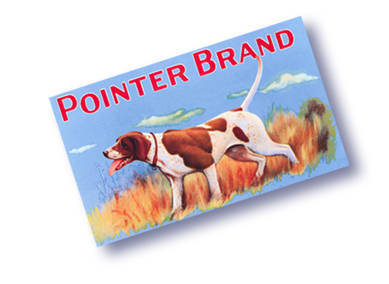
Sparky® the Fire Dog is one famous Dalmatian.
 He is the mascot and logo for the National Fire Protection Association. Perhaps the best known Dalmatians are Pongo, Perdita, Prince and the puppies made famous by 101 Dalmatians. The One Hundred and One Dalmatians was a novel published in 1956 by Dodie Smith that was made into animated films by Walt Disney Productions.
I hope that this article gives you some better information about why Pointers are different from Dalmatians. Despite their differences, the dogs get along just fine!

Sources:
Kathleen Crisley, specialist in dog massage, rehabilitation and nutrition/food therapy, The Balanced Dog, Christchurch, New Zealand
Posted in dog breeds
Tagged 101 Dalmatians, clothing, Dalmatian, English Pointer, fire dog, pointer, Pointer Brand, Rodd & Gunn, Sparky the Fire Dog, Sparty, Westminster Kennel Club
Since I’m on line just hours before the big Royal Wedding, I’ve decided to write about the Corgi, a breed of dog that is often associated with Queen Elizabeth II (and the now deceased Queen Mother as well). Queen Elizabeth has 16 corgis!
 The Corgi goes by other names: Pembroke Welsh Corgi or Welsh Corgi for short (however a Cardigan Welsh Corgi can also be called a Welsh Corgi). It is a naturally active little dog who has short legs and a long back (often having a back that is twice as long as its legs). Being a massage therapist, I see corgis that are prone to back problems because of this anatomical structure which can be exacerbated by weight gain (something they do easily).
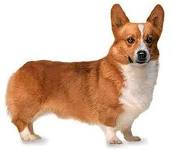
The dogs are known for their intelligence, devotion and eagerness to please. The Corgi was bred to herd cattle and is the oldest breed of herding dog. As a herding breed, however, they can develop problems such as nipping at people’s heels and so they do need training. The nipping tendency means that they may not be as suitable for homes with smaller children.
Kathleen Crisley, specialist in dog massage, rehabilitation and nutrition/food therapy, The Balanced Dog, Christchurch, New Zealand
Today I massaged a Leonberger, who unfortunately has had to have cruciate ligament surgeries in both legs over the years and as a consequence she is starting to have lots of aches and pains. What a beauty! She was the epitome of the ‘Gentle Giant’ and, despite her size, amongst the easier dogs I have handled in my dog massage career.
I’ve done some research on the breed and so I thought I’d share it with you. Leonbergers originated in Germany in the town of Leonberg. The mayor there wanted a dog that resembled the lion image of the town’s crest. The breed is a combination of Newfoundland, Saint Bernard, and Pyrenean Mountain Dog.
 If you are interested in owning one of these giant dogs, I recommend that you do your own research on the breed and then contact your local breed club for information on breeders and upcoming litters.
In New Zealand, we have approximately 300 Leonbergers in the country. The Leonberger Club New Zealand has an excellent and easy to navigate website.
Kathleen Crisley, specialist in dog massage, rehabilitation and nutrition/food therapy, The Balanced Dog, Christchurch, New Zealand







 DoggyMom.com