Category Archives: dog breeds

Study demonstrates rapid decline in male dog fertility, with potential link to environmental contaminants

A study led by researchers at The University of Nottingham has discovered that the fertility of dogs may have suffered a sharp decline over the past three decades.

The research, published in the academic journal Scientific Reports, found that sperm quality in a population of stud dogs studied over a 26-year period had fallen significantly.

The work has highlighted a potential link to environmental contaminants, after they were able to demonstrate that chemicals found in the sperm and testes of adult dogs – and in some commercially available pet foods – had a detrimental effect on sperm function at the concentrations detected.
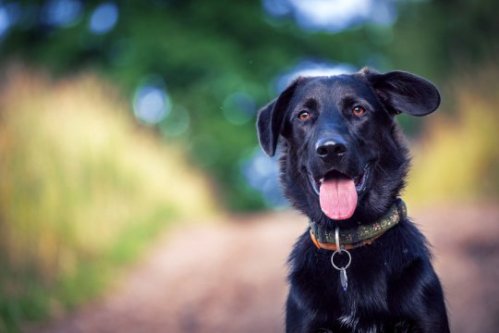
Semen study

Researchers believe that the latest results showing that dogs’ quality of semen has diminished may offer a new piece of the puzzle over the reported significant decline in human semen quality. Credit: © jurra8 / Fotolia

As ‘man’s best friend’ and closest companion animal, the researchers believe that the latest results may offer a new piece of the puzzle over the reported significant decline in human semen quality – a controversial subject which scientists continue to debate.

Dr Richard Lea, Reader in Reproductive Biology in the University’s School of Veterinary Medicine and Science, who led the research said: “This is the first time that such a decline in male fertility has been reported in the dog and we believe this is due to environmental contaminants, some of which we have detected in dog food and in the sperm and testes of the animals themselves.

“While further research is needed to conclusively demonstrate a link, the dog may indeed be a sentinel for humans – it shares the same environment, exhibits the same range of diseases, many with the same frequency and responds in a similar way to therapies.”

The study centred on samples taken from stud dogs at an assistance dogs breeding centre over the course of 26 years. Professor Gary England, Foundation Dean of the School of Veterinary Medicine and Science and Professor of Comparative Veterinary Reproduction, who oversaw the collection of semen said: “The strength of the study is that all samples were processed and analysed by the same laboratory using the same protocols during that time and consequently the data generated is robust.”

The work centred on five specific breeds of dogs – Labrador retriever, golden retriever, curly coat retriever, border collie and German shepherd – with between 42 and 97 dogs studied every year.

Semen was collected from the dogs and analysed to assess the percentage of sperm that showed a normal forward progressive pattern of motility and that appeared normal under a microscope (morphology).

Over the 26 years of the study, they found a striking decrease in the percentage of normal motile sperm. Between 1988 and 1998, sperm motility declined by 2.5 per cent per year and following a short period when stud dogs of compromised fertility were retired from the study, sperm motility from 2002 to 2014 continued to decline at a rate of 1.2% per year.

In addition, the team discovered that the male pups generated from the stud dogs with declining semen quality, had an increased incidence of cryptorchidism, a condition in which the testes of pups fail to correctly descend into the scrotum.

Sperm collected from the same breeding population of dogs, and testes recovered from dogs undergoing routine castration, were found to contain environmental contaminants at concentrations able to disrupt sperm motility and viability when tested.

The same chemicals that disrupted sperm quality, were also discovered in a range of commercially available dog foods – including brands specifically marketed for puppies.

Dr Lea added: “We looked at other factors which may also play a part, for example, some genetic conditions do have an impact on fertility. However, we discounted that because 26 years is simply too rapid a decline to be associated with a genetic problem.”

Over the past 70 years, studies have suggested a significant decline in human semen quality and a cluster of issues called ‘testicular dysgenesis syndrome’ that impact on male fertility which also include increased incidence of testicular cancer, the birth defect hypospadias and undescended testes.

However, declining human semen quality remains a controversial issue – many have criticised the variability of the data of the studies on the basis of changes in laboratory methods, training of laboratory personnel and improved quality control over the years.

Dr Lea added: “The Nottingham study presents a unique set of reliable data from a controlled population which is free from these factors. This raises the tantalising prospect that the decline in canine semen quality has an environmental cause and begs the question whether a similar effect could also be observed in human male fertility.”

Source:  University of Nottingham media release

Limber tail – it’s more common than previously thought

Limber tail photo

Limber tail is a condition that affects mostly large working dog breeds.  It’s a distressing condition that causes the tail to become limp and painful and it’s official name is acute caudal myopathy.

A research team at the University of Edinburgh compared 38 cases of limber tail that were identified from owners’ reports about their dogs’ health with 86 dogs that had no tail symptoms.

Their goal was to gain insight into habits and lifestyle factors that might explain why some dogs are affected and not others.

The majority of dogs in the study were pets but those affected by limber tail were more likely to be working dogs, they found.

Swimming has previously been thought to be a risk factor for limber tail, which is sometimes known as ‘swimmers’ tail’. Some but not all of the affected dogs had been swimming prior to the onset of symptoms, the study found.

Dogs with the condition were more likely to live in northern areas, lending support to anecdotal reports that limber tail is associated with exposure to the cold.

Labradors that had suffered limber tail were more likely to be related to each other than unaffected dogs, which may indicate an underlying genetic risk.

Experts hope that further studies will identify genes associated with the condition, which could one day help breeders to identify animals that are likely to be affected. Over time, this could help to reduce the prevalence of the disease.

The symptoms usually resolve within a few days or weeks so many cases are not reported to vets. This may be why it has been so underestimated in the past. However, owners report that it can be very painful and distressing for the animals.

The study is the first large-scale investigation of limber tail and was conducted as part of the Dogslife project, which follows the health and wellbeing of more than 6000 Labradors from across the UK.  (Note:  the disorder also commonly affects English Pointers, English Setters, Foxhounds and Beagles.)

The study has been published in the Veterinary Record.

Source:  University of Edinburgh media release

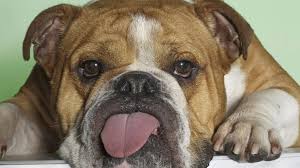
Scientists warn about health of English Bulldog

According to new research it could be difficult to improve the health of the English bulldog, one of the world’s unhealthiest dog breeds, from within its existing gene pool. The findings will be published in the open access journal Canine Genetics and Epidemiology.

The English bulldog’s limited genetic diversity could minimize the ability of breeders to recreate healthy phenotypes from the existing genetic stock, which were created by human-directed selection for specific desired physical traits.

English Bulldog

Many large regions of the bulldog’s genome have been altered to attain the extreme changes in its outward appearance. This includes significant loss of genetic diversity in the region of the genome that contains many of the genes that regulate normal immune responses. Despite this, the English bulldog is one of the most popular dog breeds, particularly in the US, where the bulldog was the fourth most popular pure breed in 2015.

Lead author, Niels Pedersen from Center for Companion Animal Health, University of California, US, said: “The English bulldog has reached the point where popularity can no longer excuse the health problems that the average bulldog endures in its often brief lifetime. More people seemed to be enamoured with its appearance than concerned about its health. Improving health through genetic manipulations presumes that enough diversity still exists to improve the breed from within, and if not, to add diversity by outcrossing to other breeds. We found that little genetic ‘wiggle room’ still exists in the breed to make additional genetic changes.”

Pedersen adds: “These changes have occurred over hundreds of years but have become particularly rapid over the last few decades. Breeders are managing the little diversity that still exists in the best possible manner, but there are still many individuals sired from highly inbred parents. Unfortunately eliminating all the mutations may not solve the problem as this would further reduce genetic diversity. We would also question whether further modifications, such as rapidly introducing new rare coat colors, making the body smaller and more compact and adding more wrinkles in the coat, could improve the bulldog’s already fragile genetic diversity.”

This is the first broad-based assessment of genetic diversity in the English bulldog using DNA analysis rather than pedigrees. DNA analysis is needed to measure, monitor and maintain genetic diversity. This has been done in several other breeds including Standard and Miniature Poodles, American Golden Retrievers, and American and European Italian Greyhound.

The researchers sought to identify whether there is enough genetic diversity still existing within the breed to undertake significant improvements from within the existing gene pool. The researchers examined 102 English bulldogs, 87 dogs from the US and 15 dogs from other countries. These were genetically compared with an additional 37 English bulldogs presented to the US Davis Veterinary Clinical Services for health problems, to determine that the genetic problems of the English bulldogs were not the fault of commercial breeders or puppy mills.

Many Swiss breeders have started to outcross the breed with the Olde English Bulldogge (an American breed) to create the Continental Bulldog, hoping to improve the breed’s health. Although outcrossing the English bulldog could improve its health, many breeders feel that any deviations from the original standard will no longer be an English bulldog.

The breed started from a relatively small genetic base with a founder population of 68 individuals after 1835 and has undergone a number of human created artificial bottlenecks (drastic reductions in population size). These could also have greatly diminished genetic diversity.

Source:  BioMed Central media release

Cross-breeding to eradicate Chiari syndrome

In a new study published in the journal PLOS ONE, scientists from the University of Surrey, working with an experienced breeder in the Netherlands, examined how the skull and brain of toy dogs change when a Brussels Griffon with Chiari-like malformation is crossed with an Australian Terrier.  The succeeding hybrid puppy is then back crossed to a Brussels Griffon to give some of the features of the Brussels Griffon, but keeping the longer skull of the Australian Terrier.

Griffon and cross breed

Second-generation backcross and purebred Brussel Griffon Sire Photo credit: Henny van der Berg

The results from the study showed it is possible to breed a dog which had the external features of a short-nosed Brussels Griffon and reduce the risk of Chiari malformation, a debilitating condition found in toy dogs and affecting 1 in 1,280 humans.  The disease is characterised by premature fusion of skull bones forcing parts of the brain to push through the opening in the back of the skull causing fluid filled cavities to develop in the spinal cord. Chiari malformation causes headaches, problems with walking or even paralysis and has become prevalent in some toy breed dogs as a result of selective breeding.

The breeder, Henny van der Berg proposed the project idea after an accidental mating between two of her dogs.  The four-year study analysed five traits on magnetic resonance images (MRI) scans and how they changed generation by generation in the family of 29 dogs.  Using a careful selection of head shape and MRI scans over two generations, the findings revealed it was possible to breed a dog which had the external features of a Brussels Griffon, but is less susceptible to Chiari malformation.

“This is a true collaboration with breeders and researchers working together and using their expertise to improve the health of dogs,” said Dr Clare Rusbridge from the University of Surrey.

“Our study investigated how the characteristics of this disease is inherited in the family.  Such knowledge could help in tackling this debilitating disease in toy dog breeds.  We hope our research will help develop more sophisticated ways of screening and improve breeding guidelines by creating robust breeding values.”

The team at the University of Surrey is now collaborating with geneticists at the University of Montreal, and correlating the skull and brain traits visualised on magnetic resonance images with the dog genome. This information will then be translated to humans.

Source:  University of Surrey media release

My other posts about Chiari malformation include:

Joey and the Pit Bull


People who have autism are often misunderstood.  So are Pit Bulls.  These two make a great pair.

Kathleen Crisley, specialist in dog massage, rehabilitation and nutrition/food therapy, The Balanced Dog, Christchurch, New Zealand


Homeopathics, in pack order

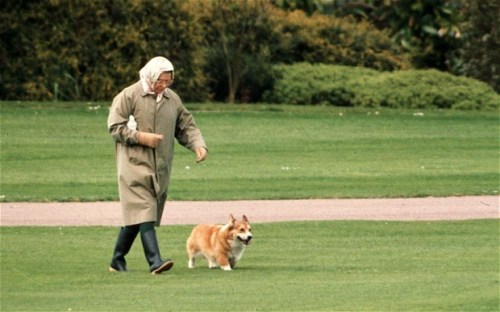
The Telegraph has reported this week that Queen Elizabeth II feeds her dogs in ‘order of seniority’  and that the dogs consume a range of herbal and homeopathic remedies.

Queen with Corgi

The Queen of England couldn’t be more Establishment and yet – there she is – open-minded enough to recognise that herbals and homeopathics may help keep her Corgis in good health, for longer.

I respect her for that.

It’s long been reported and known that the Queen is an animal-lover.  Dr Mugford, an animal psychologist who has worked with the Queen’s dogs says “The Queen has definite views about how dogs should be cared for: she doesn’t tolerate unkindness, and I remember she took a very dim view of President Lyndon B Johnson picking his dogs up by their ears.”

Queen Elizabeth has made the decision fairly recently not to replace her Corgis when they pass away, which has been a long-standing tradition in her household.  This is surely a sign that the Queen is feeling the pressures of time and old age.  She doesn’t want to bring dogs into the household when it’s highly likely they will out-live her.

Kathleen Crisley, specialist in dog massage, rehabilitation and nutrition/food therapy, The Balanced Dog, Christchurch, New Zealand


Mensa dogs

Dogs have measurable IQs, like people, suggests new research from the London School of Economics and Political Science (LSE) and the University of Edinburgh.

The research, published in the journal Intelligence, looked at whether dog intelligence is structured in a similar way as in humans. When IQ, or ‘general intelligence’, is tested in people, individuals tend to perform comparably across different types of cognitive tasks –  those who do well in one type of task, tend to do well in others.

Dog intelligence test

The researchers created a proto-type dog ‘IQ test’ which they used to assess the intelligence of 68 working border collies. These tests included: navigation, tested by timing how long it took the dogs to get food that was behind different types of barriers; assessing whether they could tell the difference between quantities of food and; their ability to follow a human pointing gesture to an object.

The researchers found that dogs that did well on one test tended be better at the other tests. Furthermore, dogs that did tests faster were likely to do them more accurately.

Dr Rosalind Arden, a Research Associate at LSE, said: “Just as people vary in their problem solving abilities, so do dogs, even within one breed. This is significant because in humans there is a small but measurable tendency for people who are brighter to be healthier and live longer.  So if, as our research suggests, dog intelligence is structured similarly to ours, studying a species that doesn’t smoke, drink, use recreational drugs and does not have large differences in education and income, may help us understand this link between intelligence and health better.

“In addition, dogs are one of the few animals that reproduce many of the key features of dementia, so understanding their cognitive abilities could be valuable in helping us to understand the causes this disorder in humans and possibly test treatments for it.”

The suite of tests was conducted in under an hour per dog, which is comparable with the time it takes a person to do an IQ-type test.  Previous research on canine cognitive abilities has taken much longer to administer.

Dr Mark Adams, Research Fellow at the University of Edinburgh, said: “This is only a first step, but we are aiming to create a dog IQ test that is reliable, valid and can be administered quickly.  Such a test could rapidly improve our understanding of the connection between dog intelligence, health, even lifespan, and be the foundation of ‘dognitive epidemiology’

“Dogs are excellent for this kind of work because they are willing to participate and seem to enjoy taking part.”

In order to get a large sample of dogs from similar backgrounds the researchers recruited working border collies, which meant that there weren’t big differences in how they were raised.

Source:  London School of Economics and Political Science media release

Personal comment:  Dogs must be a popular research topic if even the London School of Economics is getting into the act!

Jimmy the Bull

On artist’s Rafael Mantesso’s thirtieth birthday, his wife left him.

She took their cookware, their furniture, their photos.  But she left Rafael with Jimmy, their bull terrier who she had named after shoe designer Jimmy Choo.

With only Jimmy for company in an apartment painted white, Rafael found inspiration in his blank walls and his best friend and started snapping photos of Jimmy Choo.  Then, when Jimmy collapsed in happy exhaustion next to the white wall, on a whim Rafael grabbed a marker and drew a new world around his pup.

Jimmy with champagne

And this began a collaboration of the artist and his bull terrier which gained fame through social media – even attracting the attention of the Jimmy Choo brand.  In May 2015, they launched a limited edition line of accessories featuring Jimmy the Bull.

Jimmy Stop Wars

And a book of Mantesso’s drawings, A Dog Named Jimmy is also available.  In November 2015, it made the New York Times bestseller list.

A Dog named Jimmy

I love bullies and clearly many other people do, too.  Jimmy even has a 2016 calendar featuring his image.

Kathleen Crisley, specialist in dog massage, rehabilitation and nutrition/food therapy, The Balanced Dog, Christchurch, New Zealand


Christmas house guest

It’s been a busy week and so the blog has been quieter than normal.  Then yesterday, on Christmas Eve, I got a text from another greyhound owner.  His kennel plans had fallen through and he wondered if I could take his dog, Sala, for a couple of days.

No worries!

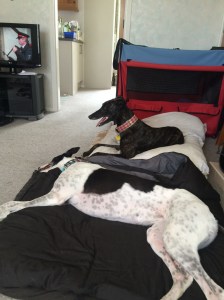
Bed switching

To make a house guest feel welcome, you let them sleep in your bed. You sleep in theirs.

Izzy has enjoyed having a playmate today (Christmas Day).  We went for an off-leash run at the Groynes dog park.

Izzy at Groynes

And after a breakfast, it was time for a big rest.

Greyhound on sofa

Izzy never goes on the sofa (she prefers the queen-sized bed). Sala found it quite comfortable, however.

Then it was time to tuck into the pigs ears that Sala’s Dad brought:

Followed later by an afternoon walk, and some cooked liver over dog food.  We are once again settling in for the night and more play time tomorrow.

Kathleen Crisley, specialist in dog massage, rehabilitation and nutrition/food therapy, Canine Catering Ltd, Christchurch, New Zealand


First puppies born by in vitro fertilization

Researchers from Cornell University and the Smithsonian Institution have solved the decades-long puzzle of canine in vitro fertilization (IVF), resulting in the world’s first litter of IVF puppies.

Photo by Mike Carroll, Cornell University College of Veterinary Medicine

Photo by Mike Carroll, Cornell University College of Veterinary Medicine

The breakthrough, described in a study published in the journal Public Library of Science ONE, opens the door for preserving endangered canid species using assisted reproduction techniques. It could also enable researchers to eradicate heritable diseases in dogs and facilitate the study of genetic diseases in dogs and humans, which share many of the same or similar illnesses.

Researchers at the Cornell laboratory transferred 19 embryos to a host female dog, who gave birth last spring to seven healthy puppies. Genetic testing shows that two are from a beagle mother and a cocker spaniel father, and five from two pairings of beagle fathers and mothers.

“Since the mid-1970s, people have been trying to do [IVF] in a dog and have been unsuccessful,” said co-author Alex Travis, associate professor of reproductive biology at the Baker Institute for Animal Health in Cornell’s College of Veterinary Medicine.

The paper’s first author, Jennifer Nagashima, was a graduate student whose participation in the project was funded by the Smithsonian Conservation Biology Institute (SCBI) and Cornell’s Atkinson Center for a Sustainable Future. The National Institutes of Health and the Baker Institute provided funding for the project itself.

Laboratories perform successful IVF with other mammals—including humans—by retrieving mature eggs and sperm and combining them in an artificial environment to produce embryos. The embryos are transferred to a host female at the right time in her reproductive cycle.

Past attempts at canine IVF failed because a female dog’s reproductive cycle differs from that of other mammals. Canine eggs retrieved at the same stage of cell maturation as other animals failed to fertilize. By applying the oocyte biology expertise of SCBI’s Nucharin Songsasen, a research biologist and co-author, the team found that if they left the egg in the oviduct one extra day, the eggs reached the stage where fertilization was most likely to occur.

In addition, the female canine tract plays a role in preparing sperm for fertilization, so researchers had to simulate those conditions in the lab. Building on Travis’s earlier work on sperm physiology, the team found that sperm could be artificially prepared by adding magnesium to the cell culture.

“We made those two changes, and now we achieve success in fertilization rates at 80 to 90 percent,” Travis said.

The final challenge arises because female dogs can only become pregnant once or twice a year. This means embryos must be created ahead of time and preserved until the host female is at the right point in her cycle.

The birth of IVF puppies has wide implications for wildlife conservation. “We can freeze and bank sperm, and use it for artificial insemination,” Travis said. “We can also freeze oocytes, but in the absence of in vitro fertilization, we couldn’t use them. Now we can use this technique to conserve the genetics of endangered species.” The method can also be used to preserve rare breeds of show and working dogs.

In addition, embryonic dogs now offer a “powerful tool for understanding the genetic basis of diseases” in canines and humans, Travis said. Dogs share more than 350 similar heritable disorders and traits with humans, almost twice the number as any other species.

A successful IVF process for canines may one day enable researchers to remove genetic diseases and traits in an embryo, ridding dogs of heritable diseases such as lymphoma, a cancer that is more prevalent in breeds like Golden Retrievers. “With a combination of gene editing techniques and IVF, we can potentially prevent genetic disease before it starts,” Travis said.

Source:  Cornell University media release