Category Archives: dog care

Puppy Up to Cancer

You’ve probably heard the terms ‘man up’ or ‘woman up’ – but how about ‘puppy up’?

That’s the origin of the name for the Puppy Up to Cancer initiative founded by the 2 Million Dogs Foundation.  Through every Puppy Up walk, funds are raised to help with cancer research.

Walks are usually led by human and canine survivors of cancer and often dogs who are infirm or who can’t walk for long distances participate by riding in wagons and carts.

Dogs are often used in comparative oncology studies because their cancers have commonalities with human cancers.

I think this  is a great idea and since we have many dogs in New Zealand who also fall to cancer, fundraising in this way would be a way of contributing to the body of knowledge.

Kathleen Crisley, specialist in dog massage, rehabilitation and nutrition/food therapy, Canine Catering Ltd, Christchurch, New Zealand

The underlying cause of canine diabetes

In a new effort, researchers from the University of Pennsylvania and Baylor College of Medicine have used advanced imaging technology to fill in details about the underlying cause of canine diabetes, which until now has been little understood. For the first time, they’ve precisely quantified the dramatic loss of insulin-producing beta cells in dogs with the disease and compared it to the loss observed in people with type 1 diabetes.

Diabetic dogs had a sharp loss of insulin-producing beta cells compared to non-diabetic dogs

Diabetic dogs had a sharp loss of insulin-producing beta cells compared to non-diabetic dogs

“The architecture of the canine pancreas has never been studied in the detail that we have done in this paper,” said Rebecka Hess, professor of internal medicine at Penn’s School of Veterinary Medicine and an author on the study.

Despite important differences between the disease in dogs and humans, the study also identified key similarities that suggest investigating diabetes in dogs may yield valuable insights into treating humans.

The research was led by Emily Shields, currently a graduate student in Penn’s Perelman School of Medicine, who completed much of the work as a high school and then college student in labs at Penn and Baylor.

The study was published in PLOS ONE.

Canine diabetes can be managed with insulin, similar to type 1 diabetes in humans. But, unlike the human version of the disease, dogs typically develop diabetes in middle or old age, while people with type 1 diabetes are typically diagnosed during childhood. In addition, while type 1 diabetes is known to be an autoimmune condition, researchers haven’t found conclusive evidence that the same is true in dogs.

To learn more about the factors that contribute to canine diabetes, the researchers made use of a repository of donated tissue samples from dogs — 23 with diabetes and 17 without — who had been treated at Penn Vet’s Ryan Hospital.

The team used robotic microscopes that can rapidly move around a slide taking images of pancreas tissue samples, which were analyzed by computer to determine the contents.

“In a larger view we could look at the entire cross-section of pancreas to determine how many islets there were and how big they were,” Shields said. “Then we could zoom in to differentiate beta cells, which produce insulin, from alpha cells, which produce glucagon.”

They found that beta cells dropped off in dramatic fashion in diabetic dogs, reduced 13-fold compared to non-diabetic animals. They also found that non-diabetic canine islets contained a large percentage of beta cells, comprising about 80 percent of endocrine cells. In contrast, beta cells comprise slightly more than 50 percent of endocrine cells in non-diabetic human islets. The researchers noted that this may mean that dogs need to lose more beta cells before experiencing symptoms of diabetes. The observation could explain why dogs develop a form of diabetes that is similar to type 1 diabetes, but do so later in life, compared to humans.

They also identified features of the islets and pancreatic structures that were different in dogs than in humans.

“In sharp contrast to human diabetes, in which there are a lot of islets still present but none contains insulin, we found in dogs that only a few beta cells were present and the islets were incredibly small,” Kushner said.

While the researchers had hoped to be able to visualize immune cells infiltrating the pancreas and attacking beta cells, they failed to do so.  While other signs point to canine diabetes being an autoimmune condition, this study did not find a “smoking gun.”

Though the work highlights differences between canine and human diabetes, it also points to a number of similarities that distinguish the two from diabetes in rodents, which are often used as models to study the disease.

For example, the scientists observed that dogs’ beta cells were distributed throughout the islets, as beta cells in humans are. In rodents, beta cells are concentrated in the center of the islet.

“Now that we know more about the disease in dogs and in particular how they are similar to humans in ways that rodents are not, it makes them more appealing as a model,” Kushner said.

At Penn, Hess is currently working to look for genetic markers in dogs that heighten a dog’s risk of developing diabetes.

“My hope is that with genetic screening we can eventually identify pre-clinical diabetic dogs, potentially making breeding recommendations that could decrease the incidence and prevalence of the disease in dogs,” Hess said.

Source:  Penn News media release

See something, do something

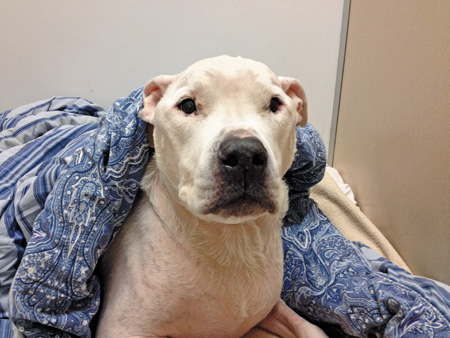
Dr Sue Ettinger is on a mission to help pet owners detect tumors early.  Her inspiration for this new program, called See Something, Do Something, was a 10-year old white pit bull named Smokey.

Smokey

Smokey

Dr Ettinger had aspirated approximately 10 masses from Smokey over the years and all came back as benign; so she wasn’t particularly worried when Smokey presented with another lump.  The clinic was so busy on the day he came in with his vet tech owner, that he never got tested that day and waited another week before returning to the clinic.

When it was aspirated, it wasn’t a lipoma and testing revealed a soft tissue sarcoma.  It hadn’t spread to other parts of the body, but a 7 cm mass with 3 cm margins was a very big surgery; they got it all and so Smokey was out of the woods.

But Dr Ettinger combed through literature to find out if there were guidelines for vets and owners about diagnosing lumps and bumps.  There weren’t and she decided to take action.

So she’s come up with:

See Something?  If a dog or cat has had a lump that is larger than a pea and has been there for more than a month…

Do Something! Go to a vet and get it aspirated or biopsied.

and even a shorter call to action:  Why Wait? Aspirate!

Simple rules that could save the life of your pet and also avoid needless pain and suffering.

Sue Ettinger is one of approximately 300 board-certified veterinary specialists in medical oncology in North America. Dr Sue is a staff oncologist and initiated the medical oncology service at the Animal Specialty Center (ASC), a private practice specialty hospital in Westchester, just north of New York City.

Sue Ettinger is one of approximately 300 board-certified veterinary specialists in medical oncology in North America. Dr Sue is a staff oncologist and initiated the medical oncology service at the Animal Specialty Center (ASC), a private practice specialty hospital in Westchester, just north of New York City

Kathleen Crisley, Fear-Free certified professional and specialist in dog massage, rehabilitation and nutrition/food therapy, The Balanced Dog, Christchurch, New Zealand

The power of rest and relaxation

Best Friends Animal Sanctuary allows sleepovers with selected sanctuary dogs.  These dogs have been assessed for behaviours and deemed ready to go out to the public so they can experience environments that are more like a private home.

These experiences make the dogs more suitable for adoption and they give the dog a much-needed rest from the kennel environment.

Brigit, a Staffordshire Bull Terrier x Cattle Dog, is my sleepover dog as I study dog handling skills here.  She’s very sociable with people, but is reactive to other dogs which we are working on…

Today, I took Brigit for an enrichment visit to the Landing, an area of the sanctuary that is grassed and is in shade.  She had a wonderful time, followed by an hour-long walk in the evening when we met many people and successfully encouraged her to look at me rather than focusing on dogs that were passing on the other side of the street.

DSC03057DSC03064 DSC03066

Kathleen Crisley, specialist in dog massage, rehabilitation and nutrition/food therapy, Canine Catering Ltd, Christchurch, New Zealand

Enrichment for the special needs dog

In my massage practice, I see quite a few special needs dogs.  These can be senior dogs who are slowing down for a variety of reasons, dogs who have been injured, and dogs who are terminally ill.  Some also have behavioral difficulties which exacerbate any physical limitations they may have.

One of the things I address with my clients is enrichment.

The dog may be physically limited in its abilities but is not impaired cognitively.  Like older people who have entered rest homes/nursing homes, or who are being cared for at home, these dogs need stimulation and variety.

Visitors, including other dogs, is just one example of an enrichment activity.

Another issue for owners in this situation is introducing variety by getting their dog out of the house.  If a dog enjoys car rides, for example, they may be happy just to take a drive to a new location with the windows down to experience new scenery and smells.

Kenny, a 13+ year old Bull Terrier/Blue Heeler cross, was taken to the beach recently - his smile says it all!

Kenny, a 13+ year old Bull Terrier/Blue Heeler cross, was taken to the beach recently.  He needed to be carried from the car to the beach but his smile says it all!

I know some owners who take their dogs for a take-out meal so they can sit in the car and enjoy it together – with snacks included.

Once owners have tried enrichment activities with their dog, they have universally reported to me an improvement in the dog’s disposition and general engagement.

Kathleen Crisley, specialist in dog massage, rehabilitation and nutrition/food therapy, Canine Catering Ltd, Christchurch, New Zealand


Teaching others the benefits of dog massage

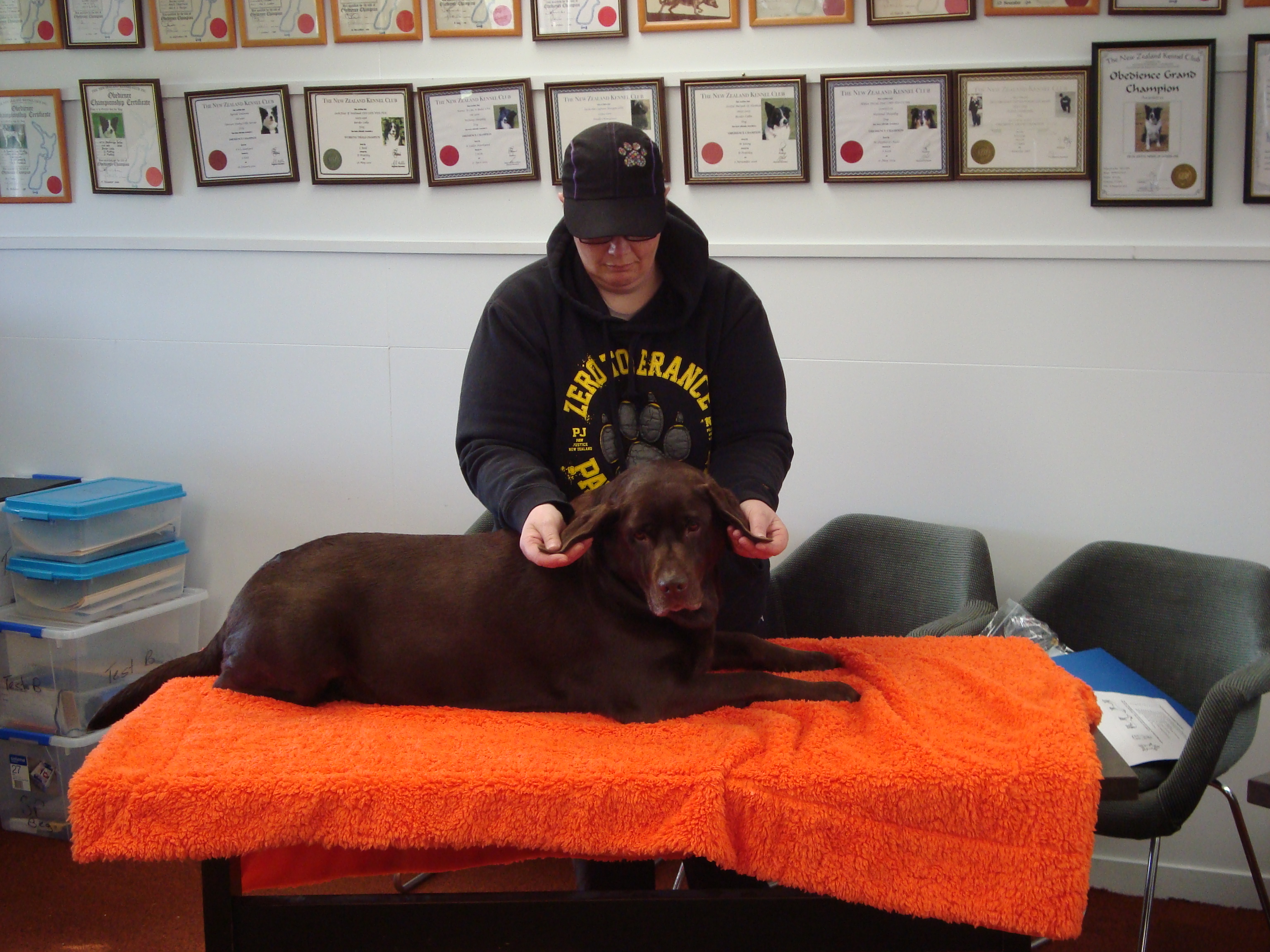
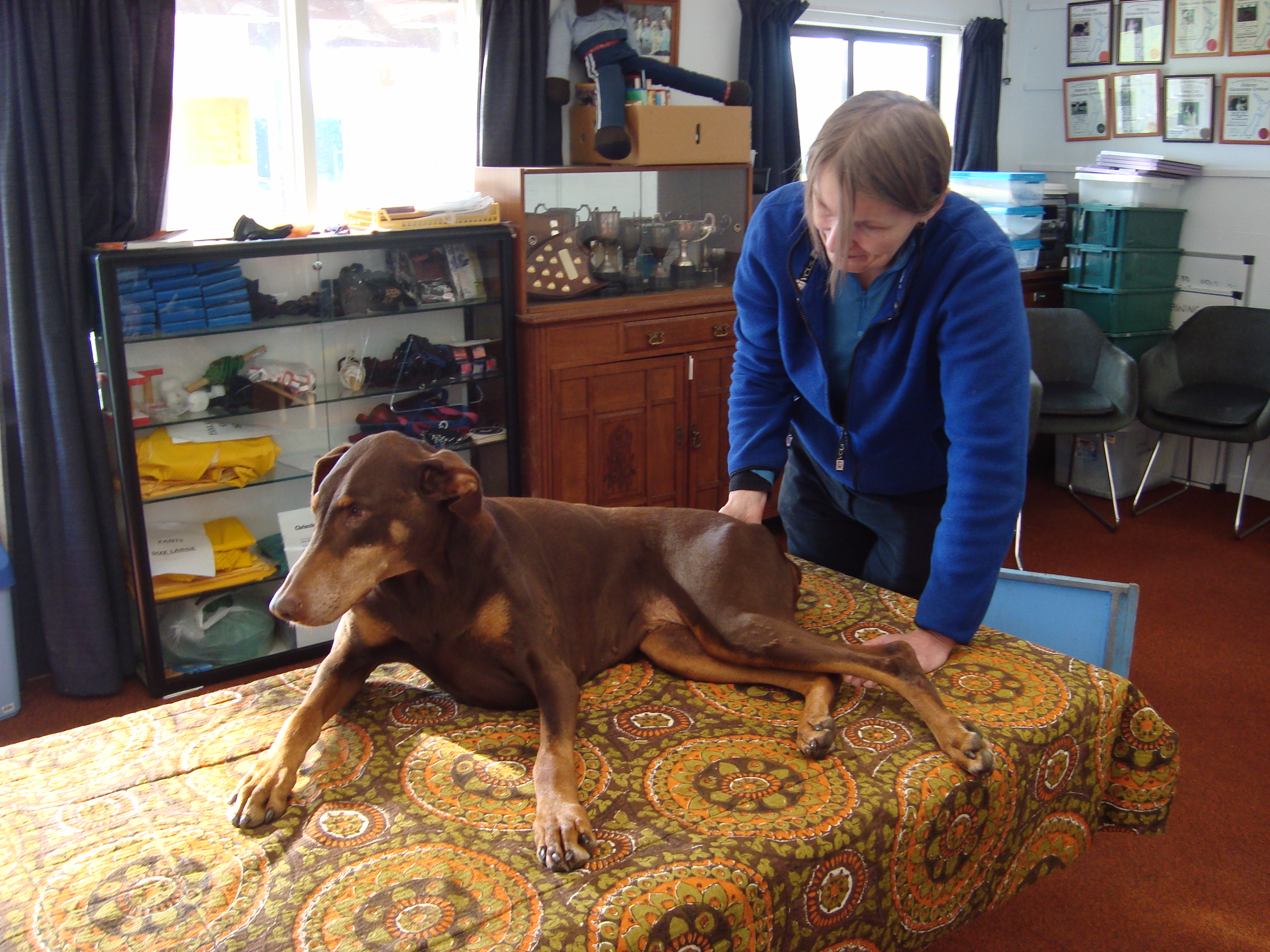
Last weekend, I held my first dog massage workshops in five years.  These half-day workshops cover my own 12-step relaxation massage sequence for dogs along with the basics of gait analysis, senior dog care and keeping records on lumps and bumps.

Today, I received this text:

“Hi, Coffee and I came to your massage class last weekend and, when we were doing hands on, I noticed a golf-ball sized lump on her.  I took her to the vet and they have operated and removed it, so just wanted to say thanks as would not have come across it if it wasn’t for your class.”

I can’t wait to do more workshops on a variety of holistic dog care topics…and I am so happy that Coffee’s lump was found in time – all because of massage.

And here are some photos from the weekend:

DSC03033DSC03030


DSC03038DSC03029


Kathleen Crisley, specialist in dog massage, rehabilitation and nutrition/food therapy, Canine Catering Ltd, Christchurch, New Zealand

Unlikely Best Friends

I’m always a little surprised when, after I explain that one of my services is to help owners measure and fit dogs for mobility carts, that I get answers like “I’d never do that to a dog.”

Stories like this one, an ad sponsored by the Kleenex brand, show you why some dogs can do very well in a cart – and experience quality of life while also sharing unconditional love.

Kathleen Crisley, specialist in dog massage, rehabilitation and nutrition/food therapy, Canine Catering Ltd, Christchurch, New Zealand

Dog bite prevention – we may be on the wrong track

Scientists at the University of Liverpool have shown that educating pet owners about canine body language may not be sufficient to preventing dog bites.  They’ve published their research in the Journal of Veterinary Behaviour.

Dog bite photo

At a time when data suggests dog bite incidents are increasing, the team at Liverpool interviewed victims of dog attacks to gain further understanding into their perceptions of the experience.

They found that in some cases there was no interaction with the dog before the bite occurred and therefore no opportunity to assess behaviour.  There was a common tendency for victims to blame themselves for the attack, rather than the animal, or in cases where the dog was not known to them, they blamed the dog’s owner.

Warning signs

Even those who felt knowledgeable about dogs, perceived that a bite “would not happen to them”, and so despite the warning signs would continue acting in the same manner, suggesting that education on body language was ineffective as a preventative measure.

My comment:  This particular part of the research resonates with me.  I’ve seen dog trainers, working with client’s dogs, be super-confident despite the feedback that both the owners and myself would be giving them.  And then, they’d do things with the dog – such as reaching for their collar – which would instigate a snap. 

Working with dogs is a privilege, but we should also be humble enough to treat each dog as an individual…

“Preventing the situation from arising at all may not always be feasible. Reducing the damage caused when a dog does bite, through careful pet dog selection and training, is something we should aim for.”  says Dr Carri Westgarth, a dog behaviour expert at the University’s Institute of Infection and Global Health.

Raising awareness

The researchers highlight that there is not enough knowledge of how dog bites occur to know how to prevent them entirely. Raising awareness that ‘it could happen to you’ as often used in other campaigns such as drink-driving, will be required for successful dog bite prevention.

More work is also needed with dog breeders to supply dogs that are less likely to bite and that have inhibited bites that do less damage, moving away from a victim or owner ‘blame’ model to explain dog bite injury.

Source:  University of Liverpool media release

Dog buns

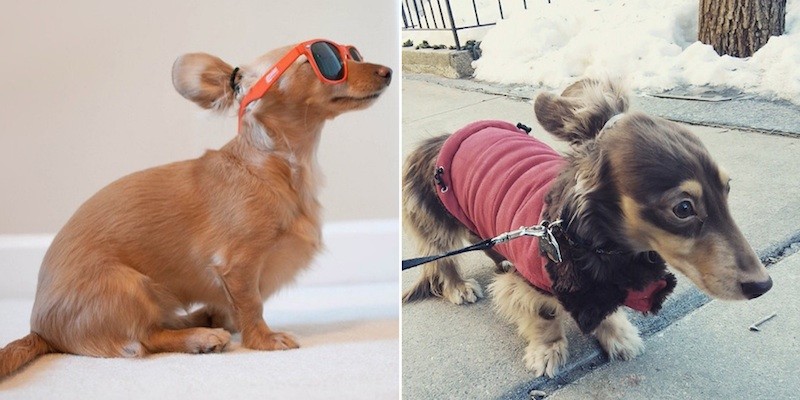
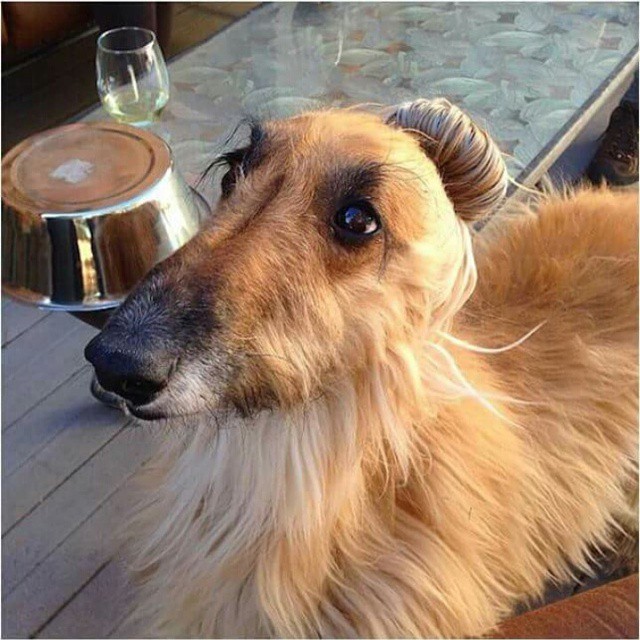
It seems that there’s a new trend in grooming and photographing dogs – it’s called dog buns, as seen from these photos downloaded from Instagram and Pinterest:

Dog bundog bun 3While I understand that some people think these photos are cute or funny, I don’t agree in tying up the ears of a dog.  The ears of a dog are sensitive tissues, with many acupressure points.

Tying up of the ears can interfere with blood circulation and, if left in for any period of time, the area is a breeding ground for bacteria – particularly in wet conditions.

Leave your dog’s ears alone!  The only dog buns I like to see are these ones:

Izzy, Greyhound, adopted in October 2014 (Photo by Dany Wu)

Izzy, Greyhound, adopted in October 2014 (Photo by Dany Wu)

Kathleen Crisley, specialist in dog massage, rehabilitation and nutrition/food therapy, Canine Catering Ltd, Christchurch, New Zealand

A dog’s perspective of your trip to the vet

This is a great video made for veterinary practices – reminding them about the layout and setting they should provide for their dog clients.

I particularly like the reference to stress and the effect it has on recovery time.  That is one reason why I recommend massage, done by a professional, when a dog is recovering.

Massage will help to reduce the anxiety and aid blood flow and recovery.  I also use acupressure to help clear the anesthetic medications from the dog’s body.

Kathleen Crisley, specialist in dog massage, rehabilitation and nutrition/food therapy, Canine Catering Ltd, Christchurch, New Zealand