Category Archives: dog ownership

Tie a yellow ribbon…

It’s Dog Bite Prevention Week in the USA.  What a better time to consider the role of The Yellow Dog Project?

The Yellow Dog Project is a global movement for owners of dogs that need personal space. It aims to educate the public and dog owners so they can identify dogs needing their space and so they understand how to appropriately interact or approach these dogs.

The Project promotes the use of a yellow ribbon, tied to the dog’s leash or collar, to show others that the dog is special and needs space.  Variations of the yellow ribbon include yellow bandanas or yellow leashes.
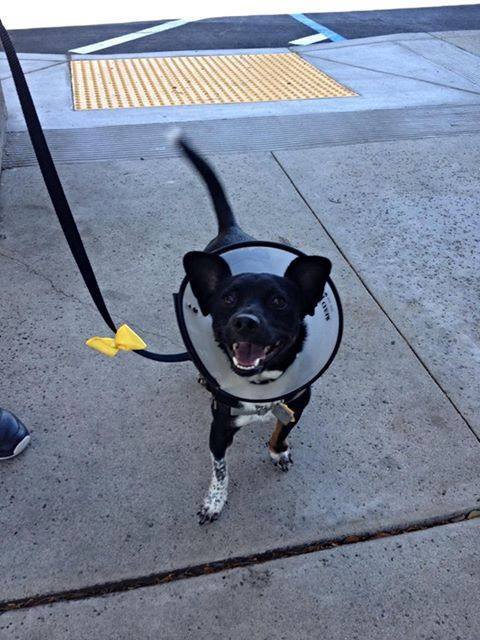
Photo courtesy of The Yellow Dog Project via Facebook

Photo courtesy of The Yellow Dog Project via Facebook

I personally like the use of leashes which not only are yellow, but have words to indicate the dog’s status:
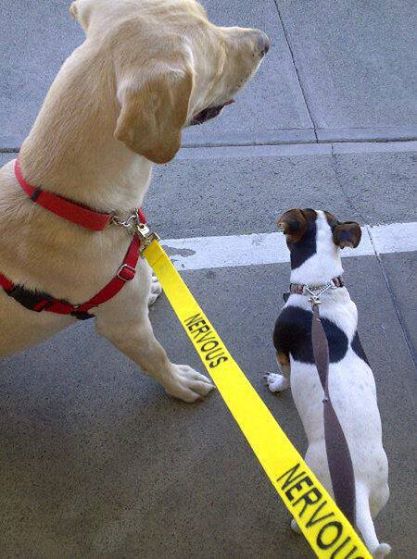
Photo courtesy of The Yellow Dog Project via Facebook

Photo courtesy of The Yellow Dog Project via Facebook

Dogs wearing a yellow ribbon are not necessarily aggressive.  Many have fear issues which could be caused by pain from injuries, advancing arthritis, or surgery.  Others may be a rescue dog who has behavioral problems associated with a traumatic history.  Some dogs will be undergoing training for their behaviors, but haven’t passed their tests yet.

In my practice, I am working with some dogs who are reactive in public and would benefit from space.  I’m very happy to recommend to their owners that they tie a yellow ribbon to their dog’s leash to help indicate that their dog is special.

The Yellow Dog Project website contains links to country-specific websites that provide resources such as contact details for trainers who use positive reinforcement techniques.  The Yellow Dog Project is also on Facebook.

Kathleen Crisley, specialist in dog massage, rehabilitation and nutrition/food therapy, Canine Catering Ltd, Christchurch, New Zealand
 

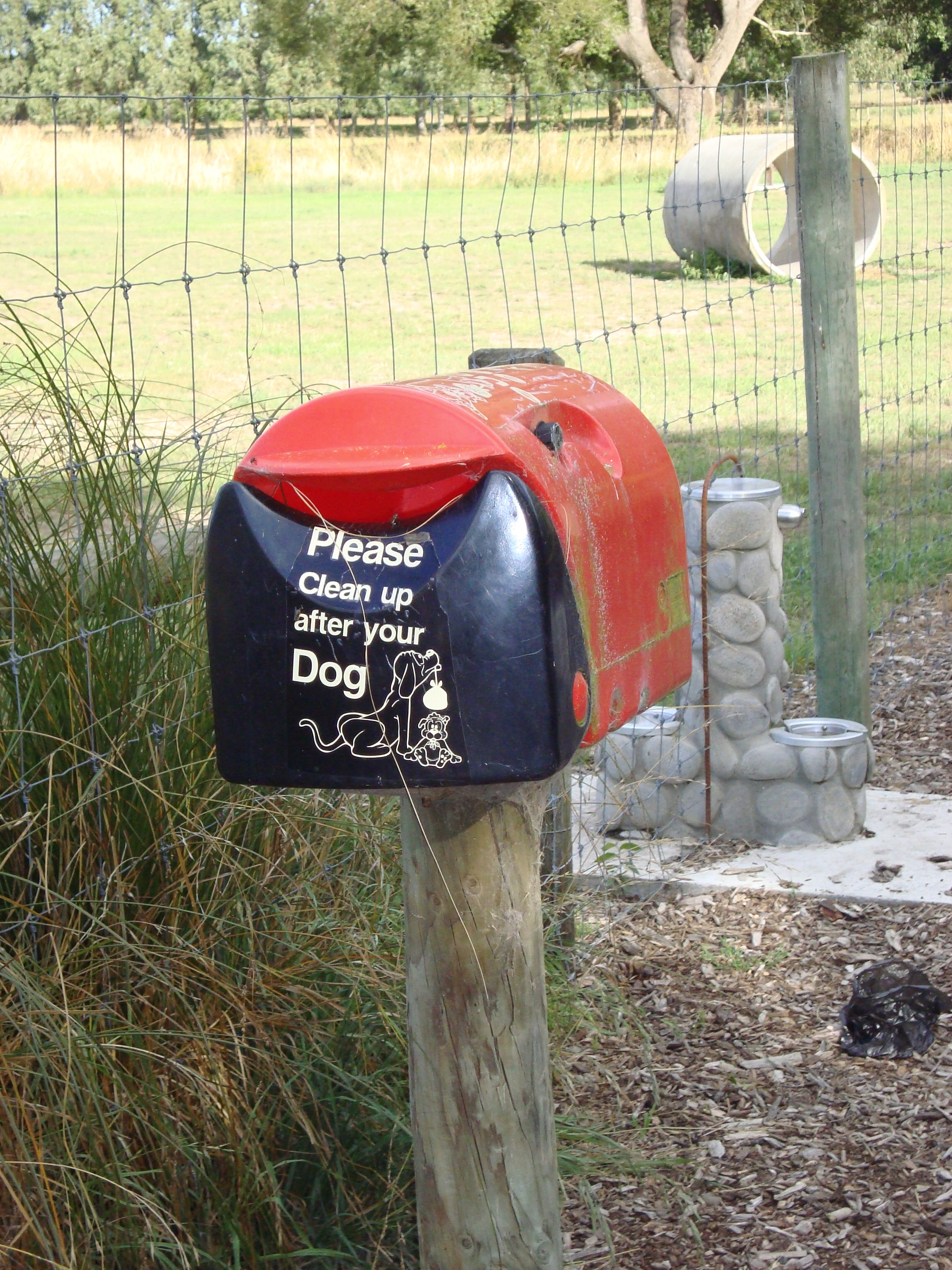
Picking up is important

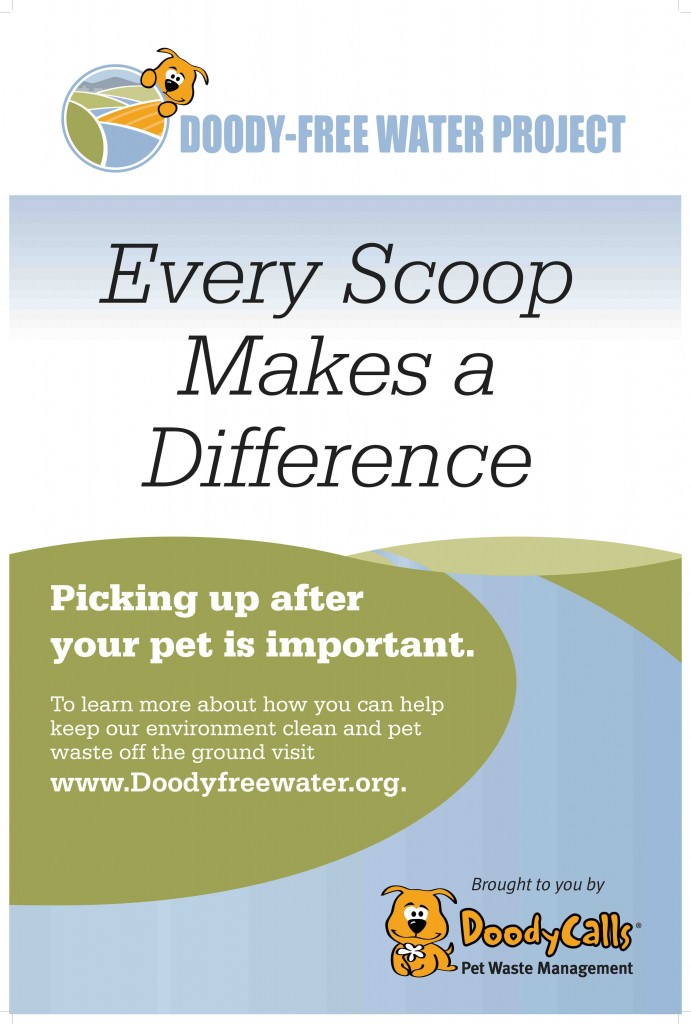
It’s National Scoop the Poop week in the USA.

DoodyFreeWater-poster-24x36-691x1024

In 1991, the EPA declared dog poo a non-point source pollutant.  Other non-point sources include herbicides, oil and chemicals (including those used for production agriculture, or in your own back yard).

(Is it any wonder why people are so concerned in New Zealand about cow urine and dung’s impacts on the environment?  A single cow excretes lots more waste than a single dog!)

To get into the spirit of things, the DoodyFree Water Project is giving away 250,000 pet waste bags to dog parks and other green spaces.  You can apply through their website by explaining how a bag donation will impact on your community.  You can also read about DoodyFree projects in your state.

The DoodyFree Water Project is sponsored by waste management company DoodyCalls.

Read my other posts about responsible dog ownership and scooping the poop:

The scoop on poop

The public relations nightmare of unscooped poop

The 5 types of dog walker

Kathleen Crisley, specialist in dog massage, rehabilitation and nutrition/food therapy, Canine Catering Ltd, Christchurch, New Zealand


Dogs benefit children with autism

A University of Missouri researcher has studied dog ownership decisions in families of children with autism and found that parents report a range of benefits of dog ownership including companionship, stress relief and opportunities for their children to learn responsibility.

Photo credit: Noël Zia Lee, Wikimedia Commons

Photo credit: Noël Zia Lee, Wikimedia Commons

‘Children with autism spectrum disorders often struggle with interacting with others, which can make it difficult for them to form friendships,’ said Gretchen Carlisle, the study’s author. ‘Children with autism may especially benefit from interacting with dogs, which can provide unconditional, nonjudgmental love and companionship to the children.’

Carlisle interviewed 70 parents of children with autism.  Nearly two-thirds of the parents in the study owned dogs, and of those parents, 94 percent reported their children with autism were bonded to their dogs. Even in families without dogs, 70 percent of parents said their children with autism liked dogs.

‘Bringing a dog into any family is a big step, but for families of children with autism, getting a dog should be a decision that’s taken very seriously.  If a child with autism is sensitive to loud noises, choosing a dog that is likely to bark will not provide the best match for the child and the family. If the child has touch sensitivities, perhaps a dog with a softer coat, such as a poodle, would be better than a dog with a wiry or rough coat, such as a terrier.’

The study, “Pet Dog Ownership Decisions for Parents of Children With Autism Spectrum Disorder,” was published in the Journal of Pediatric Nursing earlier this year.

Source:  University of Missouri media release

For more about the benefits of dogs for people with autism, read my post Dogs are a ‘social lubricant’ in helping people with autism

The 5 types of dog walker

A new study in the International Journal of Environment and Waste Management discusses the environmental, health and safety issues of dog walking and, in particular, scooping the poop.

Please Clean UpChristopher Lowe of the University of Central Lancashire in Preston (UK) and colleagues hoped to determine what factors influence dog walker behaviour and how those who do not do the right thing might be persuaded to take charge of their dog mess.

The team suggests that there are five types of dog walker from the most to the least socially and environmentally responsible:

  • Proud to pick up – happy to be seen carrying dog waste, will pick up in all locations and take it home if no bins are available
  • It is the right thing to do – will pick up in public places but will seek to dispose of the waste as soon as it is practical; often embarrassed to be seen carrying bagged waste
  • I have done my job – if there is no bin available will leave the bagged waste to be dealt with by someone else
  • Only if I have to – will only pick up in the presence of other people – likely to discard when no one is looking
  • Disengaged – will not pick up in any situation even if they are aware of the environmental consequences of their actions

Dog faeces are not only as unpleasant as any animal waste, they can also carry parasitic diseases that have health impacts on people and animals that come into contact with them. For instance, they might transmit toxocariasis, via the larvae (immature worms) of the dog roundworm (Toxocara canis), which can cause blindness, asthma and neurological problems in those affected. Dog faeces from animals that eat raw meat and bones are also suspected of causing neosporosis in cattle. The researchers also point out that the presence of dog faeces in country parks, walks and other recreational areas can deter visitors and so have a local economic impact in those areas.

The team’s final thoughts:  The issue of getting dog walkers to do the right thing is both complex and emotive….more research is needed.

Source:  AlphaGalileo media statement

Grounds for dismissal?

Royston Grimstead, owner of an Aston Martin and a Border Collie cross named Luce, came home last week to find that she had chewed the wheel arch of the £80,000 car.

photo by SWNS

photo by SWNS

Some people found this story funny, with Grimstead saying that he felt the dog acted out of spite when she heard that he wanted to re-home her.  He then reported that the had re-homed Luce without telling her new owners about the destructive chewing incident (although with the coverage this story had in worldwide media, they probably have heard by now).

In my opinion, dogs don’t act out of spite.  They do act out of boredom and Border Collies are particularly known for their high intelligence and need of a job (plus other enrichment activities).  Luce was likely bored and found the texture and shine of the fibreglass appealing.

photo by SWNS

Luce, photo by SWNS

I don’t agree with the media coverage of this story for two reasons:

  • It reinforces the myth that dogs act from spite
  • It spreads the idea that is okay to give away a dog when you don’t want to work with them on behavioural issues

What do you think?

Who’s a good girl..and other things we’d like to hear

Have you ever considered that the things you say to your dog are a reflection of what you would like to hear?  Food for thought…

Is Your Veterinarian Being Honest With You? | Video – ABC News

One of the things I try to do through this blog and my column in NZ Dog World magazine is to educate dog owners.  This item, from ABC News in the United States, gives you some food for thought.

The key messages are:

1) Be an educated dog owner about health care

2) Ask knowledgeable questions about recommended procedures (including vaccinations)

3) Understand that some practices market procedures (up-selling) to increase sales

And the subtle one for me is really to develop a working relationship with your vet.  I believe that most vets are ethical and are willing to have an intelligent conversation with you.  But, it’s up to you to be the steward of your dog’s care.  You are the one who says ‘yes’ or ‘no’ to all treatments given to your dog.

Is Your Veterinarian Being Honest With You? | Video – ABC News.

Happy anniversary…

My promise to you

Daisy and I are celebrating our 10th anniversary together this weekend.  This photo seemed appropriate!

This is my last will and testament…

If you love your dog, you should consider what would happen if you died.  Who would care for them?  One way of dealing with this issue is to have a pet trust.

To establish a pet trust you need to:

  • Nominate a trustee
  • Designate a caregiver (it would be best to consult this person in advance and make sure they are happy with the responsibility)
  • Set aside a nominated amount of funding for the trust
  • Clearly state what standard of care your dog should receive
  • Establish the trust’s duration (a certain length of time, likely to cover the rest of your dog’s natural life)
  • Designate a beneficiary who will receive any remaining funds once your dog passes
  • Name your dog(s) to be covered by the trust

Here are some more notable bequests to dogs:

Leona Helmsley (The Queen of Mean) set up a pet trust for her Maltese, Trouble.  It was a whopping $12 million.  After the will was contested, the dog’s trust was reduced by $10 million.

Leona Helmsley with her dog, Trouble

Leona Helmsley with her dog, Trouble

In 2010, socialite Gail Posner left a home and a $3 million trust fund to her three dogs.   These dogs were very pampered and were said to have been given weekly spa appointments, traveling to those appointments in a gold Cadillac. Conchita, a Chihuahua, April Maria, a Maltese, and Lucia, a Yorkshire Terrier were the beneficiaries.

Before both of these ladies made their bequests, there was German Countess Carlotta Liebenstein.  She left approximately £43 million to her pet dog Gunther III when she died in 1991.  Gunther III and his son, Gunther IV,  enjoyed the services of a personal maid, chauffeur and a pool.

In 2004, after 10 years of contention, the bank that served as executor for tobacco heiress Doris Duke’s estate agreed to compensate the caretakers of her dogs.  Although Duke had made provision for them in her will, the will was contested for a number of reasons.  The settlement involved over $100,000 to pay two of Duke’s former servants who were responsible for feeding, medicating and cleaning up after the dogs.  Two of the dogs died over the 10 years of fighting.  Only Robert, an old shepherd cross remained.

Kathleen Crisley, specialist in dog massage, rehabilitation and nutrition/food therapy, The Balanced Dog, Christchurch, New Zealand

Picking up the scent on the road to bliss

As a woman with a long history of enjoying life with canine company, I found this article, by Tatjana Soli, particularly good.

What do you think?


