Category Archives: Dogs

Norman the Scooter Dog

Norman holds the Guinness World Record for the fastest dog on a scooter.  Norman set his record, covering 30 metres in just 20 seconds, at a charity event in Georgia last July.

Norman is a French Sheepdog and he has his own website and Facebook page.

Here’s Norman setting the record (just in case you missed it):

No correlation between breed and aggression

Researchers from the University of Bristol’s School of Veterinary Sciences have investigated the occurrence of dog aggression towards people with a survey of UK dog owners.

The 4,000 responses revealed:

  • aggression towards unfamiliar people was reported more commonly by owners than aggression to family members
  • 7 per cent of owners responded that their dog barked, lunged, growled or actually bit when people came to the house
  • 5 per cent of owners said that these things happened when out on walks
  • 3 per cent of owners reported aggression towards family members

Dog bearing teeth

The study highlighted that the majority of dogs showing aggression do so in just one type of situation. This indicates that the tendency to categorise dogs as either generally ‘safe’ or ‘vicious’ is a misconception, and that most dogs show aggression as a learnt response to particular situations.  (A lot of trainers working in animal shelters probably already knew this.)

The research also highlighted that although general characteristics, such as breed type, are significant risk factors across large populations they explain only a small amount of the overall difference between aggressive and non-aggressive dogs.   Therefore, it is not appropriate to evaluate the risk of aggressive behaviour in an individual dog using characteristics such as breed type.

That’s another black mark for supporters of breed specific legislation!

The results of this research have been published in the journal of Applied Animal Behaviour Science.

Source:  University of Bristol media release

Doing the dog paddle

If you have ever watched your dog swim, you’ve probably noticed that intense look of concentration on their face.  Research has confirmed that swimming doesn’t come as naturally as, say,  walking, running or trotting on land.

Photo by the Society for Integrative and Comparative Biology

Photo by the Society for Integrative and Comparative Biology

Dr. Frank Fish, a professor of biology at West Chester University, set out with his colleagues to understand how real dogs perform the dog paddle.

Dr Fish found a large horse rehabilitation pool for filming eight dogs of six different breeds during swimming.  Dr Fish’s own dog was one of the study subjects.

The team analyzed the videos and found that the dogs were swimming with a gait that was similar to a familiar trot on land. When a dog trots, moving at a pace more brisk than a walk, diagonal pairs of legs move together. In swimming, the dog’s legs move in a similar fashion, but even faster than a trot, and the legs move beyond the range of motion for a trot.  (This is one reason why I recommend swimming for many – but not all – of my massage and rehab customers.)

Swimming dogs are, essentially, using a basic movement but with some modification. Also, while the movements that make up terrestrial gaits like trotting can vary from one dog breed to another, the dog paddle gait showed very little variation among the different breeds.

Dr Fish says that dogs can be used as a model for precursors to early swimming mammals.   He hopes to unravel the steps in evolution that allowed four-legged terrestrial animals to become swimming mammals like the dolphin.

In the meantime, get out there and let your dog swim.   For most dogs, it’s great exercise!

Daisy concentrates during her swim at the Dog Swim Spa

Daisy concentrates during her swim at the Dog Swim Spa

Want to know more about physical rehabilitation and whether swimming is right for your dog?  Get in touch with me by completing the information below.

Kathleen Crisley, specialist in dog massage, rehabilitation and nutrition, Canine Catering Ltd, Christchurch, New Zealand

← Back

Thank you for your response. ✨

Source:  Society for Integrative and Comparative Biology media release

Image

Wordless Wednesday, part 17

Mr Ted smiling with cake & candles

K9 Flight School

Air Hollywood

Assistance dogs and small dogs that are allowed to fly in aircraft cabins are now supported with a training program specifically for them!

The training is provided by Air Hollywood, a studio where the television show Lost was filmed.  The K9 Flight School prepares people and pets to travel confidently by simulating a real aviation environment.  During the training, dogs are exposed to:

  • airport checkin
  • security screening
  • boarding
  • turbulence
  • landing
  • disembarking (no pun intended)

The one-day course costs $349.   Will your dog become a frequent flyer?

We’re heading to London! (But how to take the dog?)

When journalist Danny Hakim was transferred from upstate New York to London, the most important issue was how to get Harley, the family’s Golden Retriever, there.

Photo by Luke Wolagiewicz for the New York Times

I hope you enjoy this story as much as I did.  Read it here.

How did your family cope with relocating with dogs?  Get in touch.

Harness fit in guide dogs

A research team at the University of Veterinary Medicine in Vienna (Vetmeduni Vienna) have studied the forces that guide dogs are exposed to during their work to ascertain what types of harness are most suitable.

Guide dogs walk under constant tension. A well-fitting harness is extremely important for the animals (Photo: Michael Bernkopf/Vetmeduni Vienna)

Guide dogs walk under constant tension. A well-fitting harness is extremely important for the animals (Photo: Michael Bernkopf/Vetmeduni Vienna)

A proper harness that enables good communication between the blind person and the dog is an important factor to support the dog’s well-being, while a poorly fitting harness may result in health problems and impaired communication between dog and owner.

The team members, movement analysts and physiotherapists, examined the distribution of pressure in working guide dogs by placing pressure sensors beneath their harnesses. Eight guide dogs were filmed with a trainer while climbing steps, avoiding obstacles, turning left and right and walking straight ahead. To visualize the movements, the animals, the trainers and the harnesses were equipped with reflective markers. The positions of the markers were recorded by a total of ten cameras.

The results showed that the bottom right of the animals’ chests is particularly stressed. As Barbara Bockstahler explains, “Guide dogs walk under constant tension. They are usually on their owners’ right and in front of them.” The scientists found that the pressure on the right side of a dog’s chest may equate to up to 10 per cent of the animal’s weight. In contrast, the dog’s back experiences far less pressure. “It is important for guide dogs to exercise regularly without a harness to compensate for the lopsided pressure they experience in their work”, says Bockstahler.

Very rigid harnesses enable quick and finely tuned communication between dogs and owners but cause stress to the animals. The more stiffly the harness is anchored to the handle, the more pressure the animal experiences. The most comfortable harness relies on a hook-and-loop connection, which provides the least pressure on the dog, although for long-haired dogs a plastic clip version is favourable.

The researchers want to study guide dogs for a longer period of time to find out whether any of the harnesses are associated with long-term problems in the animals.   They require partners and sponsors for this work.

The results of this study have been published in the Veterinary Journal.

Source:  Vetmeduni Vienna press release

The little gadget that every dog parent should have

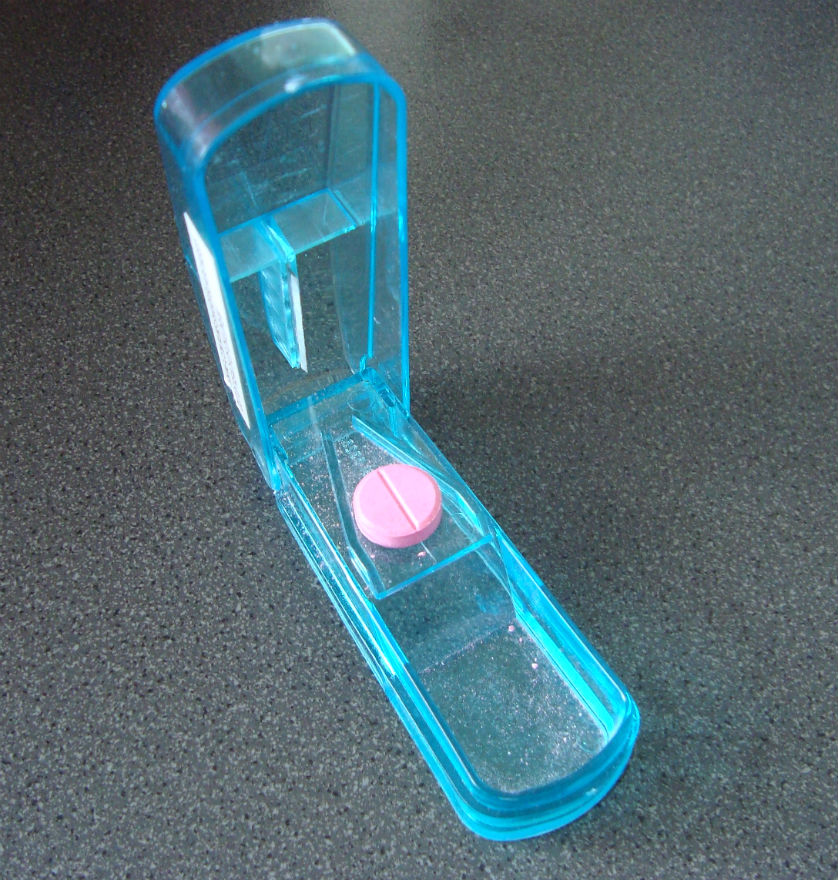
The little gadget that I recommend is a pill splitter. It isn’t high tech and, at most, it will cost you about $2.

But, if your dog needs medication or supplements and the dosage requires a half tablet, then you’ll be glad you bought one!

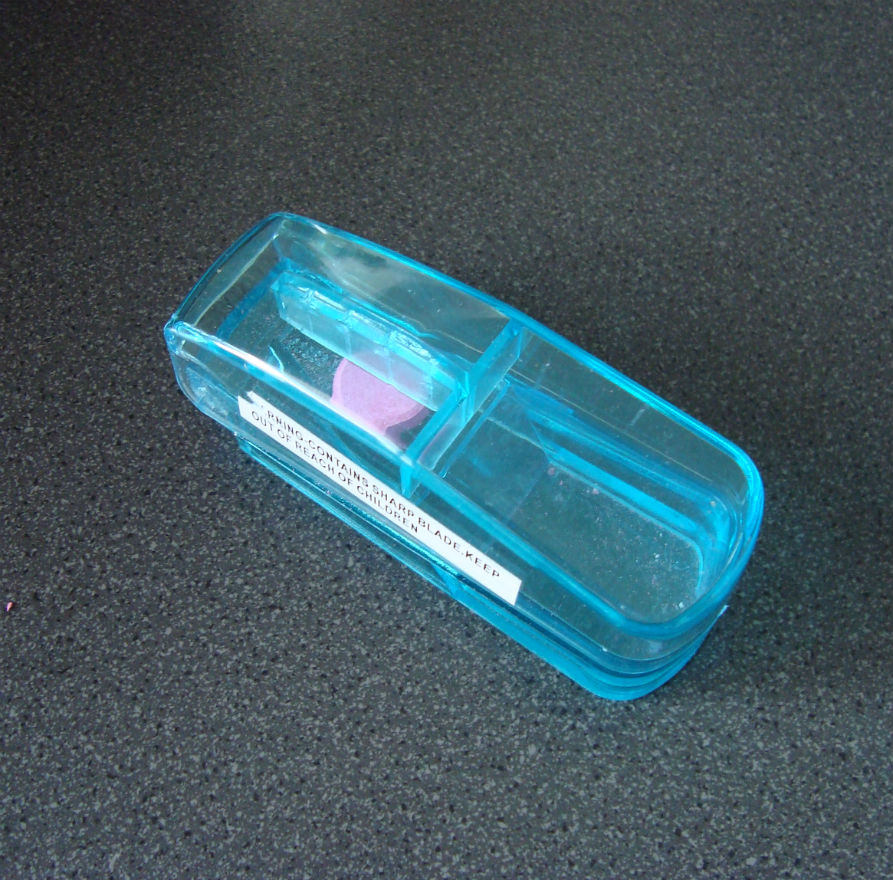
It’s really quite simple:    The lid contains a razor blade (note label warnings on the side about keeping it away from fingers and children)

Place the bill in the base of the splitter

Place the pill in the base of the splitter

Close the lid

Close the lid and push gently

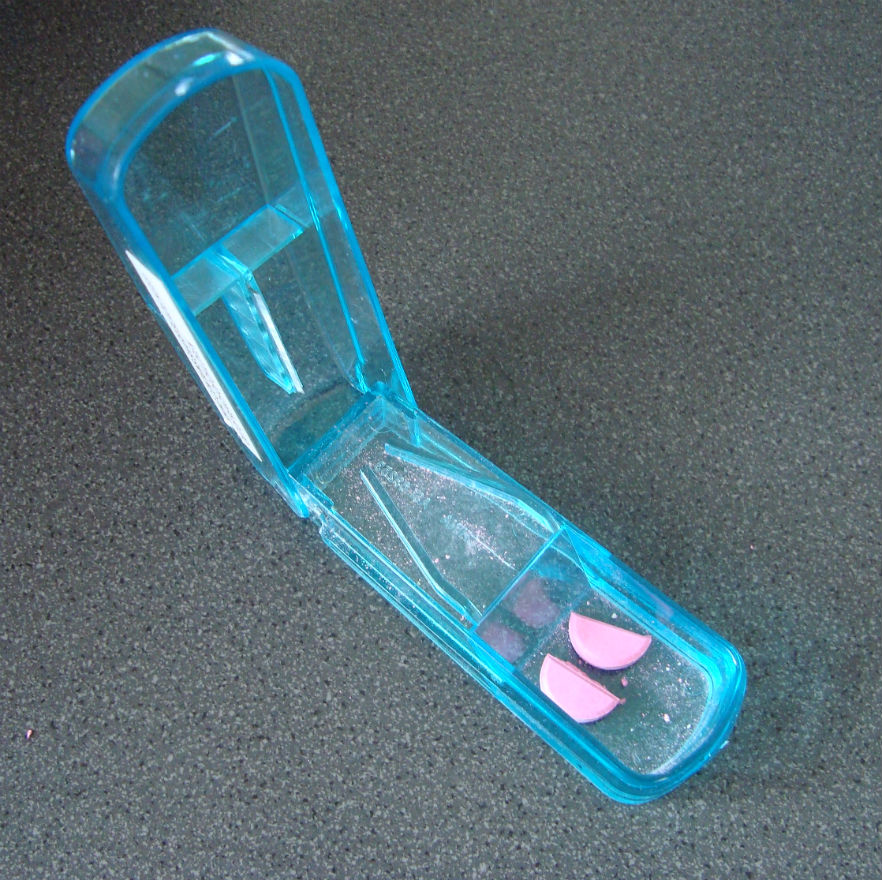
Voila!  The pill is evenly cut in half for a proper dosage

Voila! The pill is evenly cut in half for a proper dosage

Do you have a story about giving your dog medication? If so, get in touch!

Kathleen Crisley, Specialist in dog massage, rehabilitation and nutrition, Canine Catering Ltd, Christchurch, New Zealand

Image

Wordless Wednesday, part 16

OLYMPUS DIGITAL CAMERA

BP_Wordless_wed_Hop_Logo_2014

The Florida sniffing dogs

The state of Florida is employing the use of some special Labradors in their fight for biosecurity.

Bear, Sierra and RJ are trained to follow the scent trails laid down by the invasive Giant African Land Snail.

Photo courtesy of Tampa Bay Times

Photo courtesy of Tampa Bay Times

The snail is a pest in the Miami area, where officials believe they have contained the spread of the pest.

The snails can grow as big as rats and they eat plants as well as stucco and plaster because they need lots of calcium to grow their shells. In large numbers, the snails have been known to cause extensive structural damage to buildings.  (And there’s lots of stucco in Florida!)

Photo by Andrew Derksen, Florida Cooperative Agriculture Pest Survey Program

Photo by Andrew Derksen, Florida Cooperative Agriculture Pest Survey Program

The snails can carry a parasite which is a human health risk because it can cause a form of meningitis but no cases have occurred so far in the United States.

The snails were introduced by a Santeria group which is a religion with a Caribbean and West African background.  The group would use the snails in religious ceremonies.