When this happens at our house, I say ‘There will be no kisses for the rest of the day!’


When this happens at our house, I say ‘There will be no kisses for the rest of the day!’
Los Angeles International Airport (LAX) is known for its frantic pace and passenger volumes. While it can be an exciting place, it can also be stressful.
Dogs are about to make this airport a whole lot better!
PUPS, Pups Unstressing Passengers, was launched last week. This new programme involves trained dogs and their volunteer handlers who will wander throughout the gate and departure areas to visit with passengers. They’ll provide comfort as well as be knowledgeable about the airport.
Each volunteer had a 4-hour classroom session to enable them to be familiar with the airport, the layout of airlines, and operational procedures.
This YouTube video provides an overview of the programme, including the collectible trading cards that will be available portraying each dog’s photo!
Can’t wait to travel through LAX on my next trip! (And maybe, for those of us traveling from New Zealand, San Francisco’s airport will start a similar initiative.)
I caught up with an acquaintance this week who had asked me a while ago for a recommendation of a vet who could give her a second opinion on her dog’s heart condition. Her Chihuahua was on many different medications for heart problems and she was not happy with her health or progress.
So I asked her how things were going…and she told me that she had managed to get her dog off all medications.
The miracle cure? ‘We’ve taken one kilo (2.2 pounds) off of her’
Wow. A Chihuahua is a very small dog and so a kilo of extra weight is definitely classed as obesity. Here’s what an obese Chihuahua looks like:

An obese Chihuahua
It is in your dog’s best interest to manage their weight and keep it in the healthy range. This is usually achieved with a combination of exercise and a proper diet.
Obesity shortens lives!
Posted in dog care
Tagged Chihuahua, heart condition, heart problems, miracle cure, obesity, proper diet, weight loss
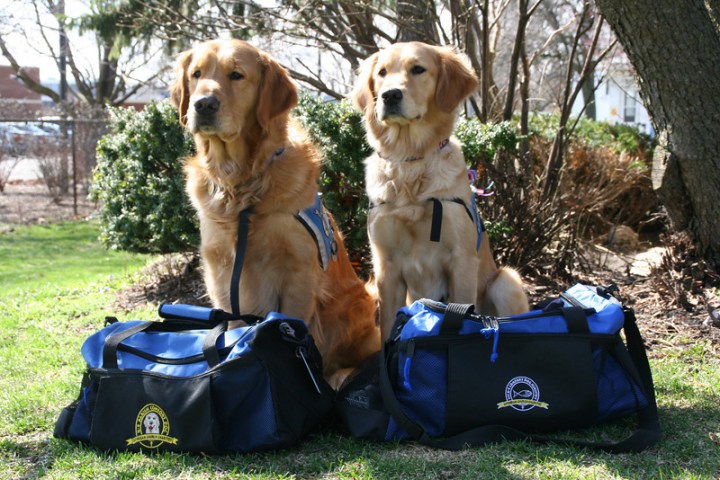
Luther and Ruthie are two comfort dogs provided by Lutheran Church Charities
Golden Retrievers trained as comfort dogs have arrived in Boston to help with the traumatised survivors of the Boston Marathon bombings.
Just as they did in Newtown, Connecticut last year, the dogs and their handlers will visit with survivors and their families to engage them in conversation, to give them a hug and a cuddle and to provide comfort.
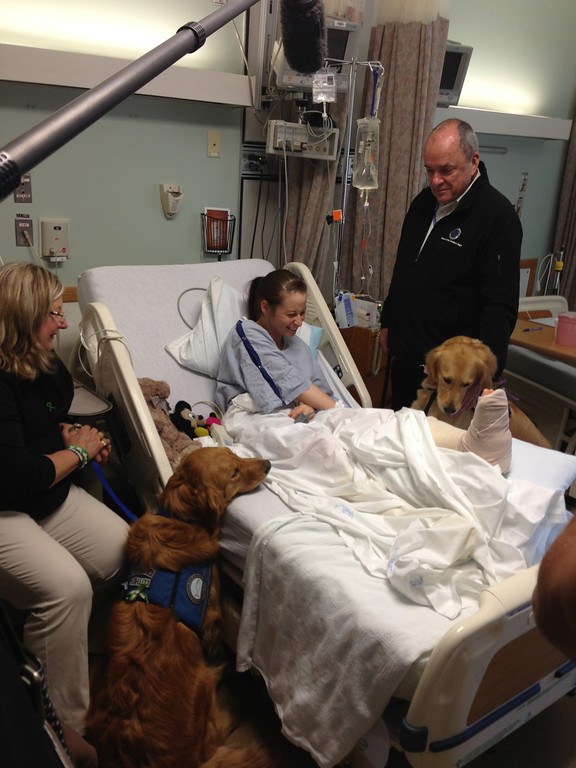
Luther and Ruthie visit with a survivor before surgery for a leg injury (courtesy Lutheran Church Charities)
The comfort dogs show us (again) the special skills that dogs have to provide solace and they also prove that dogs can be socialised and trained to enter public places without causing problems. The volunteers from Lutheran Church Charities give of their time freely.
Thank you!

Posted in Dogs, special dogs and awards
Tagged bombings, Boston, Boston Marathon, golden retrievers, Luther, Lutheran Church Charities, newtown connecticut, Ruthie, volunteer
For all our friends and family in Boston, this Boston Terrier is for you – we are thinking of you and join you in your grief.

I was at a lunch last week and I was talking about brachycephalic dogs. One fellow asked, ‘brachy what?’
Brachycephalic dogs are dogs with a short muzzle and generally flat face. “Brachy” means “shortened” and “cephalic” means “head.”
These features make them very cute. But, this head structure doesn’t leave a lot of room for the nasal passages and palate, which are parts of the anatomy that help breathing.
Most of us who either own a brachycephalic dog or who have seen one at the dog park or elsewhere can identify the ‘brachy snort’ – the sound of a dog that is struggling to breathe.
We all know that dogs help to control their temperature on hot days through panting. Unfortunately, brachycephalic dogs are inefficient panters and so these dogs are more susceptible to heat stroke. They are generally not good outdoor dogs during summer because of this.
Some dogs also suffer from brachycephalic airway syndrome. This syndrome is actually a group of upper airway abnormalities. Brachycephalic syndrome is also known as congenital obstructive upper airway disease and in extreme cases, a veterinary surgeon may do surgery to help correct the abnormalities.
The abnormalities associated with the syndrome include:
Because of their breathing difficulties, a brachycephalic breed must be fit and trim no matter what their life stage. Obesity is a real threat to these dogs.
Since breathing difficulties become worse with strenuous exercise, it’s critically important to balance the dog’s caloric intake with their exercise and look for small opportunities to exercise the dog without causing stress.
|
Common brachycephalic dog breeds include: · English Bulldog · Pug · Shih Tzu · Pekingese · Boston Terrier · Cavalier King Charles Spaniel · Shar Pei · Lhasa Apso |
Andrew Neil, co-host of the BBC’s This Week, has started bringing his Golden Retriever, Miss Molly, to the set. She’s sat on the sofa next to guests on the late-night political commentary programme. She even had a snooze in the lap of guest David Starkey.

Miss Molly naps in David Starkey’s lap (photo courtesy of the BBC)
Taking Miss Molly to the set opens up a whole new category of dog-friendly workplaces and it’s great to see the dog welcomed onto a televised show. In my opinion, it helps to create awareness of dog-friendly workplaces.

Photo courtesy of the BBC
Neil has suggested that Miss Molly might become a bit of a fixture on the show, although not a permanent one. “We probably broke every health and safety rule in the book but she is very well-behaved.”

Miss Molly roams around the set as guests are interviewed (photo courtesy of the BBC)
Source: The Independent
Posted in dog-friendly workplaces
Tagged Andrew Neil, BBC, David Starkey, Golden Retriever, Miss Molly, political affairs, politics, The Independent







 DoggyMom.com