Category Archives: research

DNA influences face shape

A study of dog DNA has revealed a genetic mutation linked to flat face shapes such as those seen in pugs and bulldogs.

The research reveals new insights into the genes that underpin skull formation in people and animals.  Scientists say their findings also shed light on the causes of birth defects that affect babies’ head development in the womb.

Researchers at the University of Edinburgh’s Roslin Institute analysed DNA samples from 374 pet dogs of various pedigree and mixed breeds. The dogs were being treated at the Royal (Dick) School of Veterinary Studies.

All of the animals underwent body scans as part of their care, producing detailed 3-dimensional images of the dogs’ heads.  These high-resolution images — called CT scans — enabled the researchers to take precise measurements of the shape of the dog’s skull.

By comparing the dogs’ genetic information with measurements of their skulls, the team were able to pinpoint DNA variations that are associated with different head shapes.

One variation — found to disrupt the activity of a gene called SMOC2 — was strongly linked to the length of the dog’s face. Animals with the mutation had significantly flatter faces, a condition called brachycephaly.

Babies are sometimes born with brachycephaly too, though little is known about its causes. Scientists say screening children for changes in the SMOC2 gene could help to diagnose the condition.

Lead researcher Dr Jeffrey Schoenebeck, of the University’s Roslin Institute, said: “Our results shed light on the molecular nature of this type of skull form that is so common and popular among dogs.”

Source:  University of Edinburgh news

Improving the lives of kids with disabilities – one family dog at a time

The family dog could serve as a partner and ally in efforts to help children with disabilities incorporate more physical activity into their daily lives, a new study from Oregon State University indicates.

In a case study of one 10-year-old boy with cerebral palsy and his family’s dog, researchers found the intervention program led to a wide range of improvements for the child, including physical activity as well as motor skills, quality of life and human-animal interactions.

“These initial findings indicate that we can improve the quality of life for children with disabilities, and we can get them to be more active,” said Megan MacDonald, an assistant professor in OSU’s College of Public Health and Human Sciences and corresponding author on the study. “And in this case, both are happening simultaneously, which is fantastic.”

CP-kid-and-dog-2-e1402346844838

A boy with cerebral palsy and a therapy dog (not the dog in this study) Photo courtesy of: http://www.michigancerebralpalsyattorneys.com

The researchers detailed the child’s experience in the adapted physical activity intervention program in a case study just published in the journal Animals.

Children with physical disabilities such as cerebral palsy spend significantly less time participating in physical activity compared to their peers and are considered a health disparity group, meaning they generally face more health concerns than their peers.

Researchers designed an adapted physical activity, animal-assisted intervention where the family dog would serve as a partner with the child in physical activities designed to help improve overall physical activity, motor skills and quality of life. The family dog is a good choice for this type of intervention because the animal is already known to the child and there is an existing relationship – and both the dog and the child will benefit from the activities, MacDonald said.

Researchers took initial assessments of the child’s daily physical activity, motor skills and quality of life before starting the eight-week intervention. A veterinarian examined the dog’s fitness for participation and the human-animal interaction between the dog, a year-old Pomeranian, and the child was also assessed.

Then the pair began the eight-week intervention, which included a supervised physical activity program once a week for 60 minutes and participation in activities such as brushing the dog with each hand; playing fetch and alternating hands; balancing on a wobble board; and marching on a balancing disc.

“The dog would also balance on the wobble board, so it became a challenge for the child – if the dog can do it, I can, too,” MacDonald said. “It was so cool to see the relationship between the child and the dog evolve over time. They develop a partnership and the activities become more fun and challenging for the child. It becomes, in part, about the dog and the responsibility of taking care of it.”

The dog and the child also had “homework,” which included brushing the dog, playing fetch and going on daily walks. The child wore an accelerometer to measure physical activity levels at home.

At the conclusion of the intervention, researchers re-assessed and found that the child’s quality of life had increased significantly in several areas, including emotional, social and physical health, as assessed by the child as well as the parent. In addition, the child’s sedentary behavior decreased and time spent on moderate to vigorous activity increased dramatically.

“The findings so far are very encouraging,” MacDonald said. “There’s a chance down the road we could be encouraging families to adopt a dog for the public health benefits. How cool would that be?” 

The researchers also found that the relationship between the dog and the child improved over the course of the therapy as they worked together on various tasks. The dog’s prosocial, or positive, behavior toward the child is a sign of wellbeing for both members of the team, said Udell, who is director of the Human-Animal Interaction Lab at OSU.

“A closer child-dog bond increases the likelihood of lasting emotional benefits and may also facilitate long-term joint activity at home, such as taking walks, simply because it is enjoyable for all involved,” she said.

This study is one of the first to evaluate how a dog’s behavior and wellbeing are affected by their participation in animal-assisted therapy, Udell noted. From an animal welfare standpoint, it is promising that the dog’s behavior and performance on cognitive and physical tasks improved alongside the child’s.

Though the case study features only one child, the research team recruited several families with children with disabilities and their dogs to participate in the larger project, which was designed in part to test the design and methodology of the experiment and determine if it could be implemented on a larger scale.

Based on the initial results, researchers hope to pursue additional studies involving children with disabilities and their family dogs, if funding can be secured. They would like to examine other benefits such a pairing might have, including the sense of responsibility the child appears to gain during the course of the intervention.

“We’re also learning a lot from our child participants,” MacDonald said. “They’re teaching us stuff about friendship with the animal and the responsibility of taking care of a pet, which allows us to ask more research questions about the influence of a pet on the child and their family.” 

Source:  Oregon State University media statement

Pet dogs help kids feel less stressed

Pet dogs provide valuable social support for kids when they’re stressed, according to a study by researchers from the University of Florida, who were among the first to document stress-buffering effects of pets for children.

boy-and-dog

Darlene Kertes and colleagues tested the commonly held belief that pet dogs provide social support for kids using a randomized controlled study – the gold standard in research.

“Many people think pet dogs are great for kids but scientists aren’t sure if that’s true or how it happens,” Kertes said. Kertes reasoned that one way this might occur is by helping children cope with stress. “How we learn to deal with stress as children has lifelong consequences for how we cope with stress as adults.” 

For their study, recently published in the journal Social Development, the researchers recruited approximately 100 pet-owning families, who came to their university laboratory with their dogs. To tap children’s stress, the children completed a public speaking task and mental arithmetic task, which are known to evoke feelings of stress and raise the stress hormone cortisol, and simulates real-life stress in children’s lives. The children were randomly assigned to experience the stressor with their dog present for social support, with their parent present, or with no social support.

“Our research shows that having a pet dog present when a child is undergoing a stressful experience lowers how much children feel stressed out,” Kertes said . “Children who had their pet dog with them reported feeling less stressed compared to having a parent for social support or having no social support.”

Samples of saliva was also collected before and after the stressor to check children’s cortisol levels, a biological marker of the body’s stress response. Results showed that for kids who underwent the stressful experience with their pet dogs, children’s cortisol level varied depending on the nature of the interaction of children and their pets.

“Children who actively solicited their dogs to come and be pet or stroked had lower cortisol levels compared to children who engaged their dogs less,” said Kertes, an assistant professor in the psychology department of UF’s College of Liberal Arts and Sciences. “When dogs hovered around or approached children on their own, however, children’s cortisol tended to be higher.”

The children in the study were between 7 to 12 years old.

“Middle childhood is a time when children’s social support figures are expanding beyond their parents, but their emotional and biological capacities to deal with stress are still maturing,” Kertes explained. “Because we know that learning to deal with stress in childhood has lifelong consequences for emotional health and well-being, we need to better understand what works to buffer those stress responses early in life.”

Source:  University of Florida News

How Dogs Interact with Others Plays a Role in Decision-Making

Researchers at Canisius College found that the relationship between two dogs living in the same household may impact how much influence they have on each other’s behavior.

Dogs who showed little to no aggression towards their housemates were more likely to automatically follow each other than dogs who viewed their canine housemates as rivals. The study results are reported in the latest issue of Animal Cognition.

Familiar dogs

Dogs were tested in their own homes because a laboratory setting would have introduced other influences into how the dogs reacted

To conduct this study, Christy Hoffman, Ph.D., and Malini Suchak, Ph.D., assistant professors of Animal Behavior, Ecology, and Conservation, traveled to 37 multi-dog households to test the dogs in their own homes. This was an unusual approach, since most studies test dogs in the laboratory and often pair them with other dogs they don’t know. “We really wanted to look at the impact of the relationship between the dogs on their behavior, and doing that in a setting natural to the dogs, with dogs they already know, is really important,” Suchak says.

To classify how competitive household dogs were with each other, the owners were asked to fill out a survey known as the Canine Behavioral Assessment and Research Questionnaire (C-BARQ).

Dogs that were low in rivalry never or rarely displayed aggressive behavior toward the other dog. Dogs that were high in rivalry displayed some degree of aggression around valuable resources, suggesting they have a more competitive nature.

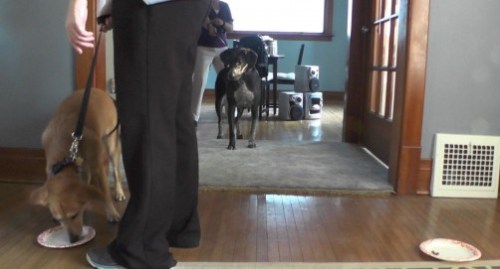
After their owners completed the C-BARQ, the dogs participated in a simple task. A research assistant placed two plates containing food in front of both dogs. One dog was allowed to approach the plates and eat the food from one plate before being walked out of the room. At that point, the second dog was allowed to make a choice. If the second dog followed the first dog, he arrived at an empty plate. If he didn’t follow the first dog, he went straight to the plate that still contained food.

Dogs that were low in rivalry were more likely to follow the first dog and frequently ended up at the empty plate. What surprised the researchers was that low rivalry dogs only blindly followed the demonstrator when allowed to make their choice immediately. “Low and high rivalry dogs only differed in the choices they made when there was no delay,” Hoffman says. “When they had to wait 5 seconds before making their choice, all dogs tended to go directly to the full plate.” 

Suchak adds, “This suggests that the low rivalry dogs may have been automatically following their housemates. When we forced the dogs to wait, it was as if the low rivalry dogs actually took the time to think about the situation, and they went straight for the food.”

The researchers also tested the dogs in a condition where a human removed the food from one plate before the dog made a choice. Interestingly, low rivalry dogs were more likely to follow the human demonstrator when there was no delay, a finding that paralleled what happened with dog demonstrators. Hoffman suggests this may have to do with the personality of low rivalry dogs, “Since the tendency of the low rivalry dogs to follow was seen when the demonstrator was both another dog and a human, competitiveness may be a characteristic of the individual that extends beyond their relationship with other dogs.” 

This means that if owners have a high rivalry dog “that dog may be more likely to think for himself, and less likely to blindly follow, than a dog that is less competitive,” says Hoffman. “On the whole, our findings show there is variation in the ways dogs make decisions and that how dogs interact with others plays a big role in how they respond under conditions that require quick thinking.”

Source:  Newswise

The evolution of dog breeds

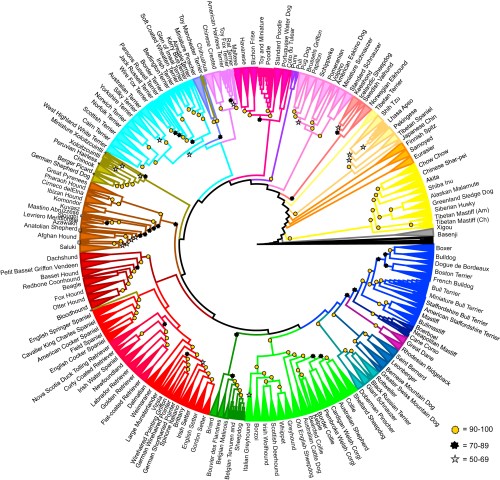
When people migrate, Canis familiaris travels with them. Piecing together the details of those migrations has proved difficult because the clues are scattered across the genomes of hundreds of dog breeds. However, in a study published April 25, 2017 in Cell Reports, researchers have used gene sequences from 161 modern breeds to assemble an evolutionary tree of dogs.

The map of dog breeds, which is the largest to date, unearths new evidence that dogs traveled with humans across the Bering land bridge, and will likely help researchers identify disease-causing genes in both dogs and humans.

Cladogram of 161 Domestic Dog Breeds

Cladogram of 161 Domestic Dog Breeds

The study highlights how the oldest dog breeds evolved or were bred to fill certain roles. “First, there was selection for a type, like herders or pointers, and then there was admixture to get certain physical traits,” says study co-author and dog geneticist Heidi Parker of the National Institutes of Health (NIH). “I think that understanding that types go back a lot longer than breeds or just physical appearances do is something to really think about.”

Most popular breeds in America are of European descent, but in the study, researchers found evidence that some breeds from Central and South America — such as the Peruvian Hairless Dog and the Xoloitzcuintli– are likely descended from the “New World Dog,” an ancient canine sub-species that migrated across the Bering Strait with the ancestors of Native Americans. Scientists have previously reported archaeological evidence that the New World Dog existed, but this study marks the first living evidence of them in modern breeds.

“What we noticed is that there are groups of American dogs that separated somewhat from the European breeds,” says study co-author Heidi Parker of the NIH. “We’ve been looking for some kind of signature of the New World Dog, and these dogs have New World Dogs hidden in their genome.” It’s unclear precisely which genes in modern hairless dogs are from Europe and which are from their New World ancestors, but the researchers hope to explore that in future studies.

Other results were more expected. For instance, many breeds of “gun dogs,” such as Golden Retrievers and Irish Setters, can trace their origins to Victorian England, when new technologies, such as guns, opened up new roles on hunting expeditions. Those dogs clustered closely together on the phylogenetic tree, as did the spaniel breeds. Breeds from the Middle East, such as the Saluki, and from Asia, such as Chow Chows and Akitas, seem to have diverged well before the “Victorian Explosion” in Europe and the United States.

Herding breeds, though largely European in origin, proved to be surprisingly diverse. “When we were looking at herding breeds, we saw much more diversity, where there was a particular group of herding breeds that seemed to come out of the United Kingdom, a particular group that came out of northern Europe, and a different group that came out of southern Europe,” says Parker, “which shows herding is not a recent thing. People were using dogs as workers thousands of years ago, not just hundreds of years ago.”

Different herding dogs use very different strategies to bring their flocks to heel, so in some ways, the phylogenetic data confirmed what many dog experts had previously suspected, the researchers noted. “What that also tells us is that herding dogs were developed not from a singular founder but in several different places and probably different times,” says the study’s senior co-author and dog geneticist Elaine Ostrander, also of the NIH.

Ostrander and her colleagues have spent years sequencing dog genomes but can also frequently be found out in the field at dog shows, recruiting dog owners to participate in the study. “If we see a breed that we haven’t had a good sample of to sequence, we definitely make a beeline for that owner,” says Ostrander. “And say, ‘Gosh, we don’t have the sequence of the Otterhound yet, and your dog is a beautiful Otterhound. Wouldn’t you like it to represent your breed in the dog genome sequence database?’ And of course, people are always very flattered to say, “Yes. I want my dog to represent Otterhound-ness.” All of the dog sequences in the study are from dogs whose owners volunteered, Ostrander says. Over half the dog breeds in the world today still have not been sequenced and the researchers intend to keep collecting dog genomes to fill in the gaps.

Understanding dogs’ genetic backstory also has practical applications. Our canine compatriots fall victim to many of the same diseases that humans do — including epilepsy, diabetes, kidney disease, and cancer — but disease prevalence varies widely and predictably between breeds, while it is more difficult to compartmentalize at-risk human populations. “Using all this data, you can follow the migration of disease alleles and predict where they are likely to pop up next, and that’s just so empowering for our field because a dog is such a great model for many human diseases,” says Ostrander. “Every time there’s a disease gene found in dogs it turns out to be important in people, too.”

Source:  ScienceDaily

Full journal article available here

Reducing stress in shelter dogs

Editor’s Note from DoggyMom:  This research endorses the approach used by Best Friends Animal Society at its Kanab, Utah sanctuary which allows behavior-tested dogs to go on ‘sleepovers’ with volunteers and guests.  I have hosted many sleepover dogs in my 3 visits to Kanab (and planning to do it again on my 4th visit).  It is heartening to know that science has backed up the practice – showing that it helps the dogs relieve stress from living in a the kennel environment


“Who’s a good dog? You are, aren’t you? Yes, you’re the best dog that ever was.”

But is he really a good dog? Can you really tell when you’re doing a meet-and-greet in the shelter? Is that how he’s going to be when you take him home? Are you getting Lassie or the Hound of the Baskervilles?

These were the sorts of questions that led to a study done by an Arizona State University researcher.

Lisa Gunter, a doctoral candidate studying behavioral neuroscience at the Canine Science Collaboratory in the Department of Psychology, began the project as a pilot study at Best Friends Animal Sanctuary in Kanab, Utah, the largest no-kill shelter in the country. About 1,600 dogs and cats live there, visited by about 30,000 people per year. It’s a popular vacation destination for pet lovers. People come and take weeklong “volunteer vacations.”

Gunter looked at the sleepover program offered by Best Friends, where visitors can take a dog back to their hotel room for the night.

The question she had was this: Is their behavior on the sleepover predictive?

Shelter dog research

Credit: Photo by Charlie Leight/ASU Lisa Gunter plays with her 11-year-old rescued border collie Sonya outside the Psychology building on ASU’s Tempe campus. Gunter, a doctoral candidate studying behavioral neuroscience at the Canine Science Collaboratory in the Department of Psychology, found that shelter dogs benefit from sleepover programs like the one offered at at Best Friends Animal Sanctuary in Kanab, Utah, the USA’s largest no-kill animal shelter.

“We wanted to see how one night out of the shelter would impact the dogs,” Gunter said. “Is that what someone will see in their house? … That has been a challenge in sheltering.”

Gunter measured levels of cortisol, a diurnal hormone that is a measure of stress. She also took a behavioral snapshot of each dog, asking such questions as: What’s he like on a leash? What’s he like when he sees another dog? What’s he like when you come into his kennel?

“We saw one night out significantly reduced their cortisol,” Gunter said. “When they returned the next day, it was the same. We knew it at least dropped for one night.”

Lowered stress levels could allow the dog to behave more naturally, giving people a better view of the dog’s true personality.

The researchers took cortisol samples at three time points: the dog at the shelter, the dog at the sleepover and the dog back at the shelter.

“We’re trying to get more at the dog’s welfare, how they’re feeling on a larger timescale, not just 10 or 15 minutes,” Gunter said. “When we saw the cortisol had significantly reduced on just one overnight, that was pretty exciting. We didn’t imagine that just one night out would make a difference.”

Anecdotally, people who took a dog home for a sleepover reported that after the dog settled down, it would immediately go for a long sleep.

“Is sleep potentially a component to their welfare?” she said. “Getting good, uninterrupted sleep could benefit them as well. That could be one mechanism by which we’re seeing this reduction in cortisol. The dogs are getting a good night’s sleep. That’s something they can’t get at the shelter because they have a lot of noisy neighbors.”

Gunter has been carrying out the study in collaboration with a researcher at Carroll College in Helena, Montana. They were recently awarded a grant to carry out this study at four shelters across the U.S. Instead of a one-day baseline, they’ll be collecting a two-day sample.

Shelters are constantly looking for ways to get animals into homes.

“For a long time in sheltering it was thought dogs would be more adoptable if you just taught them to sit, if you just taught them to be well-behaved,” Gunter said. “That’s not necessarily the case. That’s not what our lab has found. There are behaviors related to companionship of people in a meet-and-greet setting when the person is getting to know the dog.”

They’ve found two behaviors that people respond to: when the dog lies down next to the person and whether the dog responded to an invitation to play.

“We’re a behavior and cognition lab, so we really try to understand what the animal is experiencing by looking at its behavior,” Gunter said. “Until the time we can have a conversation with them, for now we’re left with observing their behavior. We’re essentially detectives, trying to gather the information to have our best understanding of what the dog is experiencing. It’s the best we can do, without being dogs.”

Source:  Newswise

Pet exposure may reduce allergies and obesity

If you need a reason to become a dog lover, how about their ability to help protect kids from allergies and obesity?

A new University of Alberta study showed that babies from families with pets—70 per cent of which were dogs—showed higher levels of two types of microbes associated with lower risks of allergic disease and obesity.

Puppy licking a baby's face

A dog licking a baby’s face. Credit: © Christin Lola / Fotolia

But don’t rush out to adopt a furry friend just yet.

“There’s definitely a critical window of time when gut immunity and microbes co-develop, and when disruptions to the process result in changes to gut immunity,” said Anita Kozyrskyj, a U of A pediatric epidemiologist and one of the world’s leading researchers on gut microbes—microorganisms or bacteria that live in the digestive tracts of humans and animals.

The latest findings from Kozyrskyj and her team’s work on fecal samples collected from infants registered in the Canadian Healthy Infant Longitudinal Development study build on two decades of research that show children who grow up with dogs have lower rates of asthma.

The theory is that exposure to dirt and bacteria early in life—for example, in a dog’s fur and on its paws—can create early immunity, though researchers aren’t sure whether the effect occurs from bacteria on the furry friends or from human transfer by touching the pets, said Kozyrskyj.

Her team of 12, including study co-author and U of A post-doctoral fellow Hein Min Tun, take the science one step closer to understanding the connection by identifying that exposure to pets in the womb or up to three months after birth increases the abundance of two bacteria, Ruminococcus and Oscillospira, which have been linked with reduced childhood allergies and obesity, respectively.

The abundance of these two bacteria were increased twofold when there was a pet in the house,” said Kozyrskyj, adding that the pet exposure was shown to affect the gut microbiome indirectly—from dog to mother to unborn baby—during pregnancy as well as during the first three months of the baby’s life. In other words, even if the dog had been given away for adoption just before the woman gave birth, the healthy microbiome exchange could still take place.

The study also showed that the immunity-boosting exchange occurred even in three birth scenarios known for reducing immunity, as shown in Kozyrskyj’s previous work: C-section versus vaginal delivery, antibiotics during birth and lack of breastfeeding.

What’s more, Kozyrskyj’s study suggested that the presence of pets in the house reduced the likelihood of the transmission of vaginal GBS (group B Strep) during birth, which causes pneumonia in newborns and is prevented by giving mothers antibiotics during delivery.

It’s far too early to predict how this finding will play out in the future, but Kozyrskyj doesn’t rule out the concept of a “dog in a pill” as a preventive tool for allergies and obesity.

“It’s not far-fetched that the pharmaceutical industry will try to create a supplement of these microbiomes, much like was done with probiotics,” she said.

The study, funded by the Canadian Institutes of Health Research and the Allergy, Genes and Environment Network (AllerGen NCE), was published in the journal Microbiome, along with an editorial in Nature.

Source:  University of Alberta media release

Brain scans of service-dog trainees help sort weaker recruits from the pack

Brain scans of canine candidates to assist people with disabilities can help predict which dogs will fail a rigorous service training program, a study by Emory University finds.

The journal Scientific Reports published the results of the study, involving 43 dogs who underwent service training at Canine Companions for Independence (CCI) in Santa Rosa, California.

Dogs with MRI machine

Some of the service dog trainees that were involved in the study pose with an fMRI scanner. (Photo by Gregory Berns.)

“Data from functional magnetic resonance imaging (fMRI) provided a modest, but significant, improvement in the ability to identify dogs that were poor candidates,” says Emory neuroscientist Gregory Berns, who led the research. “What the brain imaging tells us is not just which dogs are more likely to fail, but why.”

All of the dogs in the study underwent a battery of behavioral tests showing that they had a calm temperament before being selected for training. Despite calm exteriors, however, some of the dogs showed higher activity in the amygdala – an area of the brain associated with excitability. These dogs were more likely to fail the training program.

“The brain scans may be like taking a dog’s mental temperature,” Berns says. “You could think of it as a medical test with a normal range for a service dog. And the heightened neural activity that we see in the amygdala of some dogs may be outside of that range, indicating an abnormal value for a successful service dog.”

The findings are important, he adds, since the cost of training a service dog ranges from $20,000 to $50,000. As many as 70 percent of the animals that start a six-to-nine-month training program have to be released for behavioral reasons.

“There are long waiting lists for service dogs, and the training is lengthy and expensive,” Berns says. “So the goal is to find more accurate ways to eliminate unsuitable dogs earlier in the process.”

The study found that fMRI boosted the ability to identify dogs that would ultimately fail to 67 percent, up from about 47 percent without the use of fMRI.

“This type of approach is not going to be feasible for individual trainers and their dogs because of the expense of fMRI,” Berns says. “It would only be practical for organizations that train large numbers of dogs every year.”

CCI is a non-profit that breeds, raises and trains dogs to assist human partners. Its service dog program, designed for disabled people, provides dogs to do tasks such as turn on lights, pick up dropped keys, open a door and pull a manual wheelchair.

Golden retrievers, Labradors — or crosses between the two — are the usual CCI service dog breeds, due to their generally calm and affable natures. After the puppies are weaned, they are adopted by volunteer puppy raisers for 15 months, before returning to CCI to undergo behavioral tests. Those that pass begin training.

For the Scientific Reports paper, the researchers taught the dogs how to remain still while undergoing an fMRI at the start of the training program.

The Berns’ lab was the first to conduct fMRI experiments on awake, unrestrained dogs, as part of an ongoing project to understand canine cognition and inter-species communication. In an early experiment, dogs were trained to respond to hand signals. One signal meant the dog would receive a food treat, and another signal meant that the dog would not receive one. The caudate region of the brain, associated with rewards in humans, showed activation when the dogs saw the signal for the treat, but not for the non-treat signal.

The researchers adapted this experiment for the current study — the largest yet involving dogs undergoing fMRI. The dogs were taught hand signals for “treat” and “no treat,” but sometimes the signals were given by the dog’s trainer and other times by a stranger.

The results found that dogs with stronger activity in the caudate in response to the treat signal – regardless of who gave the signal – were slightly more likely to successfully complete the service dog training program. However, if a dog had relatively more activity in the amygdala in response to the treat signal – particularly if the signal was given by a stranger – that increased the likelihood that the dog would fail.

“The ideal service dog is one that is highly motivated, but also doesn’t get excessively excited or nervous,” Berns says. “The two neural regions that we focused on – the caudate and the amygdala – seem to distinguish those two traits. Our findings suggest that we may be able to pick up variations in these internal mental states before they get to the level of overt behaviors.”

Berns hopes that the technology may become more refined and have applications for a broader range of working dogs, such as those used to assist the military and police forces.

Source:  Emory University

High meat diets – a NZ study

An independent study from New Zealand has found that a high meat diet is easier for dogs to digest, meaning more nutrients are able to be absorbed, resulting in higher levels of bacteria associated with protein and fat digestion.

The study found:

  • High meat diets are more digestible for dogs
  • More nutrients from a high meat diet are able to be absorbed
  • Dogs on a high meat diet had higher levels of the bacteria associated with protein and fat digestion
  • Dogs on a high meat diet had smaller poo and better fecal health

The research paper ‘Key bacterial families (Clostridiaceae, Erysipelotrichaceae and Bacteroidaceae) are related to the digestion of protein and energy in the dog’ is accessible here.

With Government funding and funding from the NZ Premium Petfood Alliance, which is a collaboration between Bombay Petfoods, K9 Natural and ZiwiPeak, the research is being undertaken at AgResearch and Massey University.

“To date there has been hardly any published research, so this study is a significant contribution to the international animal nutrition field. A lot of diets on the market have been designed to ensure a dog survives, but this research shows that high meat diet is the best to help a dog thrive,” said New Zealand Premium Petfood Alliance spokesperson Neil Hinton.

Another study, about cat diets, is underway.

Source:  Beehive.govt.nz media release and AgResearch media release

Perspectives on dog walking

Rather than there being a one-way flow of power where the human is dominant, the dog walk is where humans and dogs negotiate power within their relationship. This new study highlights a delicate balance between ‘listening’ to what a dog wants and needs from a walk and acting out a human’s own dispositions and interpretations of what is best for themselves, their dog and others within the communal space.

off-lead-dog-walking

The study was led by Dr Thomas Fletcher, Senior Lecturer and Researcher within the Institute for Sport, Physical Activity and Leisure at Leeds Beckett University with Dr Louise Platt, Senior Lecturer at Manchester Metropolitan University.

Twelve people in Northern England, between the ages of 28 and 66 and who walk with dogs, took part in in-depth interviews as part of the research. The aim of the study was to examine how humans share spaces with their animal counterparts, and how walking experiences with animal companions are negotiated.

Respondents were asked to broadly discuss their dog’s personality, what their dogs meant to them and how their relationships with their dogs had developed and been negotiated. Respondents were asked to reflect on what walking meant, how it featured in their lives, how it was experienced and how they attempted to understand the relationship between themselves and their dog.

Dr Fletcher explained: “The study reveals that humans walk their dogs in large part because they feel a deep-rooted emotional bond with them and hold a strong sense of obligation to ensure they stay fit and healthy. Perhaps more interestingly, humans also walk their dogs because they believe their dogs have fun and are able to be more ‘dog-like’ while out on a walk.

“We found that it was whilst out on the walk that many respondents felt their relationship with their animal was most strongly enacted outside the confines of the domestic setting. This sense of humans ceding authority and providing the freedom and space for their dogs to enact their ‘dog-ness’ was important to the respondents.”

With 40% of UK households being home to a domestic pet and 8.5 million dogs living in UK homes (source: Pet Food Manufacturers Association, 2016), the average person walks with their dog for eight hours and 54 minutes a week, covering 36 miles (source: Esure Pet Insurance, 2011). The new research shows that a dog walk is a partnership, involving co-knowing and anticipatory knowledge, all of which is negotiated (and, to a degree, managed) by human walkers.

The study found that dog walkers commonly thought of the walk as something they did for their dog. Each respondent believed that dogs possess their own unique personality, likes and dislikes.

Dr Fletcher said: “In most cases, characteristics of the walk such as timing, length and place, were determined by their dog’s personality and what they, as humans, thought the dogs liked and disliked the most.”

Also important were ideas of caregiving and responsibility, and of walking being good for a dog’s health and wellbeing. Whilst walking patterns varied significantly, there was consensus that around 30 minutes twice a day was acceptable.

Whilst previous research suggests that the dog walk is seen as a human obligation, or even a chore, the new study found that, in most cases, this sense of obligation was actually overshadowed by the respondents’ want to walk, based on a desire to see their dogs having fun.

Dr Fletcher explained: “The walk was seen as an invaluable opportunity for dogs ‘to be dogs’. There was widespread belief that dogs are happiest when out in the open, and it is here that they are able to best demonstrate their ‘dog-ness’. This was important because, despite the respondents acknowledging that their dogs had been domesticated, they also took pleasure from seeing them behave ‘like dogs’.”

One respondent articulated this by saying: “One of the biggest joys for us is when one of us stands at one part of the field and the other; and he just runs. And we’ve managed to time him. He does 30 miles an hour. And he looks like a cheetah, he looks like a wild animal. And it just makes your heart, I mean, I feel a physical change in my body when I watch him run, which has never been created by anything else, really.”

Some respondents discussed modifying their walks as a result of anticipating their companion’s behaviour, which highlighted the tension between human authority and animal submission. For example, one walker generally kept his dog on a lead due to a perception of that breed being ‘poachers’. This walker feared if, let loose, his dog would kill rabbits and other small animals.

Dr Fletcher commented: “The dog’s ability to run free was often curtailed by her ‘other’ instincts and the human interpretation of these. In the case of the respondent highlighted above, whilst his intention was undeniably good, it does raise a number of questions about the ethics of domesticating animals to suit human needs.”

Similarly, respondents tended to frame their commitment to their dogs’ wellbeing and fun in terms of allowing them to behave in certain ways.

Dr Fletcher continued: “In spite of this, respondents did attempt to ‘listen’ to their companions and wanted to please them. They acknowledged and appreciated the ‘beastly’ nature of dogs in needing the freedom to explore and do their own thing independently. However, this ‘listening’ relies on humans imposing their own interpretations onto animals and their actions.”

Whilst dog walking is commonly thought of as a social activity, the researchers found that most of the respondents preferred to walk alone and some actively avoided interacting with other walkers. One noted that a culture of judgement existed in her dog walking community, where people known to walk their dogs less regularly were actively excluded.

Dr Fletcher said: “Respondents acknowledged the problematic nature of human and dog interaction, with some discussing how the spaces chosen for walks were selected purposefully to ensure a relatively straightforward (and pleasurable) experience is maintained for both dog and walker. Some respondents chose to walk routes they knew would be quiet. They did this for two reasons. Firstly, they did not want to socialise with other humans (or their dogs); and secondly, some believed their walk would be easier and less stressful if their route was human and dog-free.”

One participant commented: “Sometimes I have had to apologise for no reason, like even when my dog hasn’t done anything wrong. Just sometimes you get children who are scared of dogs and they would run away and have a little cry, even though he hasn’t gone anywhere near them. You just say “sorry”. I suppose it is just another etiquette thing really.”

Dr Fletcher said: “Walking with dogs represents a potentially important cultural space for making sense of human-animal relations. Our research has shown how the personalities of both dog and walker can shape not only walking practices, but also the human-animal bond.”

The researchers feel that future research in order to understand how humans attempt to fulfil the needs and wants of their dogs (and other animal companions), is vital.

Dr Fletcher added: “Moving forward, we would like to see research taking place that can capture the ‘beastly’ nature of animals, allowing them to act without human interference. Technology, such as ‘dog-cams’ and GPS, has great potential for furthering our understanding of the world of dogs beyond their relationships with human companions.”

Source:  Leeds Beckett University