Category Archives: research

Researchers identify a common underlying genetic basis for social behavior in dogs and humans

Dogs’ ability to communicate and interact with humans is one the most astonishing differences between them and their wild cousins, wolves. A new study published in the journal Science Advances identifies genetic changes that are linked to dogs’ human-directed social behaviors and suggests there is a common underlying genetic basis for hyper-social behavior in both dogs and humans.

An interdisciplinary team of researchers, including those from Princeton University, sequenced a region of chromosome 6 in dogs and found multiple sections of canine DNA that were associated with differences in social behavior. In many cases, unique genetic insertions called transposons on the Williams-Beuren syndrome critical region (WBSCR) were strongly associated with the tendency to seek out humans for physical contact, assistance and information.

In contrast, in humans, it is the deletion of genes from the counterpart of this region on the human genome, rather than insertions, that causes Williams-Beuren syndrome, a congenital disorder characterized by hyper-social traits such as exceptional gregariousness.

“It was the remarkable similarity between the behavioral presentation of Williams-Beuren syndrome and the friendliness of domesticated dogs that suggested to us that there may be similarities in the genetic architecture of the two phenotypes,” said Bridgett vonHoldt, an assistant professor in ecology and evolutionary biology at Princeton and the study’s lead co-author.

Dogs ability to communicate

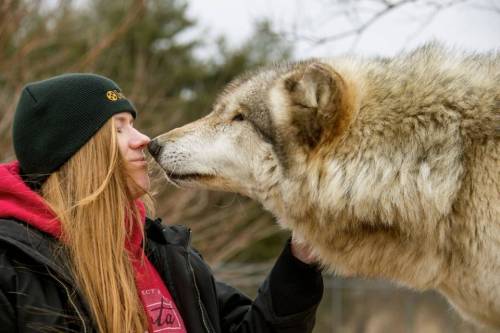
Dogs’ ability to communicate and interact with humans is one of the most astonishing differences between them and their wild cousins, wolves. Shown here, Lauren Brubaker, a graduate research assistant in the Department of Animal and Rangeland Sciences at Oregon State University and one of the study’s authors, interacts with a gray wolf. Photo by Monty Sloan

VonHoldt had identified the canine analog of the WBSCR in her publication in Nature in 2010. But it was Emily Shuldiner, a 2016 Princeton alumna and the study’s other lead co-author, who, as part of her senior thesis, pinpointed the commonalities in the genetic architecture of Williams-Beuren syndrome and canine tameness.

By analyzing behavioral and genetic data from dogs and gray wolves, vonHoldt, Shuldiner and their colleagues reported a strong genetic aspect to human-directed social behavior by dogs. Monique Udell, an assistant professor of animal and rangeland sciences at Oregon State University and the paper’s senior author, collected and analyzed the behavioral data for 18 domesticated dogs and 10 captive human-socialized wolves, as well as the biological samples used to sequence their genomes.

First, Udell quantified human-directed sociability traits in canines, such as to what extent they turned to a human in the room to seek assistance in trying to lift a puzzle box lid in order to get a sausage treat below or the degree to which they sought out social interactions with familiar and unfamiliar humans. Then, vonHoldt and Shuldiner sequenced the genome in vonHoldt’s lab and correlated their findings.

Consistent with their hypothesis, the researchers confirmed that the domesticated dogs displayed more human-directed behavior and spent more time in proximity to humans than the wolves. The also discovered that some of these transposons on the WBSCR were only found in domestic dogs, and not in wolves at all.

VonHoldt’s findings suggest that only a few transposons on this region likely govern a complex set of social behaviors. “We haven’t found a ‘social gene,’ but rather an important [genetic] component that shapes animal personality and assisted the process of domesticating a wild wolf into a tame dog,” she said.

Anna Kukekova, an assistant professor in the Department of Animal Sciences at the University of Illinois at Urbana-Champaign who is familiar with the research but had no role in it, said that the paper points to these genes as being evolutionarily conserved, or essentially unchanged throughout evolution. “The research provides evidence that there exist certain evolutionary conservative mechanisms that contribute to sociability across species,” she said. “That they have found that this region contributes to sociability in dogs is exciting.”

The researchers’ evidence also calls into question the role of domestication in the evolution of canine behavior. Most experts agree that the first domesticated dogs were wolves that ventured into early human settlements. These proto-dogs evolved not only in their looks, but also their behavior, a process likely influenced by the species’ cohabitation, according to vonHoldt.

However, unlike previous research which suggests that, during the process of domestication, dogs were selected for a set of cognitive abilities, particularly an ability to discern gesture and voice, vonHoldt and Shuldiner’s research posits that dogs were instead selected for their tendency to seek human companionship.

“If early humans came into contact with a wolf that had a personality of being interested in them, and only lived with and bred those ‘primitive dogs,’ they would have exaggerated the trait of being social,” vonHoldt said.

Source:  Princeton University media statement

Dogs help in breast cancer research

Cancer is one of the most frequent diseases not only in people, but in pets as well. Like people, dogs can also suffer from cancer of the mammary glands (mammary tumors). Dog mammary tumors are very similar to breast carcinoma in humans, and much more so than those of rats or mice, for example. For this reason, research on canine mammary tumors is important for human medicine as well. A study performed at the University of Zurich has now shown how similar mammary tumors are in both people and dogs.

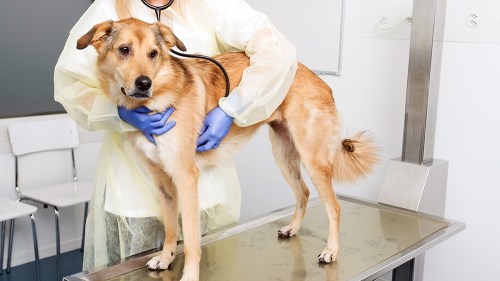
Enni Markkanen, Vetsuisse-Fakultät Zürich, Untersuch Hund

Cancerous cells reprogram healthy cells

For the development of tumors and the progression of a carcinoma, not only the characteristics of the cancer cells themselves are decisive, but also the cells surrounding the tumor play a major role in this. Many tumors even have the capability to reprogram healthy cells in the tumor environment in a way that they start to support the growth of the cancerous cells. This mechanism plays an essential role in human breast carcinoma – but is it the same for dogs? The similarity of breast carcinoma in dogs and humans has been known for a long time. “But whether these tumor cells also influence the surrounding tissue in dogs the same way they do in humans was unknown until now”, explains Enni Markkanen of the Institute of Pharmacology and Toxicology of the Vetsuisse Faculty of the University of Zurich.

Archived tissues are of great value to the research

The researchers analyzed the surrounding tissue of canine mammary tumors using molecular biology and immunohistological methods. To do this, they could access the tissue archive of the Institute of Veterinary Pathology located at the Animal Hospital. “With the permission of our patient’s owners, we conduct pathological tests to better understand diseases,” says animal pathologist Alexandra Malbon. “In the process, we archive samples of various organs and tissues as these samples can be of great value to answer future research questions.”

Dogs suffering from cancer aid cancer research for humans

In the archived samples of mammary tumors from dog patients, Enni Markkanen and her team were able to prove that some cells in the vicinity of tumors behave the same way as the corresponding cells in humans: In the healthy tissue surrounding the tumor, substances are produced that promote tumor growth. “Simply speaking, the tumor enslaves its environment: It forces the surrounding cells to work for its benefit,” Markkanen adds. This mechanism works the same in both humans and dogs. For research on breast carcinoma, tumor tissue of dogs is therefore, among other reasons, much better suitable than tissue from rats or cells cultivated in the laboratory. “Importantly, however, we don’t view our dog patients as test subjects for cancer research,” Markkanen says. “But they can help us to better understand breast carcinoma in both dogs and humans and fight it more effectively.”

Source:  University of Zurich media statement

Training of explosive-detecting dogs

With a sense of smell much greater than humans, dogs are considered the gold standard for explosive detection in many situations. But that doesn’t mean there isn’t room for improvement.

In a study appearing in the journal Analytical Chemistry, scientists report on a new, more rigorous approach to training dogs and their handlers based on real-time analysis of what canines actually smell when they are exposed to explosive materials.

Vapor analysis training

New training techniques based on real-time analysis of what a dog smells could improve explosives detection. Credit: wellphoto/Shutterstock.com

Explosives are often used in terrorist attacks. Dogs trained to detect odors emanating from TNT, nitroglycerin and other explosives are a crucial part of the first-line defense against these incidents. But delivering low-concentration vapor during training sessions is a challenging task. Cross-contamination of training materials with samples from different explosives can skew results and confuse both dogs and handlers. To address these concerns, Ta-Hsuan Ong and colleagues sought to better understand the components within explosive odors that cue a dog’s reaction.

The researchers developed a real-time vapor analysis mass spectrometer to more accurately measure the vapor plumes from explosives that trigger a canine response.

In field trials, they used the device and found that some mistakes the dogs made were indeed correct identifications. For example, some “blanks” were used that were ostensibly prepared without explosive material, but the dogs indicated an explosive was present. When the researchers used the mass spectrometer on such blanks, they found evidence of explosive vapors, indicating cross contamination occurred or other interferents were present.

Based on these findings, the researchers suggest that use of real-time vapor analysis could help differentiate canine mistakes from cross contamination and other issues during training.

Source:  American Chemical Society

Quantifying the Effects of Service Dogs for Veterans with PTSD

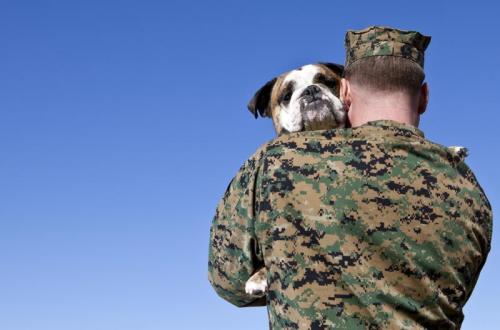
veteran with dog


Researchers from the Purdue University College of Veterinary Medicine’s Center for the Human Animal Bond will analyze the influence service dogs have on the lives of military veterans suffering from post-traumatic stress disorder (PTSD) in a unique clinical trial.

According to the United States Veterans Administration, 22 veterans commit suicide each day, and at least 40 percent have been diagnosed with PTSD. The rate could be even higher, as many cases of PTSD go undiagnosed.

Previous studies have suggested that individuals who bond with their pet dogs exhibit elevated levels of oxytocin – sometimes referred to as the “cuddle hormone” because it sparks emotional responses that contribute to relaxation and trust. Additionally, the National Center for PTSD claims dogs can encourage veterans to communicate more through commands and training, and prompt them to spend more time outdoors and meet new people.

These benefits support anecdotal reports that show an increase in the prevalence of service dogs for individuals with PTSD, but scientific evidence examining this growing trend and its effects on PTSD patients is still lacking.

“Many veterans are increasingly seeking complementary interventions for PTSD, including service dogs,” stated Maggie O’Haire, lead researcher and assistant professor of human-animal interaction at Purdue. “Yet, even with the well-meaning intentions of service dog organizations that are working to meet the demand, our systematic review of scientific literature confirms a lack of published, empirical research on the effects that service dogs have on veterans and their spouses.”

To help carry out the study, the research team has partnered with K9s for Warriors – one of the nation’s leading providers of service dogs to military vets suffering from a variety of conditions including PTSD, traumatic brain injuries, or sexual trauma as a result of service post-9/11.

The team hopes to determine what sort of PTSD symptom changes veterans may experience as a result of having a service dog, as well as any effects on social functioning and physiological biomarkers.

According to a university release, standardized survey instruments and objective measures of physiology will be used to track stress and functioning. The researchers will also use a novel ecological momentary assessment protocol to capture the role and function of the dogs in everyday life.

The results will be the first evidence-based data to be published that quantitatively identifies the roles and effects of service dogs for military veterans with PTSD.

The study is unique because it applies research methodology and evidence-based science to an area that has typically relied on emotion, according to O’Haire.

“Without scientifically sound studies that establish proof-of-concept for the therapeutic efficacy of PTSD service dogs, this animal-assisted intervention strategy will continue to be minimized as an unsupported and potentially unsound practice, despite anecdotal reports that the dogs may have a significant impact,” added O’Haire.

Source:  www.laboratoryequipment.com

Sharing your bed with your pet (or other humans)

About half of all pet owners share their beds or bedrooms with their pets at night. Although this has been the case through the ages, remarkably few studies have been done about the benefits and drawbacks of this practice.

In an article in Springer’s journal Human Nature, the authors argue that society regards both human-animal and adult-child co-sleeping with the same unnecessary apprehension. These concerns should, however, be set aside because both practices have their benefits, says lead author Bradley Smith of Central Queensland University in Australia.

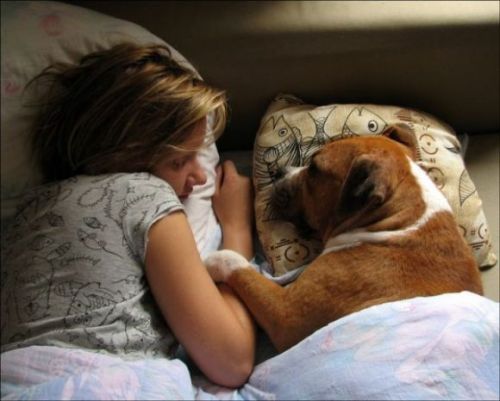
sleeping together

Sleeping arrangements between humans have evolved over time and across cultures. In medieval Europe, for instance, sleep was a public and communal affair. It was not uncommon to receive visitors in the bedroom, or for many people to sleep in the same bed. Sleeping with others was a way to increase personal security, conserve resources, and generate warmth. Sleeping with children from birth is still the norm in many cultures, for instance in Egypt and among indigenous cultures in unindustrialized populations. Intergenerational co-sleeping is generally more prevalent in collectivist Asian countries than in contemporary, individualistic or industrialized Western cultures.

In the West, sleep is nowadays regarded as an individual and private experience that helps the body and mind to optimally rest and recuperate. The normative shift from sleep as a public and social affair to a private one arose through a complex “civilizing” process starting in the Victorian era. Social norms and rules began to dictate that each person should sleep in a single bed, in a private place away from public view, and wear appropriate sleeping attire. This gradually introduced the concept of the private bedroom and private sleep to many social classes.

In their paper, Smith and his co-authors use dogs as an example of human-animal co-sleeping. They compare human-canine sleeping with adult-child co-sleeping and argue that both forms of co-sleeping share common factors for establishment and maintenance, and have similar advantages and disadvantages.

According to the Australian researchers, current apprehension about human-animal co-sleeping and bed sharing between parents and their children focuses too much on possible negative aspects or consequences, such as poor health, impaired functioning, the development of problematic behavior, and even sexual dysfunction.

“Apart from its clear reproductive function for the survival of the species, as well as physiological support for the quality and quantity of sleep that are essential to individual health and well-being, co-sleeping fulfils basic psychological needs and reinforces and maintains social relations,” highlights Smith. “Throughout history, humans have shared their sleeping spaces with other humans and other animals.”

“We propose that human-animal and adult-child co-sleeping should be approached as legitimate and socially relevant forms of co-sleeping,” says Smith, who believes that more research should be done on human-animal co-sleeping practices. “Moreover, a comprehensive understanding of human-animal co-sleeping has significant implications for human sleep, human-animal relations, and animal welfare.”

Reference: Smith, Bradley P. et al. (2017). A Multispecies Approach to Co-Sleeping: Integrating Human-Animal Co-Sleeping Practices into Our Understanding of Human Sleep, Human Nature, DOI: 10.1007/s12110-017-9290-2

Source:  Springer publishing media statement

Dogs can adopt the perspective of humans

Humans are able to interpret the behaviour of others by attributing mental states to them (and to themselves). By adopting the perspectives of other persons, they can assume their emotions, needs and intentions and react accordingly.

In the animal kingdom, the ability to attribute mental states (Theory of Mind) is a highly contentious issue. Cognitive biologists from the Messerli Research Institute of the University of Veterinary Medicine Vienna could prove with a new test procedure that dogs are not only able to identify whether a human has an eye on a food source and, therefore, knows where the food has been hidden. They can also apply this knowledge in order to correctly interpret cues by humans and find food they cannot see themselves.

This perspective taking ability is an important component of social intelligence. It helps dogs to cope with the human environment. The results have been published in the journal Animal Cognition.


The so-called Theory of Mind describes the ability in humans to understand mental states in conspecifics such as emotions, intentions, knowledge, beliefs and desires. This ability develops in humans within the first four or five years of life while it is usually denied in animals. Indications that animals can understand mental states or even states of knowledge of others have only been found in apes and corvids so far. Dogs have been tested several times, but the results were poor and contradictory.

With a new experimental approach, cognitive biologists from the Messerli Research Institute could now provide solid evidence for dogs being able to adopt our perspective. By adopting the position of a human and following their gaze, dogs understand what the human could see and, consequently, know.

This ability to ascribe knowledge is only a component of a full-blown Theory of Mind, but an important one.

Identifying the right informant

The so-called Guesser-Knower paradigm is a standard test in research into the attribution of knowledge to others. This experiment involves two persons: a “Knower” who hides food, invisibly for the dog, in one of several food containers or knows where somebody else has hided it, and a “Guesser”. The Guesser has either not been in the room or covered her eyes during the hiding of the food. A non-transparent wall blocks the animals’ view of the food being hidden. After that, the two humans become informants by pointing to different food containers.

The Knower always points to the baited container and the Guesser to another one. All containers smell of food. “To get the food, the dogs have to understand who knows the hiding place (Knower) and who does not and can, therefore, only guess (Guesser). They must identify the informant they can rely on if they have to decide for one food container,” said principal investigator Ludwig Huber. In approximately 70 per cent of the cases the dogs chose the container indicated by the Knower – and thus were able to successfully accomplish the test. This result was independent of the position of the food container, the person acting as the Knower and where the Guesser was looking.

Eye on hidden food source

Dogs are able to identify the human having an eye on a hidden food source. (Photo: Ludwig Huber/Vetmeduni Vienna)

Dogs can adopt human perspectives

The only aim of this test series, however, was to independently confirm a study carried out in New Zealand. Clear evidence of dogs being able to adopt our perspective and take advantage of it was provided in a new test developed by the team, the so-called “Guesser looking away” test.

In this new experiment, a third person in the middle hides the food. This person does not give cues later on. The potential informants were kneeing left and right of this hider and looked to the same side and slightly down. Thus, one of the two persons looked towards the baiter, the other person looked away. “This means that the tested dogs, in order to get the food, had to judge who is the Knower by adopting the informants’ perspectives and following their gazes,” explained Huber. Even in this test, which is very difficult for the animals, approximately 70 per cent of the trials had been mastered.

Adopting the human perspective leads to invisible food

Being able to adopt the perspective of a human does, however, not require the ability to understand intentions or wishes. “But the study showed that dogs can find out what humans or conspecifics can or cannot see,” explained Huber. “By adopting the positions of humans and following their gazes geometrically, they find out what humans see and, therefore, know – and consequently whom they can trust or not.”

In similar experiments, chimpanzees and few bird species such as scrub jays and ravens were able to understand the state of knowledge and also the intentions of conspecifics and modify their own behaviour accordingly. For dogs, there have only been specualtions and vague indications so far. But dogs understand our behaviour very well, for example our degree of attention. They can learn from directly visible cues such as gestures or gazes. Thus, they are able to find food even if their view of it has been blocked. “The ability to interpret our behaviour and anticipate our intentions, which has obviously developed through a combination of domestication and individual experience, seems to have supported the ability to adopt our perspective,” said Huber. “It still remains unclear which cognitive mechanisms contribute to this ability. But it helps dogs to find their way in our world very well.”

Source:  University of Veterinary Medicine, Vienna media release

DNA influences face shape

A study of dog DNA has revealed a genetic mutation linked to flat face shapes such as those seen in pugs and bulldogs.

The research reveals new insights into the genes that underpin skull formation in people and animals.  Scientists say their findings also shed light on the causes of birth defects that affect babies’ head development in the womb.

Researchers at the University of Edinburgh’s Roslin Institute analysed DNA samples from 374 pet dogs of various pedigree and mixed breeds. The dogs were being treated at the Royal (Dick) School of Veterinary Studies.

All of the animals underwent body scans as part of their care, producing detailed 3-dimensional images of the dogs’ heads.  These high-resolution images — called CT scans — enabled the researchers to take precise measurements of the shape of the dog’s skull.

By comparing the dogs’ genetic information with measurements of their skulls, the team were able to pinpoint DNA variations that are associated with different head shapes.

One variation — found to disrupt the activity of a gene called SMOC2 — was strongly linked to the length of the dog’s face. Animals with the mutation had significantly flatter faces, a condition called brachycephaly.

Babies are sometimes born with brachycephaly too, though little is known about its causes. Scientists say screening children for changes in the SMOC2 gene could help to diagnose the condition.

Lead researcher Dr Jeffrey Schoenebeck, of the University’s Roslin Institute, said: “Our results shed light on the molecular nature of this type of skull form that is so common and popular among dogs.”

Source:  University of Edinburgh news

Improving the lives of kids with disabilities – one family dog at a time

The family dog could serve as a partner and ally in efforts to help children with disabilities incorporate more physical activity into their daily lives, a new study from Oregon State University indicates.

In a case study of one 10-year-old boy with cerebral palsy and his family’s dog, researchers found the intervention program led to a wide range of improvements for the child, including physical activity as well as motor skills, quality of life and human-animal interactions.

“These initial findings indicate that we can improve the quality of life for children with disabilities, and we can get them to be more active,” said Megan MacDonald, an assistant professor in OSU’s College of Public Health and Human Sciences and corresponding author on the study. “And in this case, both are happening simultaneously, which is fantastic.”

CP-kid-and-dog-2-e1402346844838

A boy with cerebral palsy and a therapy dog (not the dog in this study) Photo courtesy of: http://www.michigancerebralpalsyattorneys.com

The researchers detailed the child’s experience in the adapted physical activity intervention program in a case study just published in the journal Animals.

Children with physical disabilities such as cerebral palsy spend significantly less time participating in physical activity compared to their peers and are considered a health disparity group, meaning they generally face more health concerns than their peers.

Researchers designed an adapted physical activity, animal-assisted intervention where the family dog would serve as a partner with the child in physical activities designed to help improve overall physical activity, motor skills and quality of life. The family dog is a good choice for this type of intervention because the animal is already known to the child and there is an existing relationship – and both the dog and the child will benefit from the activities, MacDonald said.

Researchers took initial assessments of the child’s daily physical activity, motor skills and quality of life before starting the eight-week intervention. A veterinarian examined the dog’s fitness for participation and the human-animal interaction between the dog, a year-old Pomeranian, and the child was also assessed.

Then the pair began the eight-week intervention, which included a supervised physical activity program once a week for 60 minutes and participation in activities such as brushing the dog with each hand; playing fetch and alternating hands; balancing on a wobble board; and marching on a balancing disc.

“The dog would also balance on the wobble board, so it became a challenge for the child – if the dog can do it, I can, too,” MacDonald said. “It was so cool to see the relationship between the child and the dog evolve over time. They develop a partnership and the activities become more fun and challenging for the child. It becomes, in part, about the dog and the responsibility of taking care of it.”

The dog and the child also had “homework,” which included brushing the dog, playing fetch and going on daily walks. The child wore an accelerometer to measure physical activity levels at home.

At the conclusion of the intervention, researchers re-assessed and found that the child’s quality of life had increased significantly in several areas, including emotional, social and physical health, as assessed by the child as well as the parent. In addition, the child’s sedentary behavior decreased and time spent on moderate to vigorous activity increased dramatically.

“The findings so far are very encouraging,” MacDonald said. “There’s a chance down the road we could be encouraging families to adopt a dog for the public health benefits. How cool would that be?” 

The researchers also found that the relationship between the dog and the child improved over the course of the therapy as they worked together on various tasks. The dog’s prosocial, or positive, behavior toward the child is a sign of wellbeing for both members of the team, said Udell, who is director of the Human-Animal Interaction Lab at OSU.

“A closer child-dog bond increases the likelihood of lasting emotional benefits and may also facilitate long-term joint activity at home, such as taking walks, simply because it is enjoyable for all involved,” she said.

This study is one of the first to evaluate how a dog’s behavior and wellbeing are affected by their participation in animal-assisted therapy, Udell noted. From an animal welfare standpoint, it is promising that the dog’s behavior and performance on cognitive and physical tasks improved alongside the child’s.

Though the case study features only one child, the research team recruited several families with children with disabilities and their dogs to participate in the larger project, which was designed in part to test the design and methodology of the experiment and determine if it could be implemented on a larger scale.

Based on the initial results, researchers hope to pursue additional studies involving children with disabilities and their family dogs, if funding can be secured. They would like to examine other benefits such a pairing might have, including the sense of responsibility the child appears to gain during the course of the intervention.

“We’re also learning a lot from our child participants,” MacDonald said. “They’re teaching us stuff about friendship with the animal and the responsibility of taking care of a pet, which allows us to ask more research questions about the influence of a pet on the child and their family.” 

Source:  Oregon State University media statement

Pet dogs help kids feel less stressed

Pet dogs provide valuable social support for kids when they’re stressed, according to a study by researchers from the University of Florida, who were among the first to document stress-buffering effects of pets for children.

boy-and-dog

Darlene Kertes and colleagues tested the commonly held belief that pet dogs provide social support for kids using a randomized controlled study – the gold standard in research.

“Many people think pet dogs are great for kids but scientists aren’t sure if that’s true or how it happens,” Kertes said. Kertes reasoned that one way this might occur is by helping children cope with stress. “How we learn to deal with stress as children has lifelong consequences for how we cope with stress as adults.” 

For their study, recently published in the journal Social Development, the researchers recruited approximately 100 pet-owning families, who came to their university laboratory with their dogs. To tap children’s stress, the children completed a public speaking task and mental arithmetic task, which are known to evoke feelings of stress and raise the stress hormone cortisol, and simulates real-life stress in children’s lives. The children were randomly assigned to experience the stressor with their dog present for social support, with their parent present, or with no social support.

“Our research shows that having a pet dog present when a child is undergoing a stressful experience lowers how much children feel stressed out,” Kertes said . “Children who had their pet dog with them reported feeling less stressed compared to having a parent for social support or having no social support.”

Samples of saliva was also collected before and after the stressor to check children’s cortisol levels, a biological marker of the body’s stress response. Results showed that for kids who underwent the stressful experience with their pet dogs, children’s cortisol level varied depending on the nature of the interaction of children and their pets.

“Children who actively solicited their dogs to come and be pet or stroked had lower cortisol levels compared to children who engaged their dogs less,” said Kertes, an assistant professor in the psychology department of UF’s College of Liberal Arts and Sciences. “When dogs hovered around or approached children on their own, however, children’s cortisol tended to be higher.”

The children in the study were between 7 to 12 years old.

“Middle childhood is a time when children’s social support figures are expanding beyond their parents, but their emotional and biological capacities to deal with stress are still maturing,” Kertes explained. “Because we know that learning to deal with stress in childhood has lifelong consequences for emotional health and well-being, we need to better understand what works to buffer those stress responses early in life.”

Source:  University of Florida News

How Dogs Interact with Others Plays a Role in Decision-Making

Researchers at Canisius College found that the relationship between two dogs living in the same household may impact how much influence they have on each other’s behavior.

Dogs who showed little to no aggression towards their housemates were more likely to automatically follow each other than dogs who viewed their canine housemates as rivals. The study results are reported in the latest issue of Animal Cognition.

Familiar dogs

Dogs were tested in their own homes because a laboratory setting would have introduced other influences into how the dogs reacted

To conduct this study, Christy Hoffman, Ph.D., and Malini Suchak, Ph.D., assistant professors of Animal Behavior, Ecology, and Conservation, traveled to 37 multi-dog households to test the dogs in their own homes. This was an unusual approach, since most studies test dogs in the laboratory and often pair them with other dogs they don’t know. “We really wanted to look at the impact of the relationship between the dogs on their behavior, and doing that in a setting natural to the dogs, with dogs they already know, is really important,” Suchak says.

To classify how competitive household dogs were with each other, the owners were asked to fill out a survey known as the Canine Behavioral Assessment and Research Questionnaire (C-BARQ).

Dogs that were low in rivalry never or rarely displayed aggressive behavior toward the other dog. Dogs that were high in rivalry displayed some degree of aggression around valuable resources, suggesting they have a more competitive nature.

After their owners completed the C-BARQ, the dogs participated in a simple task. A research assistant placed two plates containing food in front of both dogs. One dog was allowed to approach the plates and eat the food from one plate before being walked out of the room. At that point, the second dog was allowed to make a choice. If the second dog followed the first dog, he arrived at an empty plate. If he didn’t follow the first dog, he went straight to the plate that still contained food.

Dogs that were low in rivalry were more likely to follow the first dog and frequently ended up at the empty plate. What surprised the researchers was that low rivalry dogs only blindly followed the demonstrator when allowed to make their choice immediately. “Low and high rivalry dogs only differed in the choices they made when there was no delay,” Hoffman says. “When they had to wait 5 seconds before making their choice, all dogs tended to go directly to the full plate.” 

Suchak adds, “This suggests that the low rivalry dogs may have been automatically following their housemates. When we forced the dogs to wait, it was as if the low rivalry dogs actually took the time to think about the situation, and they went straight for the food.”

The researchers also tested the dogs in a condition where a human removed the food from one plate before the dog made a choice. Interestingly, low rivalry dogs were more likely to follow the human demonstrator when there was no delay, a finding that paralleled what happened with dog demonstrators. Hoffman suggests this may have to do with the personality of low rivalry dogs, “Since the tendency of the low rivalry dogs to follow was seen when the demonstrator was both another dog and a human, competitiveness may be a characteristic of the individual that extends beyond their relationship with other dogs.” 

This means that if owners have a high rivalry dog “that dog may be more likely to think for himself, and less likely to blindly follow, than a dog that is less competitive,” says Hoffman. “On the whole, our findings show there is variation in the ways dogs make decisions and that how dogs interact with others plays a big role in how they respond under conditions that require quick thinking.”

Source:  Newswise