Category Archives: research

Doing the dog paddle

If you have ever watched your dog swim, you’ve probably noticed that intense look of concentration on their face.  Research has confirmed that swimming doesn’t come as naturally as, say,  walking, running or trotting on land.

Photo by the Society for Integrative and Comparative Biology

Photo by the Society for Integrative and Comparative Biology

Dr. Frank Fish, a professor of biology at West Chester University, set out with his colleagues to understand how real dogs perform the dog paddle.

Dr Fish found a large horse rehabilitation pool for filming eight dogs of six different breeds during swimming.  Dr Fish’s own dog was one of the study subjects.

The team analyzed the videos and found that the dogs were swimming with a gait that was similar to a familiar trot on land. When a dog trots, moving at a pace more brisk than a walk, diagonal pairs of legs move together. In swimming, the dog’s legs move in a similar fashion, but even faster than a trot, and the legs move beyond the range of motion for a trot.  (This is one reason why I recommend swimming for many – but not all – of my massage and rehab customers.)

Swimming dogs are, essentially, using a basic movement but with some modification. Also, while the movements that make up terrestrial gaits like trotting can vary from one dog breed to another, the dog paddle gait showed very little variation among the different breeds.

Dr Fish says that dogs can be used as a model for precursors to early swimming mammals.   He hopes to unravel the steps in evolution that allowed four-legged terrestrial animals to become swimming mammals like the dolphin.

In the meantime, get out there and let your dog swim.   For most dogs, it’s great exercise!

Daisy concentrates during her swim at the Dog Swim Spa

Daisy concentrates during her swim at the Dog Swim Spa

Want to know more about physical rehabilitation and whether swimming is right for your dog?  Get in touch with me by completing the information below.

Kathleen Crisley, specialist in dog massage, rehabilitation and nutrition, Canine Catering Ltd, Christchurch, New Zealand

← Back

Thank you for your response. ✨

Source:  Society for Integrative and Comparative Biology media release

Harness fit in guide dogs

A research team at the University of Veterinary Medicine in Vienna (Vetmeduni Vienna) have studied the forces that guide dogs are exposed to during their work to ascertain what types of harness are most suitable.

Guide dogs walk under constant tension. A well-fitting harness is extremely important for the animals (Photo: Michael Bernkopf/Vetmeduni Vienna)

Guide dogs walk under constant tension. A well-fitting harness is extremely important for the animals (Photo: Michael Bernkopf/Vetmeduni Vienna)

A proper harness that enables good communication between the blind person and the dog is an important factor to support the dog’s well-being, while a poorly fitting harness may result in health problems and impaired communication between dog and owner.

The team members, movement analysts and physiotherapists, examined the distribution of pressure in working guide dogs by placing pressure sensors beneath their harnesses. Eight guide dogs were filmed with a trainer while climbing steps, avoiding obstacles, turning left and right and walking straight ahead. To visualize the movements, the animals, the trainers and the harnesses were equipped with reflective markers. The positions of the markers were recorded by a total of ten cameras.

The results showed that the bottom right of the animals’ chests is particularly stressed. As Barbara Bockstahler explains, “Guide dogs walk under constant tension. They are usually on their owners’ right and in front of them.” The scientists found that the pressure on the right side of a dog’s chest may equate to up to 10 per cent of the animal’s weight. In contrast, the dog’s back experiences far less pressure. “It is important for guide dogs to exercise regularly without a harness to compensate for the lopsided pressure they experience in their work”, says Bockstahler.

Very rigid harnesses enable quick and finely tuned communication between dogs and owners but cause stress to the animals. The more stiffly the harness is anchored to the handle, the more pressure the animal experiences. The most comfortable harness relies on a hook-and-loop connection, which provides the least pressure on the dog, although for long-haired dogs a plastic clip version is favourable.

The researchers want to study guide dogs for a longer period of time to find out whether any of the harnesses are associated with long-term problems in the animals.   They require partners and sponsors for this work.

The results of this study have been published in the Veterinary Journal.

Source:  Vetmeduni Vienna press release

Gotta Golden in the Lower 48?

golden-retrievers-fighting-cancer The Morris Animal Foundation is recruiting dogs for its Golden Retriever Lifetime Study.  3,000 Goldens will be followed for life to gather insights that could help prevent and treat cancer in Goldens and all other dog breeds.  In the USA, the Foundation estimates that more than 60 percent of Golden Retrievers die from cancer.

Participants will receive periodic questionnaires about their dog to complete and also be reimbursed $75 towards annual exam costs (owners must agree to bear the remaining costs of participation).  Dogs must be purebreds, with verifiable three-generation pedigree.  Any Golden under the age of two is eligible.

More information can be found in this brochure.

If your Golden resides in the lower 48 states, this may be his/her chance to contribute to the science behind canine health and longevity.

All around me familiar faces…

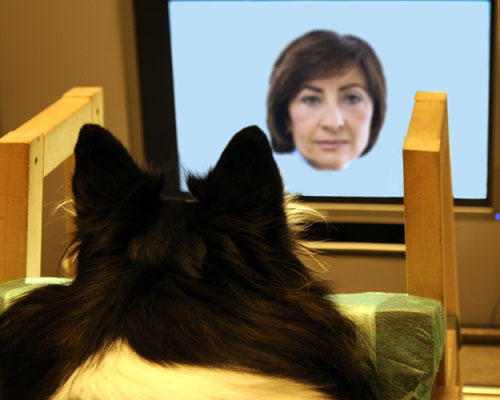
Researchers at the University of Helsinki have been testing dogs to see if they can recognise faces in images and, more specifically, whether the dogs have a different response to the images of strangers vs those people who are familiar to them.

Copyright Sanni Somppi

Copyright Sanni Somppi

The eye movements of the dogs were measured while they watched facial images of familiar humans and dogs (e.g. the dog’s owner and another dog from the same household) being displayed on the computer screen. As a comparison, the dogs were shown facial images from dogs and humans that the dogs had never met.

Dogs preferred the faces of those familiar to them.

The results indicate that dogs were able to perceive faces in the images. Dogs looked at images of dogs longer than images of humans, regardless of the familiarity of the faces presented in the images.  Dogs scanned the images of familiar faces more thoroughly, too.

The research team concludes that dogs are able to see faces in the images and they differentiate familiar and strange faces from each other. These results indicate that dogs might have facial recognition skills which are similar to humans.

Source:  University of Helsinki media release

Your dog’s (brain) reward center

Professor Gregory Berns of Emory University is at it again.  He’s expanded on his earlier research using functional MRI (magnetic resonance imaging) to show the brain activity in dogs.

“Now we’ve shown that the initial study wasn’t a fluke: Canine fMRI is reliable and can be done with minimal stress to the dogs. We have laid the foundation for exploring the neural biology and cognitive processes of man’s best, and oldest, friend.”  said Professor Berns.

Tigger, a Boston Terrier, was one of the 13 study subjects

Tigger, a Boston Terrier, was one of the 13 study subjects

The task requires dogs to cooperatively enter the small enclosure of the fMRI scanner and remain completely motionless despite the noise and vibration of the machine.  Only those dogs that willingly cooperated were involved in the experiments.

The canine subjects were given harmless fMRI brain scans while they watched a human giving hand signals that the dogs had been trained to understand. One signal indicated that the dog would receive a hot dog for a treat. The other hand signal meant that the dog would not receive a hot dog.

Most of the dogs showed a response in the caudate region of the brain when seeing the hand signal for a treat.  This area of the brain has the highest concentration of dopamine receptors, which are implicated in motivation and pleasure, among other neurological processes.

“Our goal is to map out canine cognitive processes” said Berns. The research team needs to increase the number of canine subjects that can be trained to stay within the MRI machine so it can validate its research.

See my other blogs about functional MRI and Professor Gregory Berns:

Source:  Emory University media release

Short dog syndrome

You’ve probably heard about Short Man Syndrome.  (In fact, many of us (including me) have experienced it firsthand!)

Did you know that there is growing evidence of Short Dog Syndrome?

Researchers at the University of Sydney have published their research into this topic in the online journal PLoS One.  Professor Paul McGreevy is the lead author of the study and says, “the shorter the dogs the less controllable their behaviour is for their owners.”

Dachshunds and other short breed dogs may be more difficult to train and control

Dachshunds and other short breed dogs may be more difficult to control

The study used owners’ reports on the behaviour of over 8,000 dogs from across 80 breeds and related them to the shape of 960 dogs of those breeds, revealing strong relationships between height, bodyweight, skull proportions (relative width and length) and behaviour.

33 out of 36 undesirable behaviours were associated with height, bodyweight and skull shape

As a breed’s average height decreased, the likelihood of behaviors such as mounting humans or objects (humping), owner-directed aggression, begging for food and attention-seeking increased.

“The only behavioral trait associated with increasing height was ‘trainability’. When average bodyweight decreased, excitability and hyperactivity increased,” said Professor McGreevy.

The researchers admit that there is an aspect here of nature vs nurture.  If aggressive and ‘bad’ behaviours were present in larger dogs, the results could be more dangerous.  Poor behaviour in small dogs is likely to be tolerated more.  Over time, breeding has resulted in the patterns observed by the research team.

Source:  University of Sydney media release

New gene therapy for dogs with hemophilia

Researchers at the UNC School of Medicine and the Medical College of Wisconsin have found that a new kind of gene therapy led to a dramatic decline in bleeding events in dogs with naturally occurring hemophilia A.

Photo courtesy American Kennel Club Canine Health Foundation, Inc

Photo courtesy American Kennel Club Canine Health Foundation, Inc

Hemophilia A affects about 50,000 people in the United States and millions more around the world.

Before the gene treatment, the animals experienced about five serious bleeding events a year. After receiving the novel gene therapy, though, they experienced substantially fewer bleeding events over three years.

Hemophiliacs lack  the coagulation factor VIII in their blood plasma.   In about 35% of cases, patients develop an antibody response to factor VIII, meaning that treatment by injection of the factor no longer works.

Using a plasmapheresis machine and a blood-enrichment technique, the research team isolated specific platelet precursor cells from three dogs that had hemophilia A. The team then engineered those platelet precursor cells to incorporate a gene therapy vector that expresses factor VIII. The researchers put those engineered platelet precursors back into the dogs. As the cells proliferated and produced new platelets, more and more were found to express factor VIII.

In the 2 1/2 years since the dogs received the gene therapy, researchers found that factor VIII was still being expressed in platelets that were coursing throughout the vascular systems of all three dogs. All three experienced much less bleeding. In the dog that expressed the most factor VIII in platelets, the bleeding was limited to just one serious event each year over the course of three years. And such bleeding events were easily treatable with current standard therapies.

The researchers have published their results in the journal Nature Communications.  You can read the article here.

While the goal of this research is to help human hemophiliac patients, I hope that the treatment is able to be offered more widely to dogs with the condition too!

Source:  UNC School of Medicine media statement

Risk factors for bone cancer in dogs

Bone cancer in dogs is affected by a variety of genetic risk factors, researchers from Uppsala University and the Broad Institute have found.  They’ve published their results in the journal Genome Biology.
Osteosarcoma, a type of bone cancer, is similar in humans and dogs – although in dogs it is more common.  In the current study, the researchers compared the genome of sick and healthy dogs from three different breeds to find inherited risk factors for the disease.

“The key is that we find many different risk factors within each breed. We already knew that Greyhounds, Rottweilers and Irish wolfhounds are at increased risk of developing bone cancer and our results explain much of the increased risk”, said Emma Ivansson, scientist at SciLifeLab and Uppsala University.

Irish Wolfhound

The study demonstrated that each breed has its own risk genes, but these genes converge in common disease mechanisms.

“Our results show that the pathways involved in bone formation and growth are important for the disease. Because of the great similarities between bone cancer in dogs and humans, we believe that our findings may contribute to an increased understanding of how bone cancer develops in humans”, said Kerstin Lindblad-Toh, professor at Uppsala University and Co-Director of the SciLifeLab and Director of Vertebrate Genome Biology at the Broad Institute.
The researchers are continuing to study the identified risk factors to understand more about how they affect tumor development and to see whether different risk factors respond to different types of treatment.
The researchers are continuing to study the identified risk factors to understand more about how they affect tumor development and to see whether different risk factors respond to different types of treatment. – See more at: http://www.uu.se/en/media/news/article/?id=3103&area=2,10,16&typ=artikel&na=&lang=en#sthash.H1aUoBA8.dpuf

Osteosarcoma, a type of bone cancer, is a rare but very aggressive form of cancer that primarily affects teenagers. Among some large-sized dog breeds the disease is much more common, but otherwise osteosarcoma in humans and dogs is very similar. In the current study, the researchers compared the genome of sick and healthy dogs from three different breeds to find inherited risk factors for the disease.

“The key is that we find many different risk factors within each breed. We already knew that greyhounds, Rottweilers and Irish wolfhounds are at increased risk of developing bone cancer and our results explain much of the increased risk”, said Emma Ivansson, scientist at SciLifeLab and Uppsala University.

The study demonstrated that each breed has its own risk genes, but these genes converge in common disease mechanisms

– See more at: http://www.uu.se/en/media/news/article/?id=3103&area=2,10,16&typ=artikel&na=&lang=en#sthash.H1aUoBA8.dpuf

Bone cancer in dogs is affected by a variety of genetic risk factors. Researchers from Uppsala University and the Broad Institute show this in a new study published in Genome Biology. – See more at: http://www.uu.se/en/media/news/article/?id=3103&area=2,10,16&typ=artikel&na=&lang=en#sthash.H1aUoBA8.dpuf

Breast cancer in dogs

A PhD project at the Norwegian School of Veterinary Science has been studying the genetics behind mammary tumours in dogs.  Breast cancer is the most common form of cancer in female dogs.

A mammary tumor in a dog (Photo by Veronica Kristiansen)

A mammary tumour in a dog (Photo by Veronica Kristiansen)

Kaja Sverdrup Borge’s PhD project has led to the identification of genetic changes associated with these types of tumour.

Borge studied known risk genes in dogs to learn more about the genes that predispose dogs to canine mammary tumours. These genes are already known to be linked to cancer in humans. Borge discovered that there was a large variation in these genes from breed to breed. Some of the variants proved to have a detrimental effect and could lead to a potential change in the risk of developing cancer.

Borge compared the incidence of these genes in different groups of English springer spaniels with and without mammary tumours. The genes were also studied in another group of dogs from breeds having either a high or low incidence of mammary tumours. The results of these analyses indicate that variants of the oestrogen receptor gene are associated with the risk of English springer spanieldeveloping mammary tumours in dogs.

Borge examined canine mammary tumours in order to identify mutations which have arisen in tumours and may therefore be involved in the development of cancer. She focused on changes in the number of gene copies where there was either a decrease or increase in gene areas in the tumours.

She found a large number of mutations and the number of aberrations increased, the more malignant the tumours turned out to be. She detected major cancer genes known to occur in humans but also identified new areas. Borge also demonstrated that linking detailed histopathological parameters from mammary tumour diagnostics to genetic mutations could help to chart specific genes that lead to the growth of tumours and to more malignant types of cancer.

Increased knowledge about the genetic changes which cause cancer is essential for the prevention, diagnosis and treatment of the disease.  Because of the similarities between carcinogenic gene mutations in both canine and human breast cancer, studying breast cancer in dogs also has benefits for the study of breast cancer in humans.

Source:  Media statement from Norwegian School of Veterinary Science

The ability for dogs and wolves to learn

Wolves can learn from observing humans and pack members where food is hidden and recognize when humans only pretend to hide food, reports a study published for the first time in the open-access journal Frontiers in Psychology.

The researchers conclude that the ability to learn from other species, including humans, is not unique to dogs but was already present in their wolf ancestors. Prehistoric humans and the ancestors of dogs could build on this ability to better coordinate their actions.  Photo by Wolf Science Center

The researchers conclude that the ability to learn from other species, including humans, is not unique to dogs but was already present in their wolf ancestors. Prehistoric humans and the ancestors of dogs could build on this ability to better coordinate their actions. Photo by Wolf Science Center

These findings imply that when our ancestors started to domesticate dogs, they could have built on a pre-existing ability of wolves to learn from others, not necessarily pack members.

A paper published recently in the journal Science suggested that humans domesticated dogs about 18 thousand years ago, possibly from a European population of grey wolves that is now extinct. But it remains unknown how much the ability of dogs to communicate with people derives from pre-existing social skills of their wolf ancestors, rather than from novel traits that arose during domestication.

In a recent study, Friederike Range and Zsófia Virányi from the Messerli Research Institute at the University of Veterinary Medicine Vienna investigated if wolves and dogs can observe a familiar “demonstrator” – a human or a specially trained dog – to learn where to look for food within a meadow. The subjects were 11 North American grey wolves and 14 mutts, all between 5 and 7 months old, born in captivity, bottle-fed, and hand-raised in packs at the Wolf Science Center of Game Park Ernstbrunn, Austria.

The wolves and dogs were two to four times more likely to find the snack after watching a human or dog demonstrator hide it, and this implies that they had learnt from the demonstration instead of only relying on their sense of smell. Moreover, they rarely looked for the food when the human demonstrator had only pretended to hide it, and this proves that they had watched very carefully.

The wolves were less likely to follow dog demonstrators to hidden food. This does not necessarily mean that they were not paying attention to dog demonstrators: on the contrary, the wolves may have been perceptive enough to notice that the demonstrator dogs did not find the food reward particularly tasty themselves, and so simply did not bother to look for it.

Source:  EurekAlert! press release