Category Archives: special dogs and awards

New products to help train dogs for explosive detection

The Department of Homeland Security (USA) has been conducting independent assessments and developing products to assist canine explosive teams.
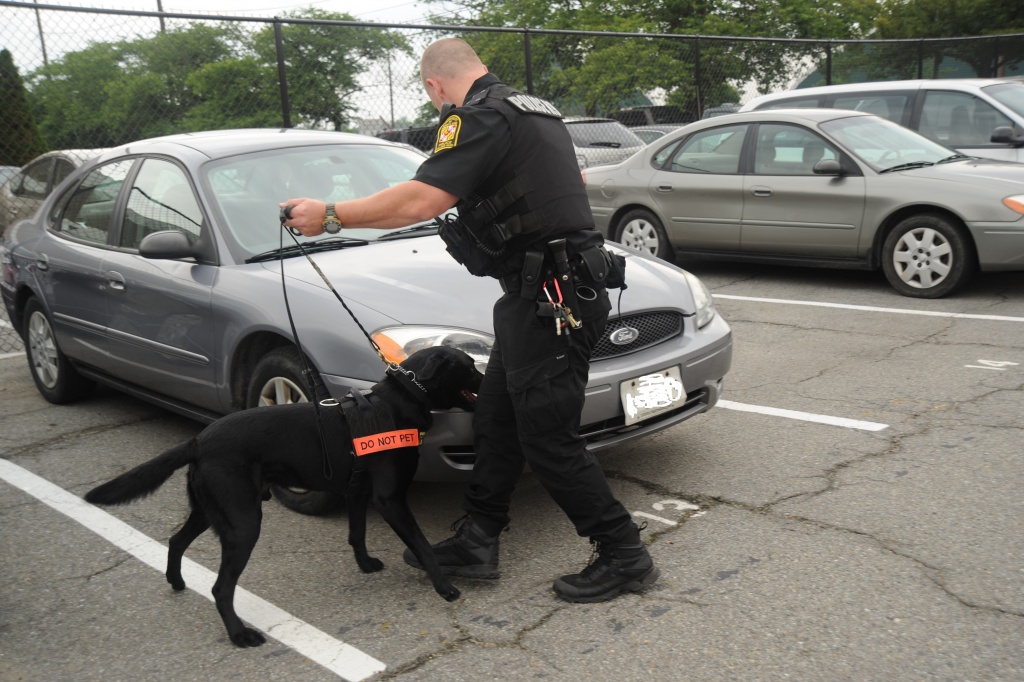
An explosive detection dog in action. Photo courtesy of the Department of Homeland Security

An explosive detection dog in action. Photo courtesy of the Department of Homeland Security

One of the biggest challenges in the training and testing of canine teams results from the explosives materials themselves – especially new homemade explosives. Due to the potential safety risks of explosives, only specially trained federal explosive technicians can provide the material for training and testing. This not only limits training times and opportunities, but also increases the costs since the technicians must travel to a central location for multi-day training events.

Researchers have been developing a new training aid that matches the scent of explosive materials but poses no danger to the trainers, the canines or the environment. It is currently undergoing field testing within federal, state and local canine detection teams. A key objective was to for the canines to react to the non-hazardous, non-explosive training aid the same way they would actual explosive material.

“It doesn’t go boom if you drop it, hit it or light it on fire,” said Canine Program Manager, Don Roberts. “That allows teams to take the training from the very controlled environment we currently have to train in for safety reasons and put it in a real-world scenario – for example putting the odor in a cinderblock and seeing if the dog can find it. We can put this new training aid in car wheel wells, airports etc., without fear that they’ll explode.”

S&T’s partner, Johns Hopkins Applied Physics Lab, developed the new training aid, Roberts said. After a number of trials, they’re ready to transfer the technology to the Transportation Security Administration, the primary customer for the aid. The bigger news, according to Roberts, is that the product was also designed to fit first responders’ needs as well.

“The design price point and usability factor has been geared to the first responder community – state and local explosive detection dogs who don’t have the regular training support TSA has. They are the ones who really need these products,” said Roberts.

The training aids are made to be thrown away after being used. These aids can last for over eight hours and can be stored up to two years. The scent can be dissolved in water, as opposed to the previous explosive training materials, which required special handling, transport and had to be stored in a bunker.

Next steps for this program include developing a second scent for training the dogs, and licensing so that the products can be produced outside of the federal government.

Source:  Department of Homeland Security media release

Read my other blog posts about explosives detector dogs:
Better paws for Brutus

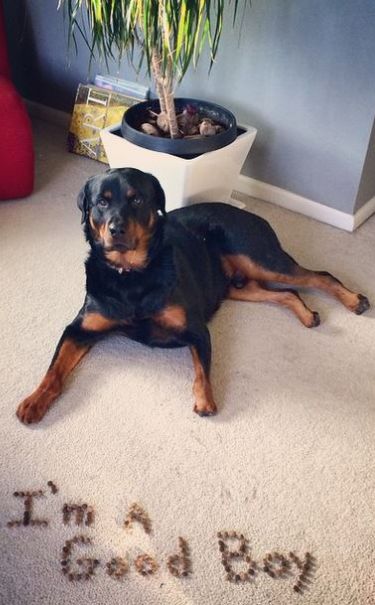
When Brutus was just a puppy, his breeder left the young Rottweiler outside in freezing temperatures.

The pup suffered frostbite in all four paws, and the breeder tried to salvage the puppy’s paws with an at-home amputation. But Brutus was maimed and couldn’t walk without pain.

Brutus

Brutus

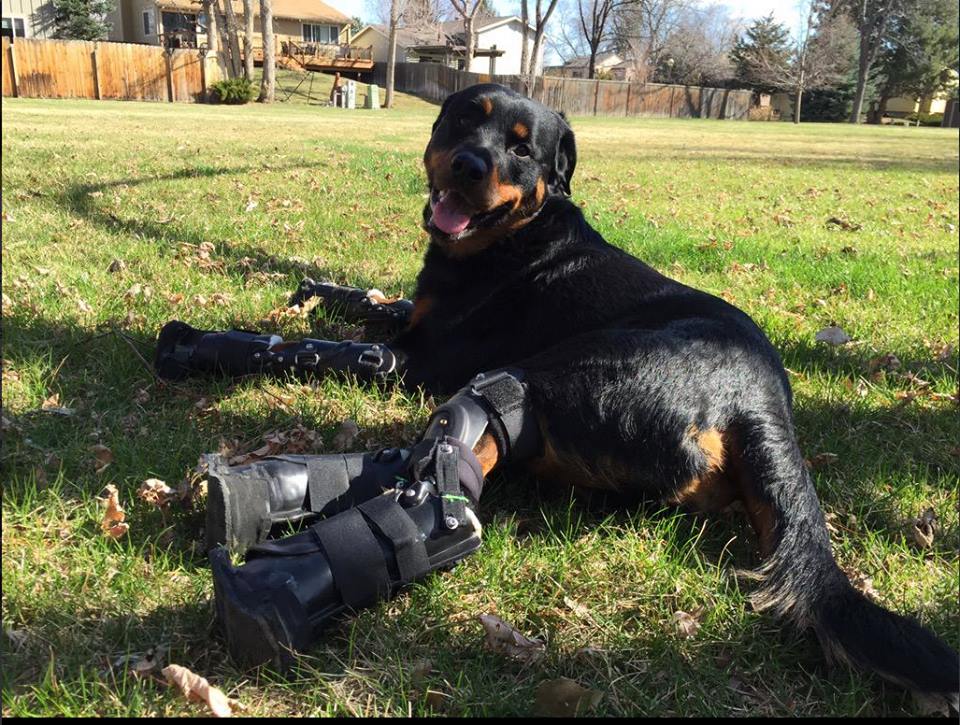
Now 2 years old, Brutus is living with a new and dedicated owner in Loveland, Colorado, and has become the second dog ever known to receive four prosthetic limbs. He is learning to walk again with help from OrthoPets, an animal prosthetics developer in Denver, and pet orthopedics experts at Colorado State University’s James L. Voss Veterinary Teaching Hospital.

“I believe prosthetics will play a big role in the future of veterinary orthopedics,” said Dr. Felix Duerr, an assistant professor in the Department of Clinical Sciences who practices small animal orthopedics and sports medicine at the university’s Veterinary Teaching Hospital.

“Brutus shows how we can explore new technologies to find solutions, and how our partnerships with companies like OrthoPets really help.”

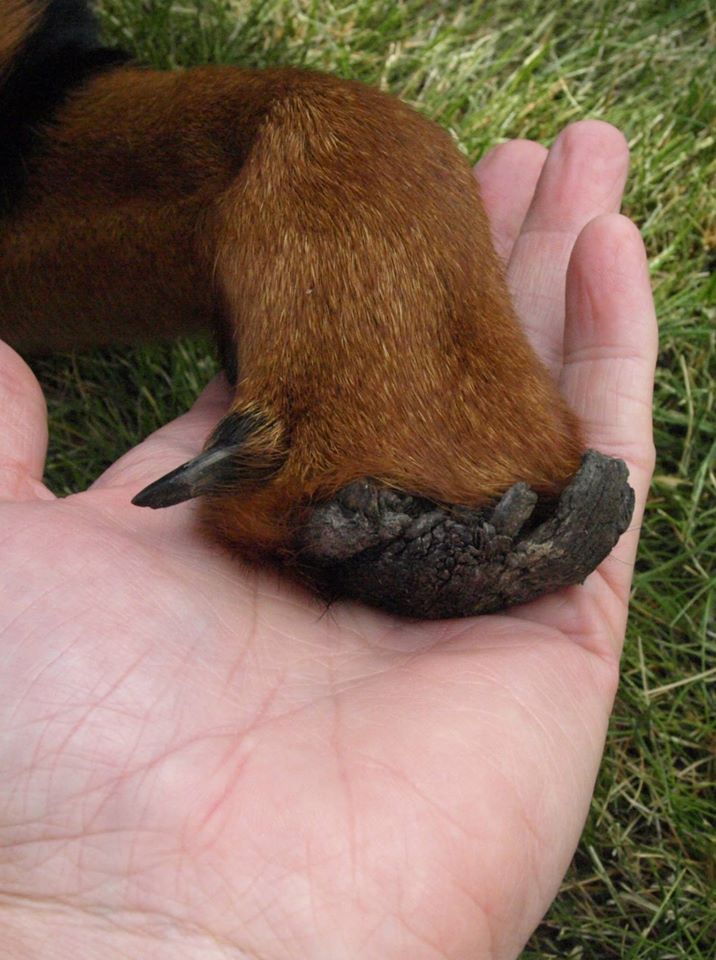
Brutus' paw

Brutus’ paw

Laura Aquilina, the dog’s owner, has provided a caring home for Brutus for seven months in an attempt to find “better paws” for the young rottie. She began fostering Brutus, and more recently adopted him, after he had trouble navigating hardwood floors and stairs in his first foster home, and the family couldn’t meet the disabled dog’s needs.

Aquilina and a pet rescuer in Canon City joined forces to raise nearly $12,500 for Brutus’ prosthetics and physical therapy through Go Fund Me, an online fundraising site. The crowdfunding project was aptly named “Better Paws for Brutus.”

Brutus with his prosthetics

Brutus with his prosthetics

In preparation for prosthetics, Brutus underwent corrective paw surgery with Dr. Trent Gall, a CSU veterinary alumnus working in Longmont. The procedure removed bone fragments, dew claws, and two toes left from the botched amputation.

After recovery from surgery, Brutus and Aquilina worked with Denver-based OrthoPets, the world’s largest veterinary orthotic and prosthetic company, to undergo the process of prosthetics fitting. OrthoPets adapts the same technologies used in the field of human orthotics to care for animal patients.

Martin Kaufmann, company founder, partnered with Colorado State’s Veterinary Teaching Hospital for its research and rehabilitation services.

“I don’t want to be part of a world that settles for ‘fine,’ and neither does CSU,” Kaufmann said. “There’s a common mission between CSU and OrthoPets to return animals’ lives to ‘great.’”

Since the collaboration began, CSU and OrthoPets have successfully developed techniques to treat Achilles tendon injuries in dogs and are investigating how specific injuries correlate with successful orthotic techniques and long-term prosthetic use.

Kaufmann compared the Rottweiler’s story to that of Nakio, the other dog known to live with four prosthetics. “We learned a lot from Nakio’s story and were able to apply that knowledge to Brutus’ case,” he said.

OrthoPets veterinarians learned that both of Brutus’ wrist joints had collapsed. “It’s similar to a human rolling his ankle completely to the side, left grossly unstable,” Kaufmann said, noting that the dog also has a troublesome callus that makes movement difficult.

The unique prosthetics have three purposes: to protect and make Brutus’ limbs more comfortable, to support his front collapsed legs, and to realign each leg to an equal length.

As his devices are refined, Brutus has entered a new phase of rehabilitation with physical therapy guided by Sasha Foster, CSU’s certified canine rehabilitation therapist.

“We’re working with Brutus to help him adjust to wearing his new prosthetics,” Foster said. “He’s learning how to move with them on. Once he’s mastered that, we will help him achieve higher-level functioning activities, like hiking and playing with other dogs.”

In upcoming months, Foster will use underwater treadmill therapy, balance activities, exercise balls and other neuro re-education therapies to help Brutus adjust to his new limbs.

Foster said her work is motivated by helping her patient – and the animal’s family. “When you improve the quality of life for a dog, you improve the quality life for the entire family,” Foster said.

It’s likely Brutus will need physical therapy intermittently for the rest of his life. But Aquilina is hopeful.

“You need a good team behind you, and we found that at CSU,” she said.

Follow Brutus’s recovery on Facebook and Instagram at @BetterPawsForBrutus

Source:  CSU media release

Lola the therapy dog

Lola, as photographed by Nancy Rubin Stuart

Lola, as photographed by Nancy Rubin Stuart

Meet Lola, a nine-year old Golden Retriever, who accompanies her owner, Dr Bodrie of Bourne, Cape Cod, to his office and on Wednesday rounds to one of six nursing facilities.    She’s a certified therapy dog!

In this article from Cape Cod.com, you can read about the Therapy Dogs International certification process that she and Dr Bodrie underwent to make her a certified therapy dog.

Lola and Dr Bodrie

Lola and Dr Bodrie

Lola's official therapy dog badge

Lola’s official therapy dog badge


Ike the dog gets a new set of wheels

Ike in his new wagon (photo courtesy of ABC News)

Ike in his new wagon (photo courtesy of ABC News)

Ike is a 15-year old dog living in California.  He’s been diagnosed with bone cancer and so only has a few months to live.  His owner, Risa Feldman, wanted to give Ike as much quality of life as possible and the traditional hind end harnesses for helping him around weren’t cutting it.

So she went into Home Depot to ask for help and two employees there did even better.  They built Ike (free of charge) a new wagon complete with a little ramp so he can get in and out easily (the back end of the wagon lifts down to form the ramp).

Ike and Risa (photo courtesy of Risa Feldman)

Ike and Risa (photo courtesy of Risa Feldman)

Risa says the wagon will help Ike enjoy their walks along Manhattan Beach for a while yet.  Whilst Risa sits down at a local cafe for a coffee, Ike usually has an order of bacon…

Kathleen Crisley, specialist in dog massage, rehabilitation and nutrition/food therapy, Canine Catering Ltd, Christchurch, New Zealand

Source:  ABC News

Dog shovels snow!

The northeast United States has received record snowfalls this year.  And as a word of encouragement to all of those who are sick and tired of shovelling snow, here comes a video to give you confidence:

a Canadian man has trained his Yellow Labrador, Elsa, to shovel snow!

In this YouTube video, Elsa is hard at work clearing snow from the family’s ice rink (yes, it gets so cold and snowy there that families have their own ice skating rinks at home!)

Kathleen Crisley, specialist in dog massage, rehabilitation and nutrition/food therapy, Canine Catering Ltd, Christchurch, New Zealand

Infection control guidelines for animal visitation

The use of dogs in hospitals and other therapy institutions is on the rise, as more medical professionals acknowledge the positive effects of dogs on human patients.

New expert guidance by the Society for Healthcare Epidemiology of America (SHEA) outlines recommendations for developing policies regarding the use of animals in healthcare facilities, including animal-assisted activities, service animals, research animals and personal pet visitation in acute care hospitals.

The guidance was published online in Infection Control & Hospital Epidemiology, the journal of SHEA.

“Animals have had an increasing presence in healthcare facilities,” said David Weber, MD, MPH, a lead author of the recommendations. “While there may be benefits to patient care, the role of animals in the spread of bacteria is not well understood. We have developed standard infection prevention and control guidance to help protect patients and healthcare providers via animal-to-human transmission in healthcare settings.”

Guidance is grouped by the role of animals – animal-assisted activities (i.e., pet therapy and volunteer programs), service animals, research animals and personal pet visitation. Select recommendations include:

Animal-Assisted Activities

  • Facilities should develop a written policy for animal-assisted activities. An animal-assisted activity visit liaison should be designated.
  • Allow only dogs to serve in animal-assisted activities, such as pet therapy.
  • Animals and handlers should be formally trained and evaluated.
  • Animal interaction areas should be determined in collaboration with the Infection Prevention and Control team and clinical staff should be educated about the program.
  • Animal handlers must have all required immunizations, restrict contact of their animal to patient(s) visited and prevent the animal from having contact with invasive devices, and require that everyone who touches the animal to practice hand hygiene before and after contact.
  • The hospital should maintain a log of all animal-assisted activities visits including rooms and persons visited for potential contact tracing.

Service Animals

  • The policy allowing service animals of patients and visitors into the facility should be compliant with the Federal Americans for Disability Act (ADA), other applicable state and local regulations and include a statement that only dogs and miniature horses are recognized as Service Animals under federal law.
  • If an inpatient has a service animal, notification should be made to the Infection Prevention and Control Team, followed by discussion with the patient to make sure the owner of the service animal complies with institutional policies.
  • Healthcare providers or staff may ask the patient or visitor to describe what work/tasks the dog performs for the patient, but may not ask for a “certification” or “papers.”

Personal Pet Visitation

  • Pets should, in general, be prohibited from entering the healthcare facility.
  • Exceptions can be considered if the healthcare team determines that visitation with a pet would be of benefit to the patient and can be performed with limited risk. Even then, visitation should be restricted to dogs.
  • The patient must perform hand hygiene immediately before and after contact with the animal.

The authors of the guidance also note that as the role of animals in healthcare evolves, there is a need for stronger research to establish evidence-based guidelines to manage the risk to patients and healthcare providers.

This guidance on animals in healthcare facilities has been endorsed by the Association for Professionals in Infection Control and Epidemiology (APIC), the leading professional association for infection preventionists with more than 15,000 members.

Source:  EurekAlert! media release

Previous blogs about therapy dogs include:

A day in the life of a therapy dog

I love it when we hear about dogs who are able to use their instincts, talents and charm for good.  There is a growing body of knowledge about how the company of dogs can assist with human therapies.

In this video, the pet therapy program at HCA Virginia’s Chippenham and Johnston-Willis hospitals is featured.  Meet Fraser, a Black Labrador/Golden Retriever mix.  Fraser’s canine colleague, Schaffer, doesn’t feature in this video.  But, as full-time employees of HCA Virginia, the dogs receive benefits which include supplies and paid veterinary care.

Kathleen Crisley, specialist in dog massage, rehabilitation and nutrition/food therapy, Canine Catering Ltd, Christchurch, New Zealand

An update on Kai

Kai, the dog who was abandoned at Ayr Railway Station in Scotland last month, has found a new home.  I wrote about Kai in the post  A new twist on abandonment.

Because of the worldwide coverage of Kai’s story (which reminded a lot of people of the story of Paddington Bear), there were lots of people who applied to adopt him.  Ian Russell, a self-employed hydraulic engineer, is Kai’s new owner.  Kai will get to travel all over Scotland with Russell, just as Russell’s previous dog did for almost 15 years!

Read more about Kai’s new home here:

Dog abandoned at railway station with suitcase of his belongings finds a new owner – Telegraph

Kathleen Crisley, specialist in dog massage, rehabilitation and nutrition/food therapy, Canine Catering Ltd, Christchurch, New Zealand

Special needs pets can make great companions

(Photo: Sara C. Tobias/The Advocate)

Pickles, a Pug with no eyes (Photo: Sara C. Tobias/The Advocate)

In this story (link below), the Newark Advocate talks about the adoption of pets with special needs and why their owners wouldn’t think twice about doing it again.

Meet, for example, Pickles.  Pickles’ eyes were surgically removed for health reasons but she still enjoys life!

Special needs pets can make great companions.

Kathleen Crisley, specialist in dog massage, rehabilitation and nutrition/food therapy, Canine Catering Ltd, Christchurch, New Zealand


Dog of the Year

Forget the Golden Globes…

Don’t even think about the Screen Actors Guild awards…

And even pass by the Oscars…

The awards show of early 2015 was the World Dog Awards, broadcast earlier this month on the CW Network in the USA.

Dog of the Year was Hank, the Ballpark Pup. Hank, a suspected Bichon Frise cross, made headlines last year when he wandered into the spring training camp of the Milwaukee Brewers professional baseball team.   A veterinary check revealed that he may have been hit by a car.  Outfitted in Brewers’ official gear, he became the team’s mascot.  A children’s book, beach towel, and other merchandise have also been produced, with 20% of the proceeds going to the Wisconsin Humane Society.

The title “Dog of the Year” was given to honor the dog that made the most impact on popular culture during 2014.   Hank received his Golden Hydrant statue from celebrity Paris Hilton.

While this award show may be seen my some as ‘over the top’ – Hank’s story helped to highlight the plight of homeless pets and the need for people to think ADOPTION first.

Good dog, Hank.  Good Dog.

Kathleen Crisley, specialist in dog massage, rehabilitation and nutrition/food therapy, Canine Catering Ltd, Christchurch, New Zealand