Author Archives: DoggyMom.com

How dogs see with their noses

This post isn’t some reference to a scientific journal – it’s a YouTube video.

I hope you enjoy it and learn a little something about your dog’s gift of smell…

Kathleen Crisley, specialist in dog massage, rehabilitation and nutrition/food therapy, Canine Catering Ltd, Christchurch, New Zealand

Best dogs for apartment living

Did you know that the American Kennel Club has published a list of the best dogs for apartment living?

With cities growing and land prices escalating, most metropolitan areas around the globe are looking to establish neighborhoods characterized by apartments rather than single-family homes.  This move can create challenges for people wanting to ensure that dogs remain part of their lives.

Years ago for example, in New  Zealand, the main telecommunications company here used a Jack Russell Terrier named Spot in its commercials.  The breeding and demand for these dogs soared.  People thought that the dog, being small, would be good for the suburbs (let alone, apartments).  But terriers need wide-open spaces and are bred for hunting down prey like rabbits and ferrets.  The result:  lots of ill-behaved dogs and owners who were out of their depth.

I would say that this list is a starting point, many mixed-breed dogs can acclimate to apartment living with the right routine and devotion.  And small dog breeds need to be managed carefully around stairs – because a lifetime of walking up and down stairs puts a lot of strain on the back and shoulders….

The best dog breeds for apartment living are:

The Cavalier King Charles Spaniel

The Cavalier King Charles Spaniel

The Pug

The Pug

The Shih Tzu

The Shih Tzu

The Bulldog

The Bulldog

The Bichon Frise

The Bichon Frise

The French Bulldog

The French Bulldog

IMG_0265

The Greyhound

The Chinese Crested

The Chinese Crested

The Havanese

The Havanese

The Maltese

The Maltese

Kathleen Crisley, specialist in dog massage, rehabilitation and nutrition/food therapy, Canine Catering Ltd, Christchurch, New Zealand

The dog meat trade in China

China meat trade photo

Photo courtesy of Animals Asia

Back in June, there was a lot of media attention given to the Lychee and Dog Meat Festival in Yulin, China.  This is a festival to mark the summer solstice and traditionally dog meat is on the menu.

However, many people don’t understand that the killing of dogs for meat happens year-round and not just at festival time.  Animals Asia has investigated the trade of dog meat thoroughly.

Their four reports, which I have linked here, are sobering reading.  “At every stage (of a 4-year investigation), investigators found a trade riddled with crime and extreme cruelty, violating existing laws on food safety, while those involved in the industry were highly secretive and suspicious of outside interest in their work.”

This is a trade of organized crime and a total disregard for animal welfare.

The black market for dog and cat meat in China

Lies, illegality and stolen lives report

China’s rural dogs in crisis

Survey of public attitudes to dog and cat eating in China

Kathleen Crisley, specialist in dog massage, rehabilitation and nutrition/food therapy, Canine Catering Ltd, Christchurch, New Zealand

Unlikely Best Friends

I’m always a little surprised when, after I explain that one of my services is to help owners measure and fit dogs for mobility carts, that I get answers like “I’d never do that to a dog.”

Stories like this one, an ad sponsored by the Kleenex brand, show you why some dogs can do very well in a cart – and experience quality of life while also sharing unconditional love.

Kathleen Crisley, specialist in dog massage, rehabilitation and nutrition/food therapy, Canine Catering Ltd, Christchurch, New Zealand

Dog bite prevention – we may be on the wrong track

Scientists at the University of Liverpool have shown that educating pet owners about canine body language may not be sufficient to preventing dog bites.  They’ve published their research in the Journal of Veterinary Behaviour.

Dog bite photo

At a time when data suggests dog bite incidents are increasing, the team at Liverpool interviewed victims of dog attacks to gain further understanding into their perceptions of the experience.

They found that in some cases there was no interaction with the dog before the bite occurred and therefore no opportunity to assess behaviour.  There was a common tendency for victims to blame themselves for the attack, rather than the animal, or in cases where the dog was not known to them, they blamed the dog’s owner.

Warning signs

Even those who felt knowledgeable about dogs, perceived that a bite “would not happen to them”, and so despite the warning signs would continue acting in the same manner, suggesting that education on body language was ineffective as a preventative measure.

My comment:  This particular part of the research resonates with me.  I’ve seen dog trainers, working with client’s dogs, be super-confident despite the feedback that both the owners and myself would be giving them.  And then, they’d do things with the dog – such as reaching for their collar – which would instigate a snap. 

Working with dogs is a privilege, but we should also be humble enough to treat each dog as an individual…

“Preventing the situation from arising at all may not always be feasible. Reducing the damage caused when a dog does bite, through careful pet dog selection and training, is something we should aim for.”  says Dr Carri Westgarth, a dog behaviour expert at the University’s Institute of Infection and Global Health.

Raising awareness

The researchers highlight that there is not enough knowledge of how dog bites occur to know how to prevent them entirely. Raising awareness that ‘it could happen to you’ as often used in other campaigns such as drink-driving, will be required for successful dog bite prevention.

More work is also needed with dog breeders to supply dogs that are less likely to bite and that have inhibited bites that do less damage, moving away from a victim or owner ‘blame’ model to explain dog bite injury.

Source:  University of Liverpool media release

Dog buns

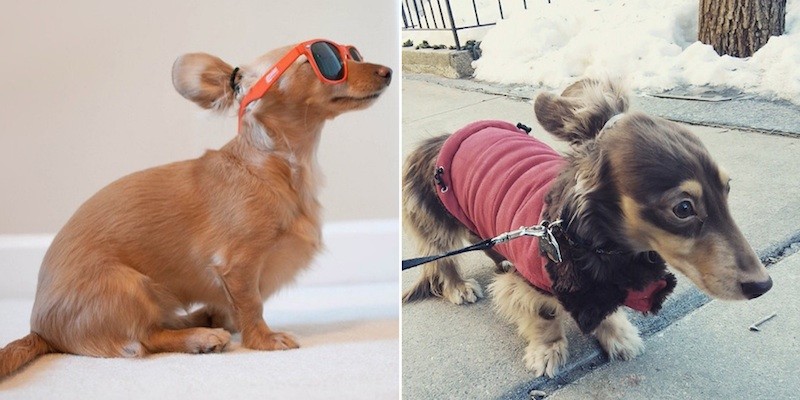
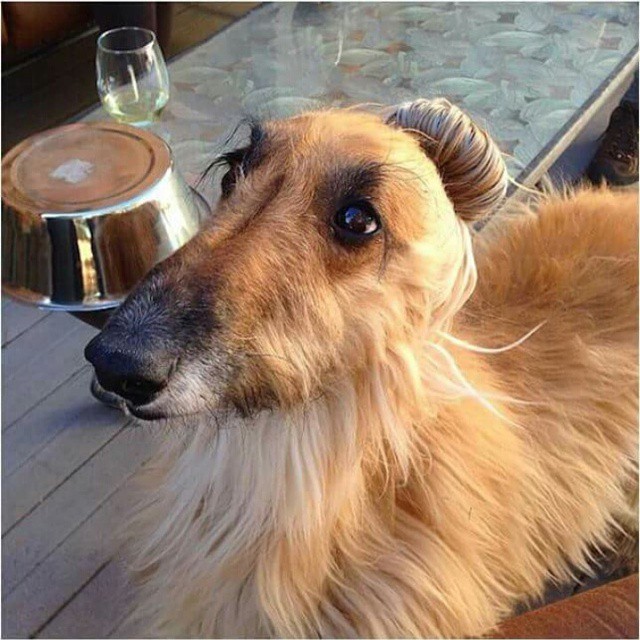
It seems that there’s a new trend in grooming and photographing dogs – it’s called dog buns, as seen from these photos downloaded from Instagram and Pinterest:

Dog bundog bun 3While I understand that some people think these photos are cute or funny, I don’t agree in tying up the ears of a dog.  The ears of a dog are sensitive tissues, with many acupressure points.

Tying up of the ears can interfere with blood circulation and, if left in for any period of time, the area is a breeding ground for bacteria – particularly in wet conditions.

Leave your dog’s ears alone!  The only dog buns I like to see are these ones:

Izzy, Greyhound, adopted in October 2014 (Photo by Dany Wu)

Izzy, Greyhound, adopted in October 2014 (Photo by Dany Wu)

Kathleen Crisley, specialist in dog massage, rehabilitation and nutrition/food therapy, Canine Catering Ltd, Christchurch, New Zealand

A dog’s perspective of your trip to the vet

This is a great video made for veterinary practices – reminding them about the layout and setting they should provide for their dog clients.

I particularly like the reference to stress and the effect it has on recovery time.  That is one reason why I recommend massage, done by a professional, when a dog is recovering.

Massage will help to reduce the anxiety and aid blood flow and recovery.  I also use acupressure to help clear the anesthetic medications from the dog’s body.

Kathleen Crisley, specialist in dog massage, rehabilitation and nutrition/food therapy, Canine Catering Ltd, Christchurch, New Zealand

Dog sledding is an adventure for kids with cancer

A young cancer patient on the dog sled Credit: Emmanuelle Compte

A young cancer patient on the dog sled Credit: Emmanuelle Compte

A team of sled dogs racing through the snowy forests of northern Canada conjures up the timeless spirit of exploration. But the intrepid youths on the sleds may not be exactly what you’re picturing – they’re young girls and boys with cancer.

A common perception of the paediatric cancer patient is of a frail youth whose childhood experiences are tragically curtailed by the disease. Now, the results of a new preliminary study published in ecancermedicalscience show that children with cancer may benefit from a different kind of treatment – a healthy dose of adventure.

The study follows eleven children aged 10-18 years, and five chaperones including doctors and nurses, on an expedition organised by the French non-profit Sourire à la Vie, which supports the use of adapted physical activity for young cancer patients.

“What I learned from this study is that we doctors have the false belief that kids with cancer cannot practice sport because they are too tired or weak from their treatments,” says corresponding author of the study, Dr Nicolas André. He’s a paediatric oncologist at the Assistance Publique Hôpitaux de Marseille, France.

“These perceptions are at least partly wrong,” Dr André says. “Adapted physical activities can be performed by most children with cancer even during their treatment, and can bring a lot to children.”

All of the eleven children received adapted physical training and exercises before the expedition. The children successfully completed the programme without harm – and they demonstrated statistically significant improvement in both physical and psychological health.

The children participated in other activities, such as snow exercises, as well as caring for the sled dogs.

“One of the main reasons why we chose dog sledding was to create a unique sportive experience based on change of scenery and building a strong relationship with animals,” explains study author Frédéric Sotteau, founder of Sourire à la Vie.

The health and safety of the children was of paramount concern, Sotteau says. “We did not compromise regarding security, so we carefully prepared the expedition hand-in-hand with Canadian associations and doctors.”

“Based on our work over the last eight years, we all are convinced that practicing adapted physical activity is very positive for children with cancer,” comments study author Professor Laurent Grélot, a researcher at Aix Marseille University, France. “It avoids cardiovascular and muscular deconditioning, can decrease treatment induced fatigue, and can help maintaining social integration.”

“It is now time to demonstrate these results.”

Based on the success of this study, the researchers have collected enough funding to initiate a randomised trial to evaluate the benefits of adapted physical activities for children with cancer. But perhaps the best take-home message comes from the children themselves.

“Before my cancer diagnosis, I used to do a lot of sport, but then I lost self-confidence and my body was not able to cope with physical efforts,” says Merwan, an 18-year-old patient. “This trip in Canada transformed me. I am in shape again, and now I know I am able to practice sport again.”

“I have been dog sledding for 6 hours a day,” adds Nell, a 12-year-old patient. “I am very proud, and I feel so good now.”

Source:  AlphaGalileo media release

The sign I don’t like to see

No dogs allowed sign in Dunedin

I was recently in Dunedin on business and noticed these brass signs inlaid into the sidewalks leading to the central business area – No Dogs Allowed.

It makes me sad when I see these signs.  If only we had more responsible dog owners, who trained and cleaned up after their dogs, our cities would be more like those in Europe – where dogs are welcomed everywhere.

In my opinion, we can only stamp out poor dog ownership and training when it is seen publicly and acted upon with enforcement as well as incentives for being a good dog owner.  When we consistently restrict access to ‘good’ and ‘bad’ owners alike, we hide poor dog ownership rather than addressing it as a community.  Peer pressure as well as formal enforcement is a good combination.

Sadly, it seems the re-built Christchurch will also be off limits to dogs and their families.  We are not learning.

Kathleen Crisley, specialist in dog massage, rehabilitation and nutrition/food therapy, Canine Catering Ltd, Christchurch, New Zealand

A frosty morning at the dog park

Izzy and I make a regular weekly date to go to the dog park on Sunday morning.  For most of the year, especially in winter, we have the dog park to ourselves.

This morning was frosty and cold but with lots of birdsong.

Here she is, chasing down a tennis ball and coming back to me:

Because Izzy has lost some teeth, her tongue usually hangs out of the side of her mouth

Throw another one, Mum!

Kathleen Crisley, specialist in dog massage, rehabilitation and nutrition/food therapy, Canine Catering Ltd, Christchurch, New Zealand