In Tennessee, college football is a religion. When I studied in Knoxville in 2023, I was told that on Fridays the staff have to clear their car parks by a certain time (no overtime on Fridays!) because all of the car parking is needed for football fans who descend with their vans, campers and gear to make a weekend of it.
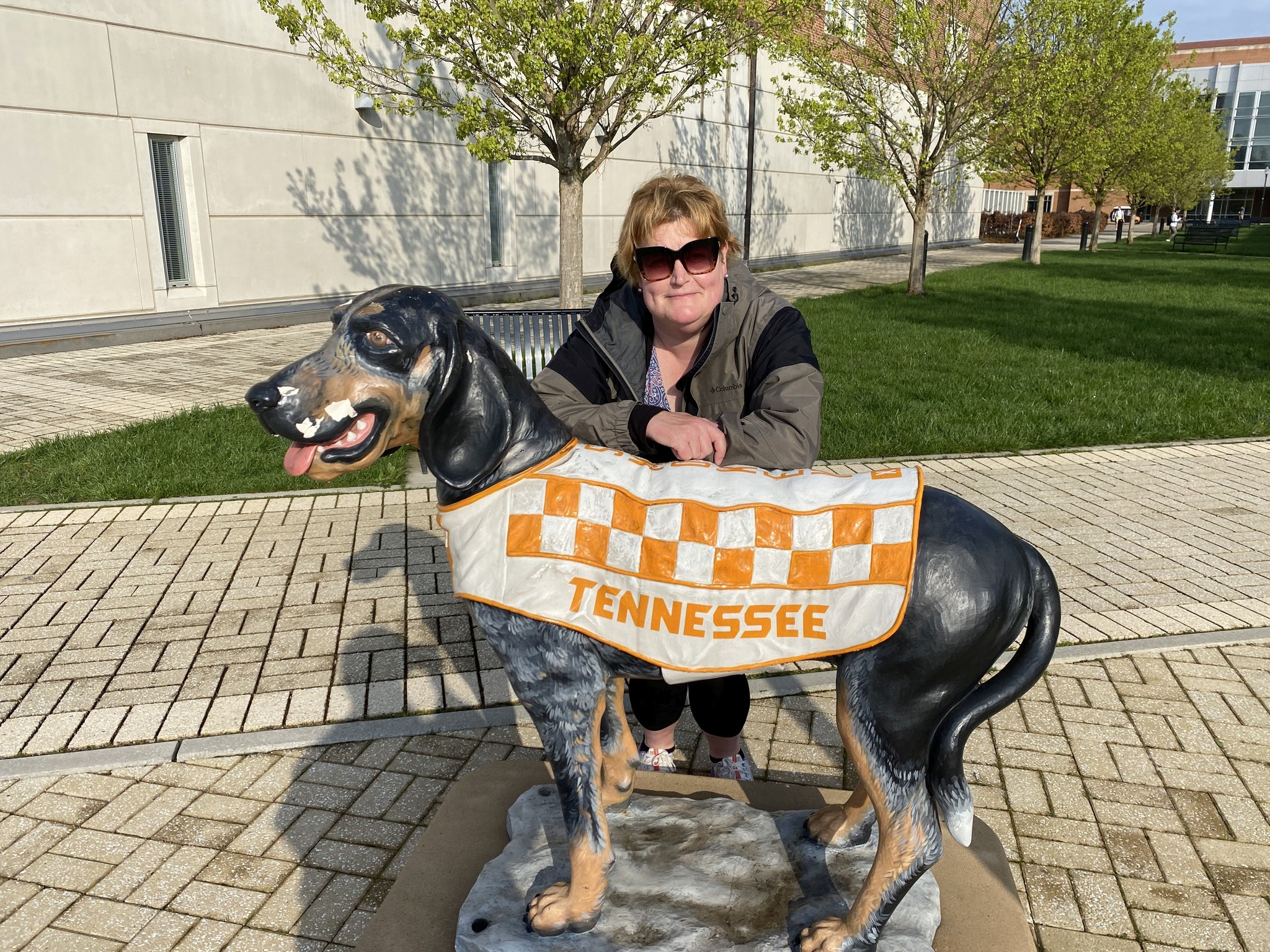
Smokey, a Bluetick Coonhound, is the team mascot and the Knoxville campus is dotted with Smokey statues:
There have been a succession of real-life Smokeys; below is a story about the woman who outfits the current mascot, Smokey X…
Kathleen Crisley is Fear-Free certified dog massage therapist and canine fitness trainer. She has a particular passion for working with dogs and their families to ensure injury prevention and quality of life. She specialises in working with anxious and emotionally damaged dogs. Her mobile practice, The Balanced Dog, is based in Christchurch, New Zealand
________________________
There’s nothing quite like sitting in the stands of Neyland Stadium on a fall Saturday as the T opens and Smokey leads the football team out to the field of battle.
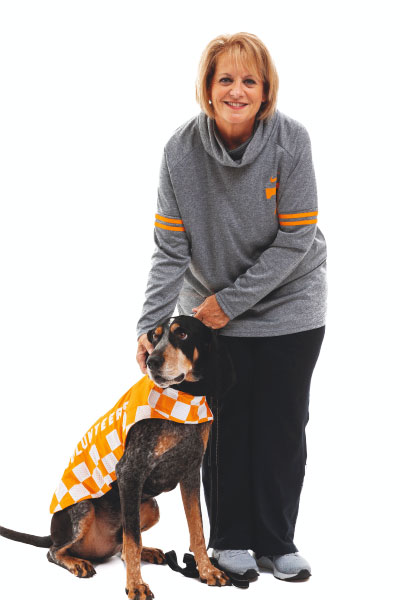
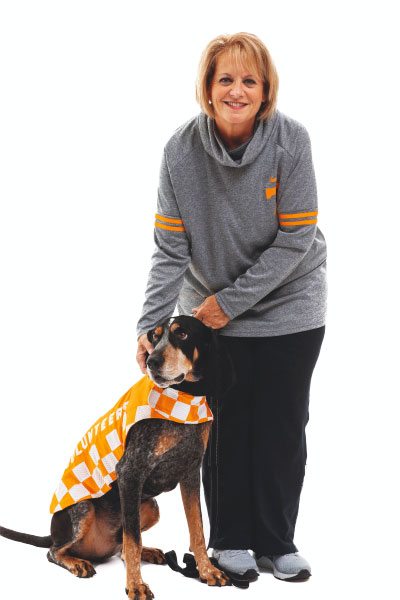
Jill Mayfield with Smokey X
For more than 70 years, Smokey has been an icon in college sports, and his game day gear, made by Tennessee Athletics’ own Jill Mayfield, is just as iconic.
Mayfield, a facility operations and support specialist for UT Athletics, has dedicated a prodigious amount of time brainstorming, stitching, and sewing for the beloved canine.
And it all began with some cheerleaders and a paint mishap.
Before Mayfield began working at UT, she had a friend whose son was on the cheer team. One game day morning, the team was painting the Rock, and without thinking they threw the paint cans in the back of their truck.
“Paint got all over the big flag they had back there for the football game that night,” Mayfield says. Knowing she was a seamstress, they called her in a panic.
The cheerleaders brought the flag to Mayfield’s house, giving her the opportunity to fashion a pattern of the Power T. Half of the team went to find white material, and the other half went to find orange, and they made a temporary flag for the night.
The Cedar Rapids, Iowa, native attributes her love for sewing to her maternal grandmother, who ran a drapery business out of her home.
“My mom would help her at the shop, and to keep me entertained they would have me pick up pins they dropped on the floor,” Mayfield recalls. “Just being around it led me to want to sew.”
In 2000, Mayfield began working for the UT ticket office and reconnected with the head of the cheer team. Shortly afterward, she was asked to try her hand at crafting the outfits worn by the costume mascot.
Though she doesn’t sew much for the costume mascot currently, Mayfield was responsible for the fan favorite Big Orange tuxedo.
It was in 2014 that she was asked if she was interested in making the live mascot’s vest—and she jumped at the opportunity.
Her first task was figuring out the timing. Smokey’s senior handler, a member of the Alpha Gamma Rho fraternity, designs the vests for each football season. Depending on how intricate the design is, the garment may take up to two days to make.
After the design is approved by the spirit program director, Mayfield will tweak it, measure Smokey, and then gather the orange and white fabric to pull the design together.
“I start at the back section first, then the side sections to finish. I’ll put them together and send a picture to the team. Once it looks good, I’ll start assembling and bring Smokey in for a final fitting.”
Mayfield is on the sidelines for each game and loves to see Smokey on duty and interacting with fans.
“I always want to make the handler’s vision come through just like he wanted it,” she says. “I’ve seen Smokey run through the T a million times, but each time feels like the first.”
It’s a win for Darwin’s Dogs and open access data! A new study published in the journal Science Advances has identified genomic links to the behaviours of herding breeds. The study used data entirely sourced from open-access databases.
Researchers at Korea’s Gyeongsang National University and the U.S. National Institutes of Health analyzed data exclusively from publicly available repositories, including genomic and behavioral data from the community science initiative, Darwin’s Dogs. Their findings are powerful examples of how open science—making research data freely and publicly available—can accelerate discovery by helping scientists leverage existing data in innovative ways.
Herding breeds carry genes linked to cognitive function
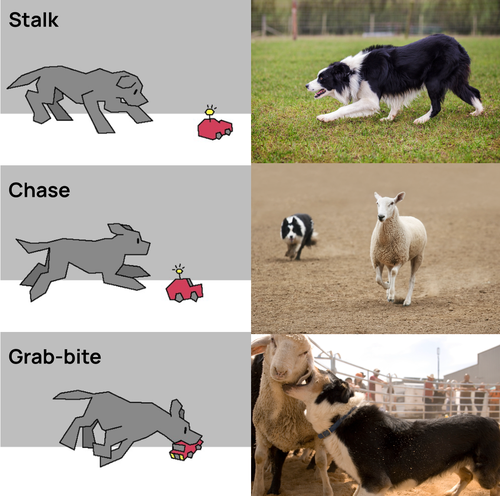
Herding breeds like the Australian cattle dog, Belgian Malinois, and border collie have a long history of helping humans move and manage livestock. These dogs are renowned for their precise motor control, sharp intellect, and unwavering drive. In fact, motor patterns required for effective herding—like eyeing, stalking, and chasing animals without killing them—have been so deeply ingrained in herding dogs through generations of selective breeding that even non-working lines often display these traits. But while herding behaviors have been recognized and refined for centuries, their genetic roots have remained largely unknown.
To explore the genetic foundations of herding behaviors, researchers conducted a large-scale genomic comparison across dogs from 12 herding breeds and 91 nonherding breeds. They identified hundreds of genes that have been naturally selected in herding breeds, several of which, through additional analysis, they found linked to cognitive function.
Narrowing their focus to the border collie, a breed celebrated for its intelligence, the research team identified more than eight genes strongly associated with cognition. One of the standouts was EPHB1, a gene involved in spatial memory. Several variants of EPHB1 appeared across herding breed genomes, suggesting that this gene may support the array of complex motor patterns and decision-making skills essential for herding.
Darwin’s Dogs’ database connects genomic discoveries with behavioral insights
Identifying genes associated with breeds is one thing, but understanding their function is another. This is where Darwin’s Dogs’ open-access behavioral and genomic datasets became critical to expanding the impacts of the study’s findings.
Darwin’s Dogs invites dog owners to participate in scientific research by taking behavioral surveys about their dogs and contributing DNA samples for whole genome sequencing. As part of Darwin’s Ark’s open science commitment, this data is de-identified and made available to researchers around the world, creating a unique open-access resource that allows scientists to explore connections between canine DNA and behavioral traits.
The researchers analyzed data from 2,155 dogs in the Darwin’s Dogs database to see whether dogs with the EPHB1 gene behaved differently than dogs without the gene. They found a strong link between EPHB1 and behavior: dogs with this gene were significantly more likely to show toy-oriented behaviors such as stalking, chasing, and grab-biting toys. These actions closely resemble motor patterns seen in herding behaviors.
This link held true even among dogs with mixed breed ancestry, and within border collies from working versus non-working lines, reinforcing the strong connection between EPHB1 and herding-related behaviors.
Open science opens doors to discovery
This study’s discoveries were made possible through open science. Data from open science initiatives like Darwin’s Dogs—and the thousands of community scientists who shared behavioral insights about their dogs—helped researchers connect genomic markers to observable behaviors. The scale and scope of the Darwin’s Dogs database helped the research team analyze behavioral associations to the EPHB1 gene across dogs with varied breed ancestry.
This research serves as a model for how professional researchers and community scientists can come together to accelerate scientific progress. When community scientists contribute to open repositories like Darwin’s Dogs, the possibilities for discovery are endless.
Resources
Read the paper published in Science Advances: Hankyeol Jeong et al. , Genomic evidence for behavioral adaptation of herding dogs. Sci. Adv.11,eadp4591(2025).DOI:10.1126/sciadv.adp4591
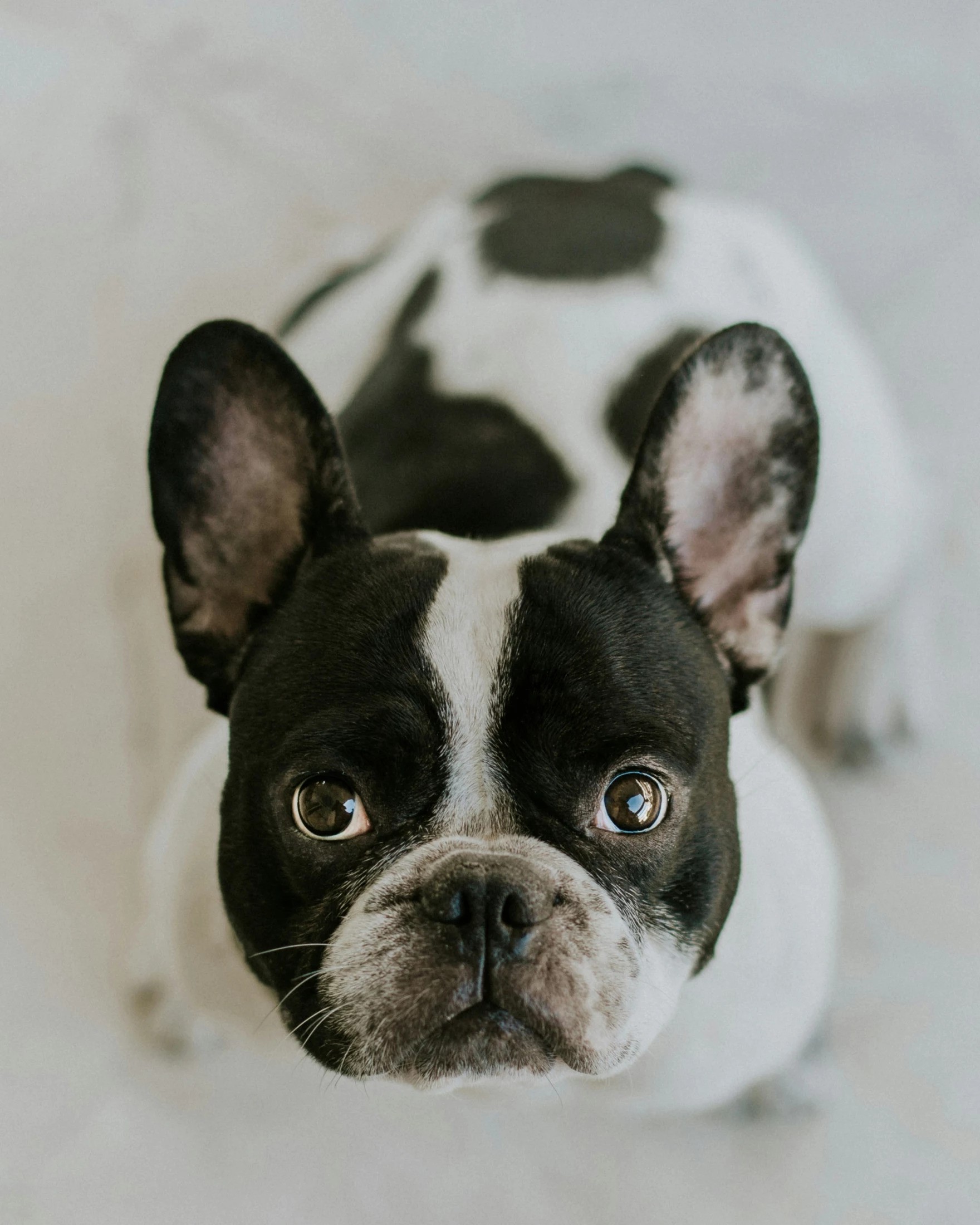
They can suffer from wheezing and struggling to breathe – and the new Companion Animal Protection Ordinance in Ojai, means the breeding of breathing impaired cats and dogs, like French bulldogs and Persian cats is banned.
“For so many of these animals, breathing through their nose is like trying to suck in air through a tiny straw,” explained Jakob Shaw, the manager of strategic initiatives at PETA.
The animal welfare organization welcomed the new law.
“Breeders are deliberately selecting for unhealthy and harmful traits in order to breed dogs with these unnatural features like the flat, smushed faces and corkscrew tails that French bulldogs have. This ordinance prevents breeders from purposefully breeding dogs to have bodies that don’t work,” said Shaw.
“I’m thrilled that Ojai is setting a new national standard for protecting dogs and cats from being bred to suffer. Our companion animals are cherished members of our families and our communities, so I hope that this inspires other cities around the country to adopt Companion Animal Protection Ordinances of their own,” said Ojai Mayor Betsy Stix.
A recent study revealed that some of the most common Breathing Impaired canines have the shortest life expectancies of companion dog breeds. Shaw said that French bulldogs – who have been the most popular dog in the U.S. for the past two years – have an especially low life expectancy of only 4.5 years due in large part to their deformed, smushed-in faces. A number of countries—including Austria, Germany, the Netherlands, and Norway—have banned or restricted the breeding of some or all BIBs.
Ojai City Council has previously passed ordinances recognizing the bodily rights of elephants and banning the use and sale of glue traps for rodents.
The Pet Advocacy Network has released this media statement opposing the ban:
On Tuesday night, Ojai Mayor Betsy Stix and the Ojai City Council in California voted to adopt a misguided new law—the Companion Animal Protection Ordinance—making it the first city to ban the breeding of a wide range of cherished dog and cat breeds.
Concerningly, the Council ignored input from citizens who spoke out against the bill at a public hearing earlier this month and didn’t appear to consult any experts with real-life experience breeding pets. Instead, the Council took months of input from People for the Ethical Treatment of Animals (PETA), which has argued against breeding and pet ownership entirely, saying, “it would have been in the animals’ best interests if the institution of ‘pet keeping’—i.e., breeding animals to be kept and regarded as ‘pets’—never existed.”
The sweeping legislation outlines 19 different categories of “congenital anatomical features”—ranging from “excessive skin folds” to certain snout lengths—as grounds for a ban. Impacted breeds include beloved French Bulldogs, Pugs, Dachshunds, Corgis, Shar-Peis, Mastiffs, Persian cats, and more.
The Pet Advocacy Network (PAN), which advocates for the responsible pet care community at all levels of government, is speaking out against the law, characterizing it as an attempt to ban purebred dogs in general.
“This law is an outrageous overreach that insults responsible pet owners and breeders and takes away their freedom to choose their ideal cat or dog,” said Mike Bober, president and CEO of PAN. “The legislation flies in the face of veterinary science showing that these breeds lead happy, healthy lives with loving families when bred responsibly.
“Historical records show some of these species, including Shar-Peis and Tibetan Mastiffs, are ancient breeds that have existed in their current form for thousands of years,” he added. “We should celebrate these incredible animals, not outlaw them.”
About the Pet Advocacy Network
The Pet Advocacy Network connects the experience and expertise of the responsible pet care community to lawmakers and governing bodies, advocating for legislative and regulatory priorities at the local, state, federal and international levels. Since 1971, the organization has worked to promote animal well-being and responsible pet ownership, foster environmental stewardship, and ensure access to healthy pets, including small animals, cats, dogs, fish, reptiles, and birds. Pet Advocacy Network members include retailers, companion animal suppliers, manufacturers, wholesale distributors, manufacturers’ representatives, pet hobbyists, and other trade organizations. To learn more, visit www.PetAdvocacy.org.
When his girlfriend Misty came to stay, I took Sox and Misty to Christchurch’s red zone for off-lead time.
In this video, the dogs run and play. Greyhounds love to run. In this video, both dogs are free to stop, change direction, dodge and weave as they see fit, and stop when they are ready. This greatly reduces the risk of injury and supports enrichment. It allows them to make choices, something that behaviourists call ‘agency.’
The definition of “to run” is “to move along, faster than walking.” The dogs choose to do this and for how often.
The definition of “to race” is “a competition between runners, horses, vehicles, etc. to see which is the fastest in covering a set course.”
Most dogs love to have a run and play, such as I explain in my post There’s a technical term for almost anything – the zoomie. To truly love to race, a sentient being, be it human or animal, must be able to opt into competition of their own free will, accept the risks associated with the race, and take pleasure in it.
Kathleen Crisley, Fear-Free certified professional and specialist in dog massage, rehabilitation and canine fitness, The Balanced Dog, Christchurch, New Zealand.
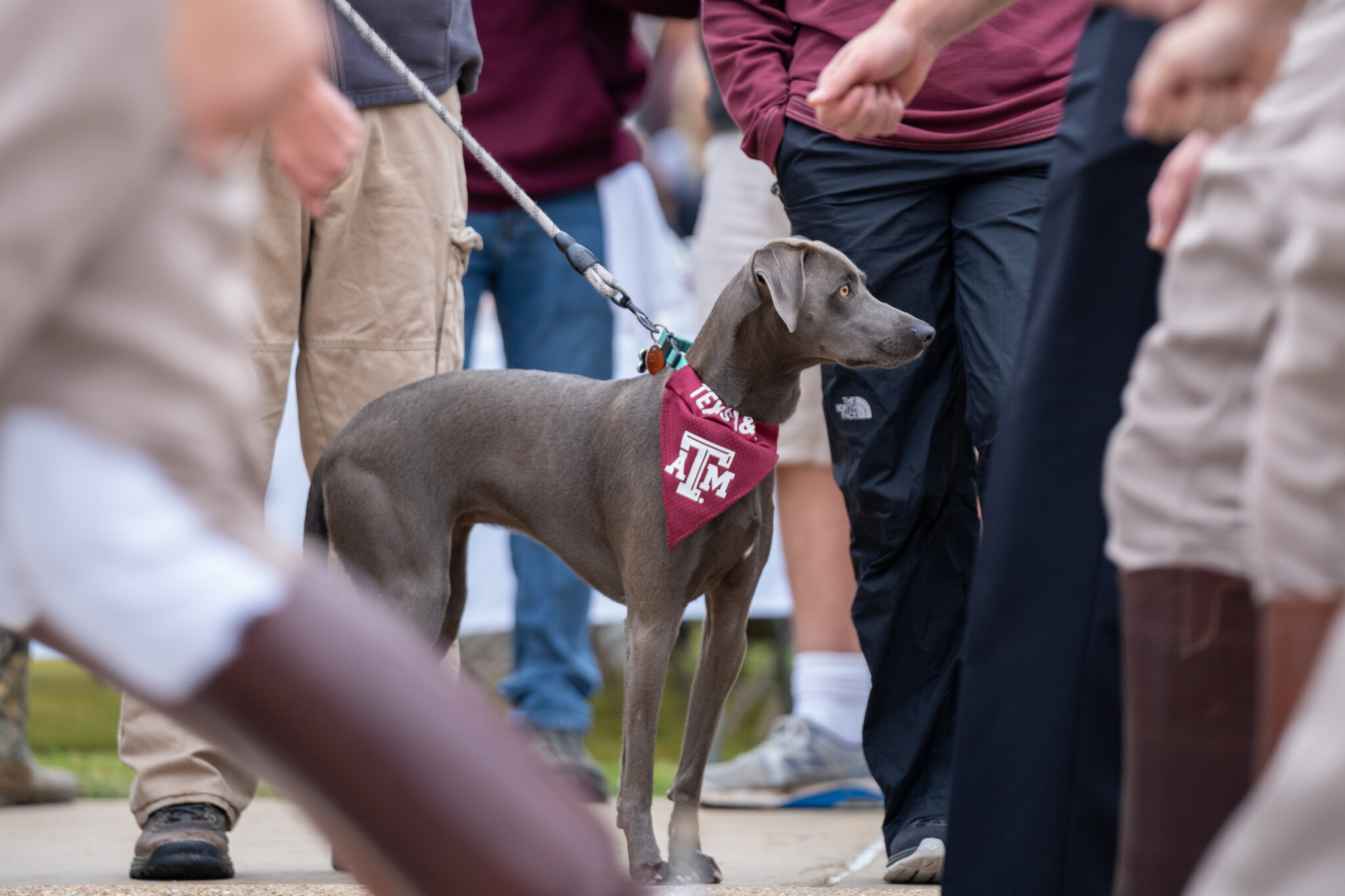
A study by researchers at Texas A&M University and the Dog Aging Project has found that purebred and mixed-breed dogs are mostly equal when it comes to overall frequency of health condition diagnoses. Jacob Svetz/Texas A&M University Division of Marketing and Communications
The study, published in the journal Frontiers In Veterinary Science, found that while certain dog breeds are prone to specific diseases, purebred and mixed-breed dogs are mostly equal when it comes to overall frequency of health condition diagnoses.
“There are several well-known diseases that frequently occur in specific dog breeds,” said Dr. Kate Creevy, chief veterinary officer of the Dog Aging Project and a professor in the VMBS’ Department of Small Animal Clinical Sciences. “This has helped perpetuate the misconception that all purebred dogs are more prone to disease, but that is not the case.”
The study — which surveyed the owners of more than 27,000 companion dogs — also found that some of the most common diagnoses, like ear infections or osteoarthritis, occur in both purebreds and mixed-breed dogs.
Breaking Down The Data
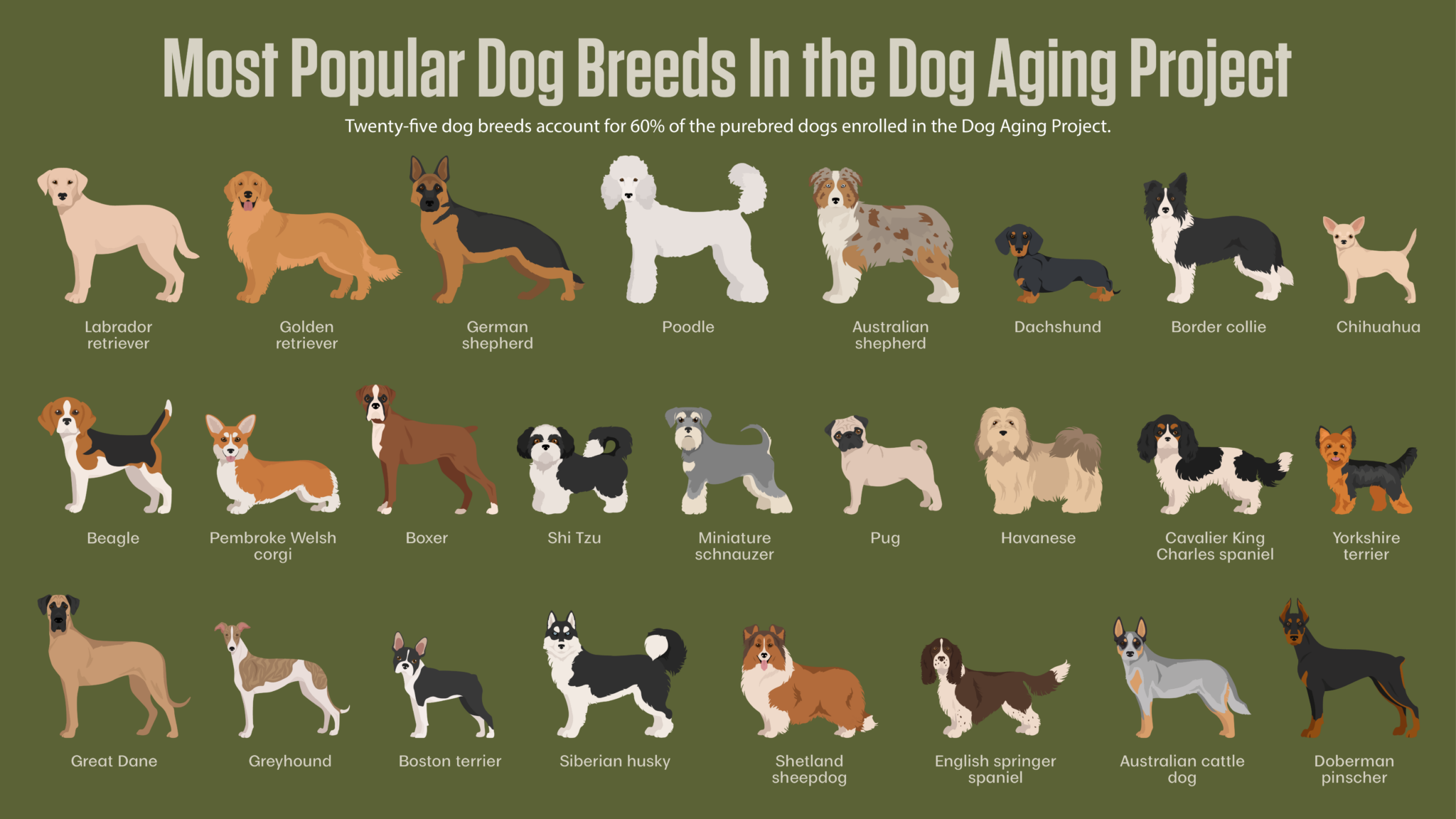
According to the study, 25 breeds make up about 60% of the purebred dog population within the Dog Aging Project. In order of popularity, those breeds are:
Labrador retriever
Golden retriever
German shepherd
Poodle
Australian shepherd
Dachshund
Border collie
Chihuahua
Beagle
Pembroke Welsh corgi
Boxer
Shi Tzu
Miniature schnauzer
Pug
Havanese
Cavalier King Charles spaniel
Yorkshire terrier
Great Dane
Greyhound
Boston terrier
Siberian husky
Shetland sheepdog
English springer spaniel
Australian cattle dog
Doberman pinscher
Within these 25 breeds, a total of 53 unique medical conditions make up the top owner-reported medical conditions.
“The medical conditions reported by owners of purebred dogs varied considerably,” Creevy said. “However, some conditions appeared frequently in the top 10 reported health conditions by breed.”
Across the 25 most popular breeds, those 10 conditions were:
Dental calculus (hardened plaque)
Dog bites
Extracted teeth
Giardia (a parasite)
Osteoarthritis
Seasonal allergies
Ear infection
Heart murmur
Fractured teeth
Cataracts
For mixed-breed dogs, the most common reported conditions were highly similar, with cataracts and heart murmur being replaced by torn/broken toenail and chocolate toxicity.
Some conditions, like dental calculus and osteoarthritis, appeared with roughly the same frequency in both purebred and mixed-breed dogs. Other conditions were more common in one than the other; extracted teeth and dog bites were more common in purebreds, versus ear infections in mixed-breed dogs.
“Out of the 53 medical conditions that owners reported, 26 did not differ significantly between mixed-breed and purebred dogs,” Creevy said.
Implications For Dog Owners
Ultimately, one of the most important findings from the study is that dog breed is only one aspect of pet health to consider when creating a pet’s care plan or researching what kind of dog to adopt.
“People should consider many factors when choosing a dog, including environment, lifestyle, social interactions and physical activity that will be available to the dog,” Creevy said. “Planning for both preventive veterinary care and medical care as the dog ages is also prudent. Dog owners should also talk with their primary care veterinarians about the kinds of medical problems to which their new dog might be particularly prone based on breed, size, sex, etc.”
As the study also showed, some of the most common reasons owners take their dogs to the vet have little or nothing to do with breed.
“Dental disease, allergies and osteoarthritis are among the most common conditions for all dogs,” Creevy said. “Owners should work with their primary care veterinarians on a plan to manage dental health. Regular exercise and maintaining lean body weight may help delay, prevent or lessen the impact of osteoarthritis.”
Expanding Dog Health Understanding
Though the study is already one of the largest cross-sectional studies of canine health, researchers at the Dog Aging Project are far from done examining its findings.
“We were surprised by the number of owners who reported that their dogs had experienced a bite from another dog,” Creevy said. “More investigation is needed to determine what this means and what particular factors might put an individual dog at risk.”
The DAP is a collaborative, community scientist-driven data-gathering research project that enrolls companion dogs from all backgrounds to study the effects of aging and gain a better understanding of what contributes to a long and healthy life for a dog.
The DAP continues to accept dogs of all breeds into the project. To date, more than 50,000 dogs have been enrolled.
Many of their research projects have led to translational studies that inform not only dog health, but also human health. To enroll your dog, or learn more, visit dogagingproject.org.
Twenty-five dog breeds account for 60% of the purebred dogs enrolled in the Dog Aging Project. Aubree Herrold/School of Veterinary Medicine and Biomedical Sciences
It’s not often the dog but the person holding the leash who creates the conditions, often by neglect or abuse, for a dog to attack.
***This is a wonderful opinion piece by Marcela Garcia of The Boston Globe. The words are hers, but I agree entirely***
Supporters of the XL bully dog breed held placards during a protest against the UK government’s plans for the breed, in central London on Oct. 7.HENRY NICHOLLS/AFP via Getty Images
“They’re not dangerous if you raise them right. Neither are the dogs.”
Those lines are from a sign carried by one of the hundreds of demonstrators who recently took to the streets in London to protest Prime Minister Rishi Sunak’s proposed ban on the American XL bully.
Sunak’s measure came after a string of biting incidents, at least two of them fatal, involving canines believed to be American bully XL dogs, a relatively new breed. In one short but horrific incident caught on camera in Birmingham, England, an 11-year-old girl is attacked and bit by a dog.
But such a policy ignores the real cause behind aggressive and dangerous dogs. It’s not often the dog but the person holding the leash who creates the conditions, often by neglect or abuse, for a dog to attack. While it’s true that the American bully XL has a history of being used in dogfighting, the boxer, the shar-pei, the Boston terrier, and the English bull terrier also all have histories of fighting.
Kara Holmquist, director of advocacy at the Massachusetts Society for the Prevention of Cruelty to Animals, said in an interview that there are many factors that can come into play and compel a dog to bite — “how the dog is socialized, how the dog is managed, and whether it’s spayed or neutered plays a role. So when places enact policies that just look at breed, not only is it not fair, but it’s just not effective.” It’s making a blanket judgment on what a dog breed is perceived to be, she said. Nowadays it has become very difficult “to look at a dog and know or make a guess as to what type of breed it is.”
That’s why the MSPCA, Holmquist said, helped push for a law, passed in 2012, that prevents cities and towns from enacting dog breed bans. It was around the time that there was hysteria around pit bulls and Dobermans. But discrimination against certain dog breeds still occurs in some spaces, and the MSPCA is working to remove dog breed bans in housing policies.
“Responsible Massachusetts dog owners are often not welcome in certain housing markets, particularly if they own medium or large dogs, or certain dog breeds (or a dog that looks like one of these breeds),” read testimony presented jointly by animal rights advocates, including the MSPCA, during a hearing last month on a bill that would prevent some housing providers, such as condo associations and public housing, “from arbitrarily refusing responsible dog owners as tenants.” The organizations also noted that this “discrimination occurs in some publicly-funded housing, making this a particularly pernicious practice.” It makes it a housing equity issue, as well.
Massachusetts’ cities and towns do have the power to police specific dogs through the dangerous dog law, the purview of the animal control officer. “If there is a dog that is of concern that’s demonstrated some behavior that’s outlined in the law, there’s a process for addressing that through a dangerous dog hearing,” Holmquist said.
Meanwhile, it’s looking like there will be no such dog hearings for the American bully XL in England. Prime Minister Sunak has pledged to ban the dogs but, thankfully, existing ones will receive amnesty. The dogs, which can weigh over 130 pounds, have risen in popularity since the COVID-19 lockdowns, which saw dog ownership rise. Under Sunak’s plan, owners of those existing dogs will have to register them, as well as muzzle them in public places. They will also be required to neuter them in an attempt to eradicate the dog type within a decade.
What’s baffling is that the UK has evidence that banning breeds does not make the public safer. The country has in place a Dangerous Dogs Act, which was enacted more than three decades ago. It bans four breeds: the pit bull terrier, Japanese Tosa, Dogo Argentino, and Fila Brasileiro. Despite that, the number of dog bite incidents has gone up in the UK.
The English dog-owning community is not taking the proposal lying down, but it seems clear the British government has the authority to deem a breed dangerous and ban it. In the case of the American bully XL, it still isn’t officially recognized as a breed by the UK’s Kennel Club. So the breed needs to be declared a breed before it can be banned.
I’m still waiting for a ban on bad dog owners, because when you follow the trail leading to a terrible dog incident, often the owner’s treatment of the dog is to blame. The American bully XL may become extinct in Britain, but you can bet the country’s bad dog owners eventually will find another breed to mistreat. And sadly it, too, will be banned.
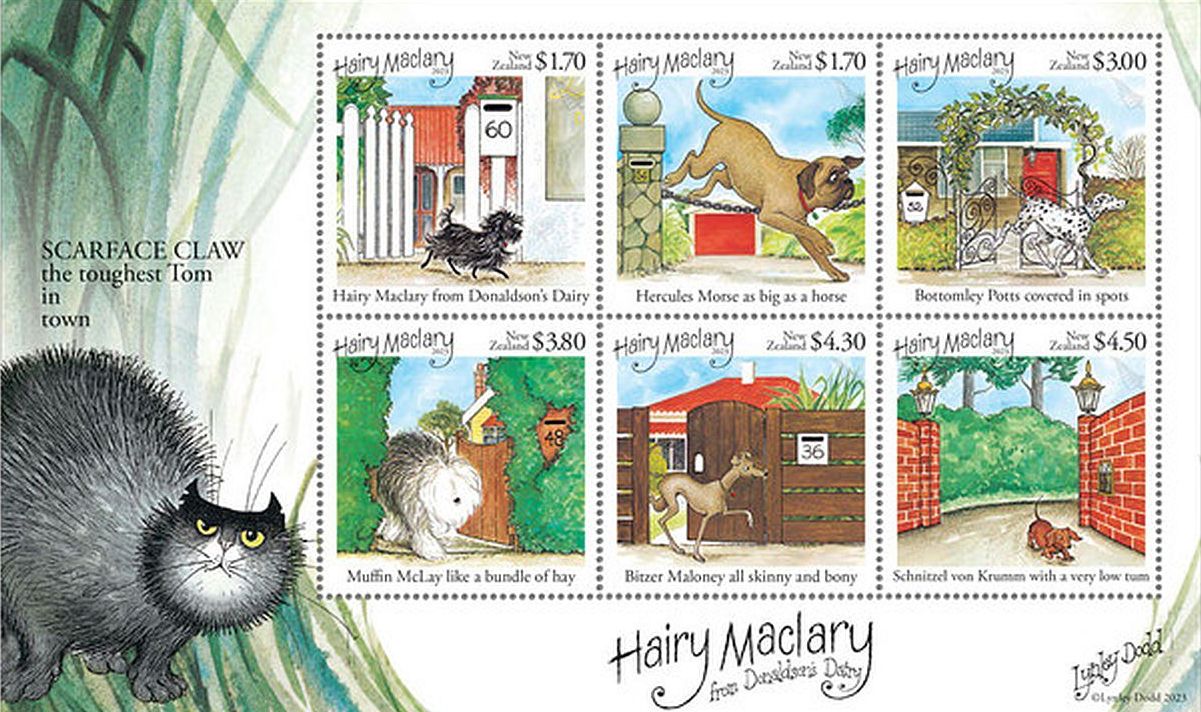
For Dame Lynley Dodd, a sketch of a dog on note paper started it all – 40 years ago.
Harry Maclary From Donaldson’s Dairy was first published in 1983. The book features Harry, a mixed breed dog who looks a lot like a Skye or Scottish Terrier (Dodd has said that he is a terrier mix) alongside his canine friends:
Hercules Morse, As Big as a Horse, a Mastiff
Bottomley Potts, All Covered in Spots, a Dalmatian
Muffin McLay, Like a Bundle of Hay, an Old English Sheepdog
Bitzer Maloney, All Skinny and Boney, a mixed breed dog that is clearly part Greyhound
and
Schnitzel Von Krumm, With a Very Low Tum, a Dachshund
Every Kiwi child knows this story! (with a further 19 books that followed the first).
NZ Post will release a series of commemorative stamps on 1st March to celebrate the 40th anniversary of this now classic children’s book. Can you guess which character is Sox’s favourite?
Kathleen Crisley, Fear-Free certified professional and specialist in dog massage, rehabilitation and nutrition/food therapy, The Balanced Dog, Christchurch, New Zealand
Rosie is my foster dog; she arrived one month ago exactly, on 17 December 2021.
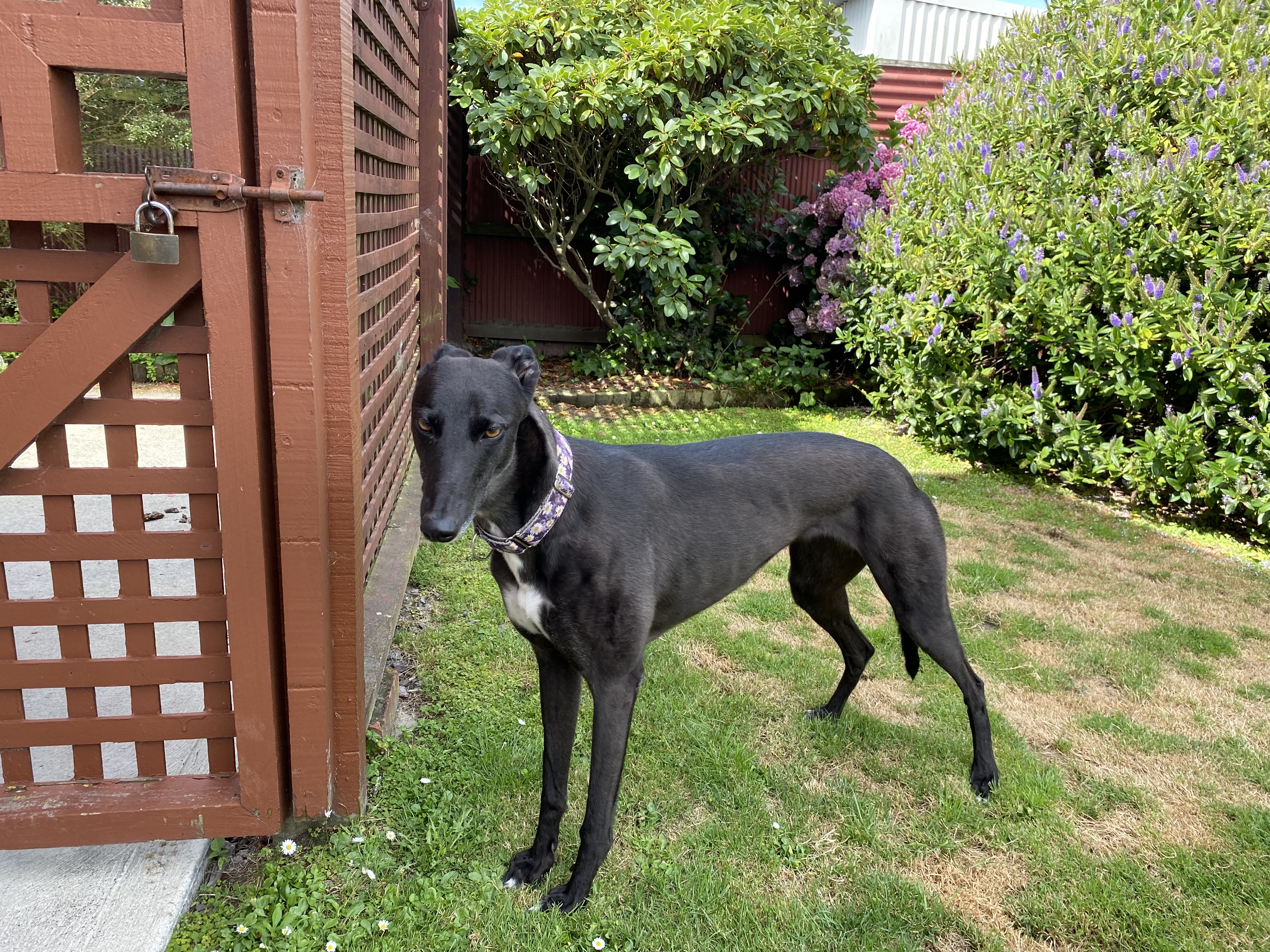
Rosie is an affectionate black greyhound who has had three unsuccessful adoption placements. You see, Rosie is profoundly deaf.
She was not born deaf, but she became deaf through ear infections – and what appears to be lots of them, or at least ones that had unsuccessful or no treatment. Her ear canals are so severely scarred that about the only sound she has reacted to was the high-pitched loud squeal of my burglar alarm which I set off accidentally last month.
But there is a lot more you need to know about Rosie to understand her
Rosie doesn’t know she is special needs. She simply lives in a world where she sees people’s lips move but no sound comes out. She is reluctant to make eye contact with new people and so can easily misread their intentions. She responds to emotional energy very well; she seems to know when someone is smiling and wants to give her a pat; I always ask them to allow her to come to them which works well.
When Izzy died, she certainly knew I was upset and came in for lots of cuddles and reassurance.
She isn’t so sure of people wearing masks because masks cover faces and Rosie needs faces to read the situation. I have been deliberately taking her places where she meets people in masks and where I am wearing mine. She even came with me to the drive-thru vaccination clinic when it was time for me to have my Covid-19 booster shot; she barked anxiously at the face outside the window.
Mask-wearing will be part of our lives for a while and Rosie needs to live successfully in a masked up world so I will continue exposing her in a controlled manner to mask-wearing people so she can become more confident. Today, for example, we went to the local SPCA op shop which welcomes pets. The shop attendants and the customers were all wearing masks. We didn’t have any issues.
Rosie has lots of energy. When the sun is up, so is she. Forget the advice that a greyhound is so placid that two, 20-minute walks per day are sufficient exercise. Rosie has been having two walks of at least 30-40 minutes each and cracks a good pace for the entire time. An hour’s long walk on the beach with greyhound Misty was not problem for her, either.
I gave Rosie a massage over the weekend (her first) and I can assure you that she has great muscle tone. For a girl who is now 6 years, 9 months old, she is in great shape!
Rosie would benefit from being adopted by a household with another dog who is well-settled and playful. Rosie likes to play (she has had several play dates and is enthusiastic about engaging with other dogs who are both off-lead and on-lead). A dog that could be Rosie’s mentor will give her someone to follow around and mimic. In my opinion, a chilled out dog who can teach Rosie the house rules will see her settle into a new adoptive home pretty quickly.
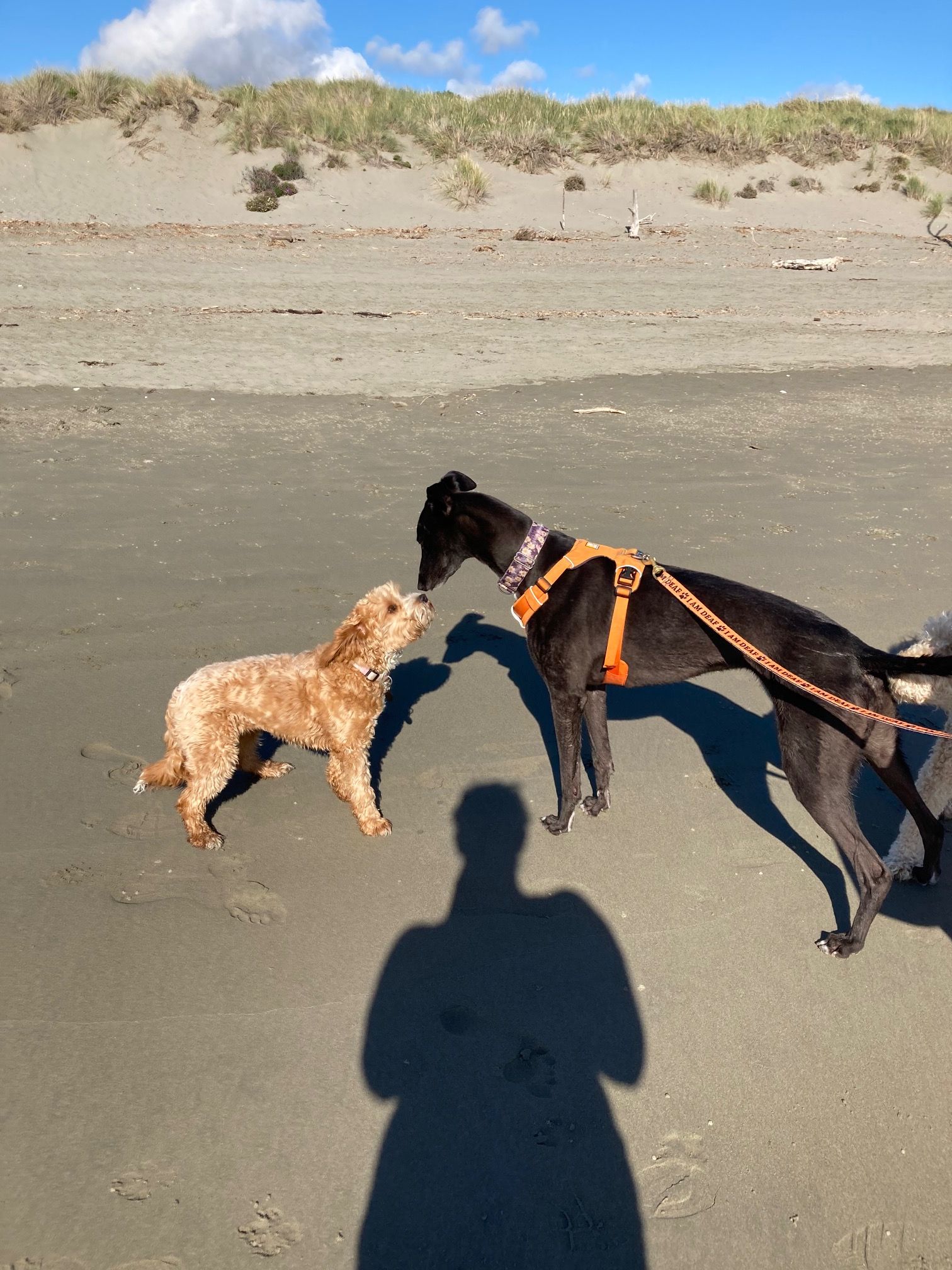
Meeting other dogs at the beach
Remember, though, that Rosie is deaf. She will always be deaf no matter how much training she receives. Rosie misses out on the low growls of dogs who are giving her a warning signal.
She doesn’t hear the children on the footpath who are coming from behind on scooters (startling her in the process). Whomever adopts Rosie needs to understand that they need to be her ears when they are out of the house – at all times. And when integrating into her new home, the dog:dog interactions will need to be supervised initially. Rosie doesn’t mean to be annoying, but she could be, in her enthusiasm to play.
Every greyhound needs a securely fenced section.
Rosie definitely needs one and always will. Off-lead exercise can only happen in securely fenced areas.
Rosie explores the section regularly throughout the day; the gate is always padlocked for added security
You may have heard that people who lose the their hearing seem to develop enhanced senses of touch, taste, smell, and sight. This is definitely the case with Rosie.
She is a sighthound. I can attest to the fact that Rosie triggers on all movement. So that is definitely cats, ducks, chickens, other birds, and rabbits. She also reacts to leaves, branches, pieces of rubbish and even my neighbour’s clothes on the line when they move in the breeze. Last week we were taking an afternoon walk along Papanui Road and the sunlight was reflecting off cars onto the ceiling of the shop walkway. Rosie startled at the reflections because it looked like something overhead was coming our way.
Consequently, it’s essential that anyone who walks Rosie does so with a firm grip of the leash and with it wrapped around their wrist. Always. And so that means that Rosie cannot be taken on walks by young members of an adoptive family. Adults only. Able-bodied ones, too. And please – a normal leash and not those horrible extension leads…
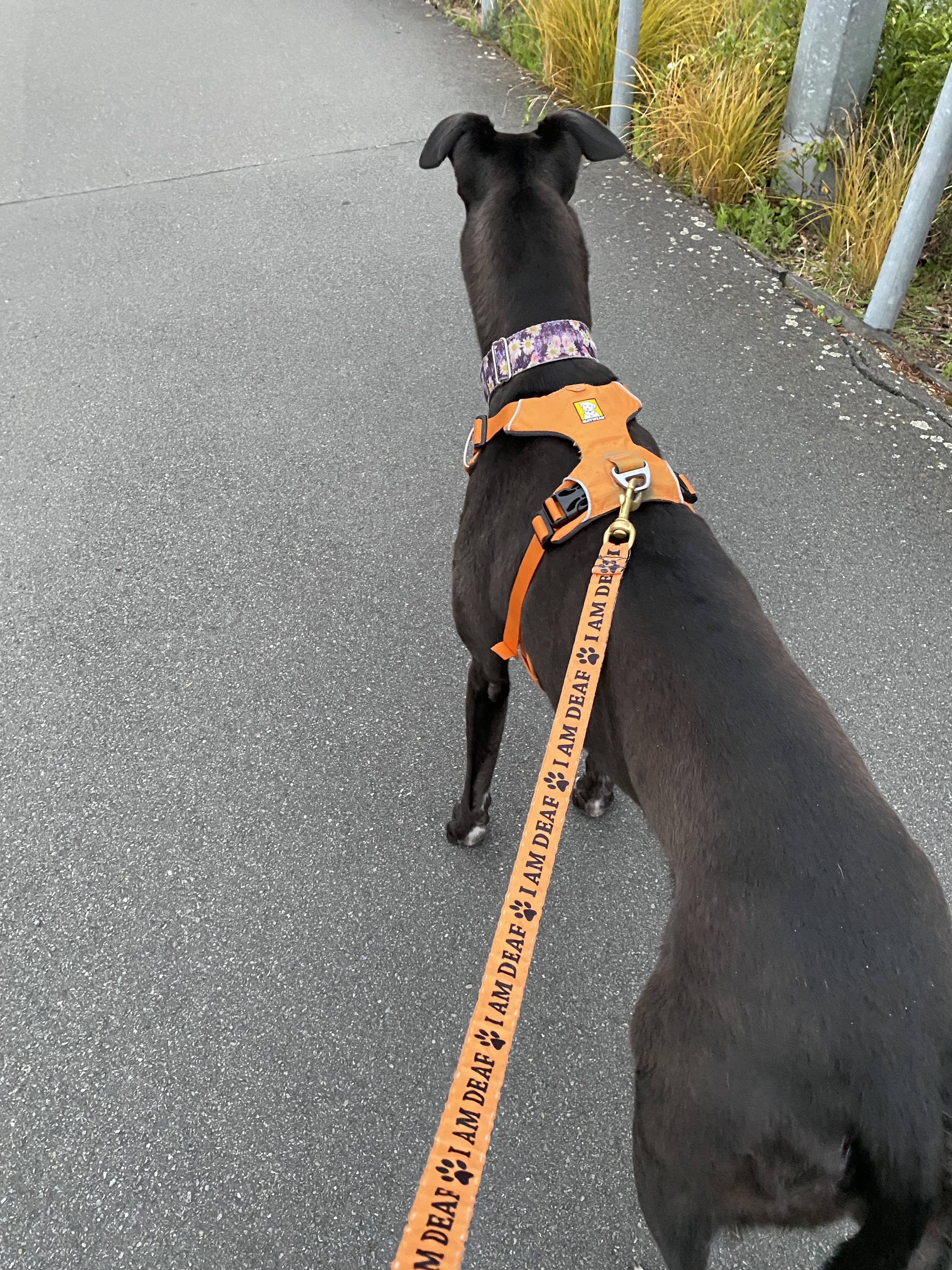
At my request, Rosie came with a lead that helps people know that she is a deaf dog. Her walking skills have improved considerably over the last month. She walks more calmly, mostly at my left side, although she will cross over the footpath when there is something interesting to investigate. Rosie is supposed to be a pet, not a competitive obedience dog and so I am happy to have her wander a bit. The important thing is that she has stopped tripping me up on walks with frantic zig-zagging in front of me.
If Rosie sees something of interest – like a neighbourhood cat – she will pull and rear up on her hind legs. Hold your ground and hold on tight. Rosie should always be walked in a harness for greater control and to avoid damage to her neck.
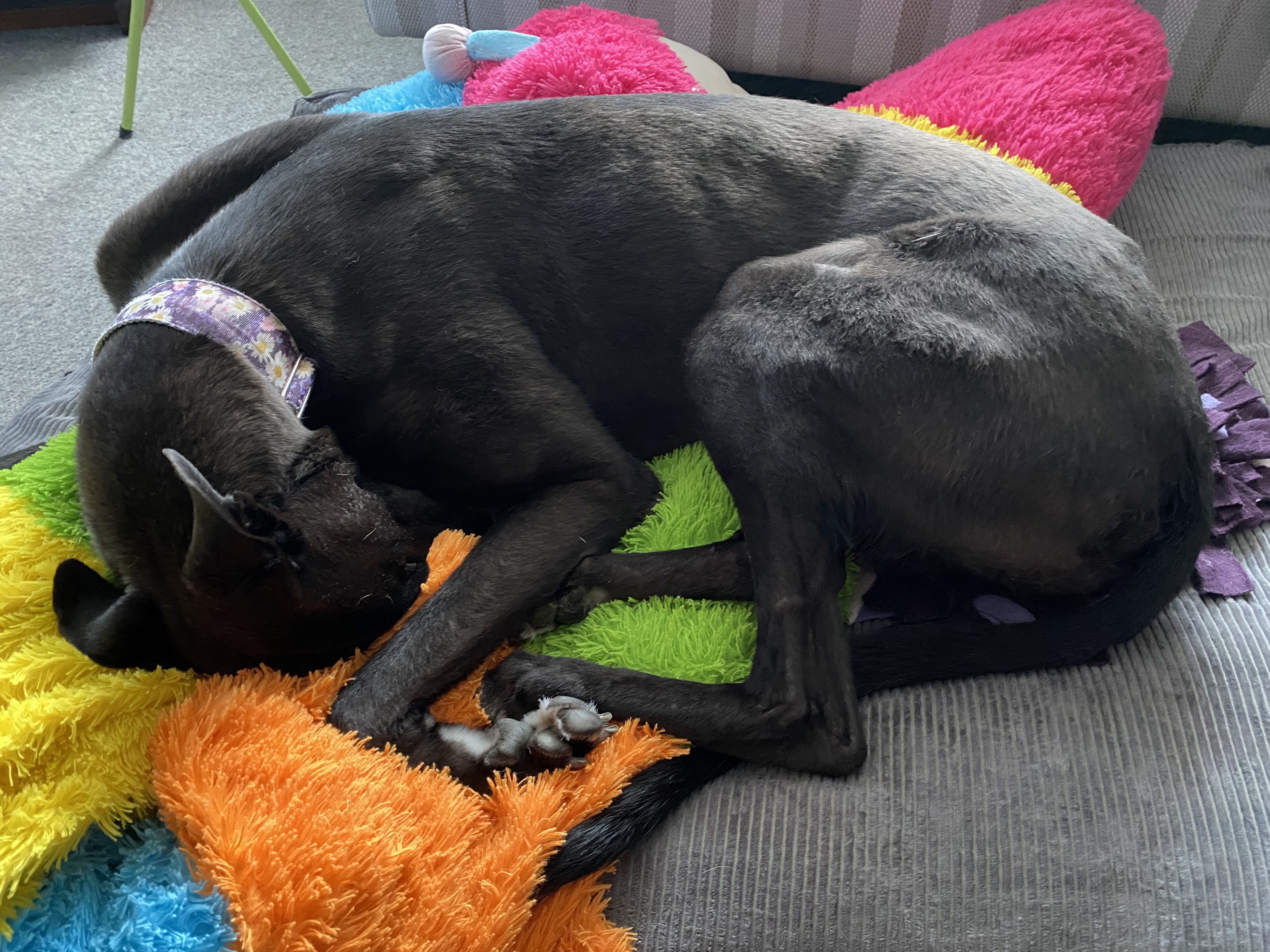
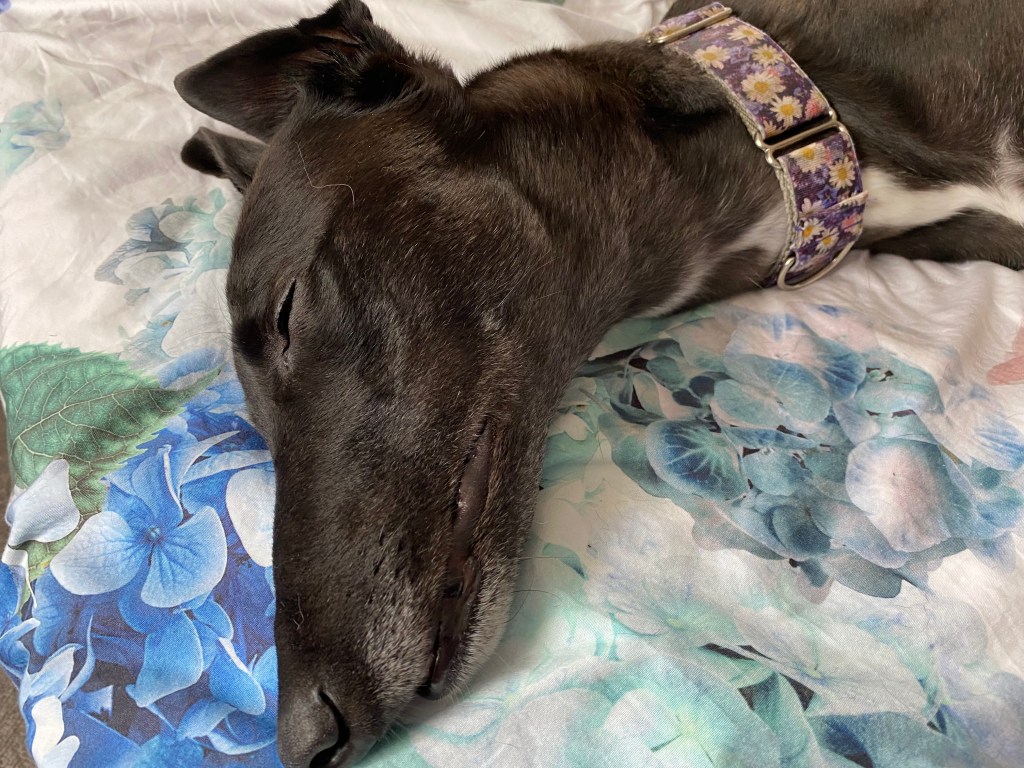
Rosie is a deep sleeper. All greyhounds sleep. Rosie sleeps more deeply than most. We know that dogs have a different sleep pattern than we do, but since Rosie cannot hear, it seems that she goes into a deep REM-like sleep more often. (This explains her energy levels when she’s awake – refreshed and ready to go!)
Greyhounds are known for their sleep startle – that sweet little greyhound can become a raving Cujo when wakened suddenly. In Rosie’s case, her risk of sleep startle is much greater. Therefore, I have developed a new habit of walking into a room with a good solid stomp of my foot. The vibrations will stir Rosie from her slumber.
The risk of sleep startle is another reason why Rosie cannot go to a home with small children, who are unlikely to remember the rules about engaging with a sleeping Rosie. Mature households only are needed as Rosie’s eventual adoptive family to keep everyone safe.
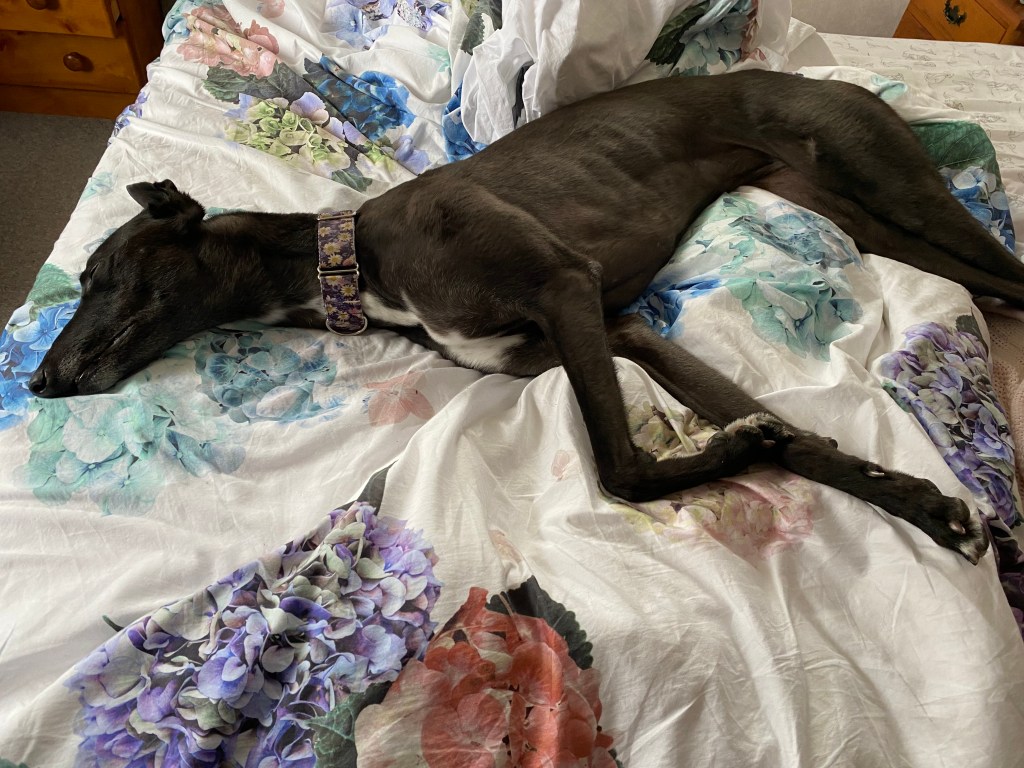
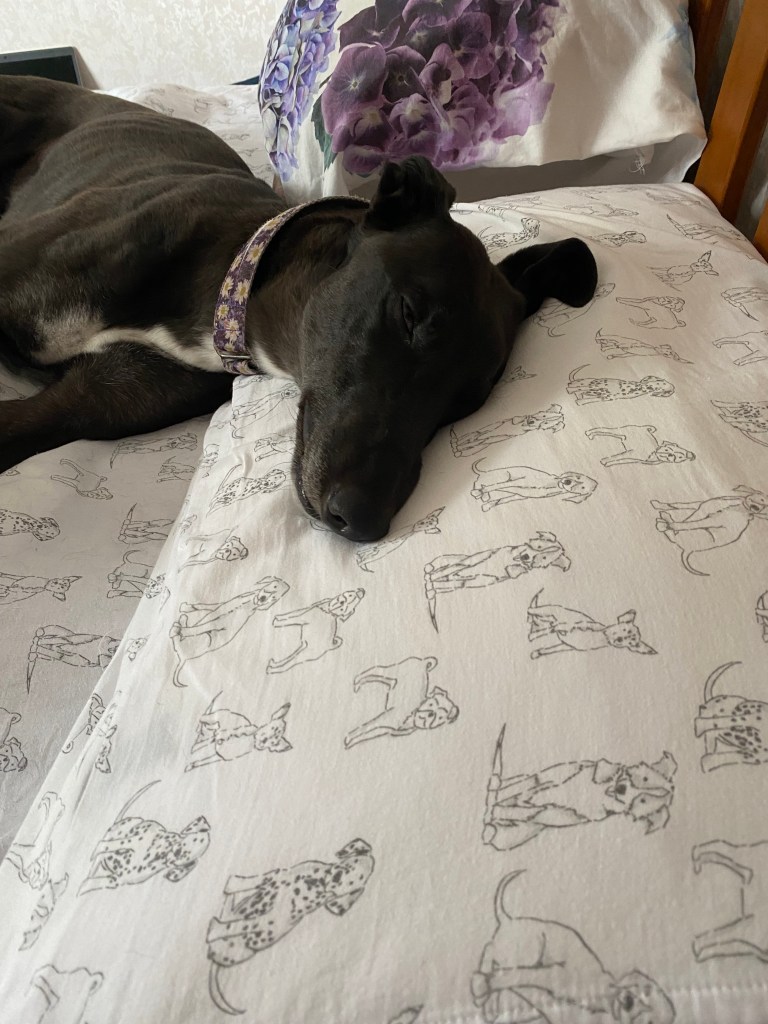
I mentioned earlier that Rosie is cuddly and affectionate. I have allowed her to sleep on my bed, particularly because she really wanted to snuggle and because she came one night to my bedroom at about 3 am when I was simply too tired to keep pushing her off the bed. Besides, I feel that since she has shown no interest in the sofa, she rightly deserves a chance to be a real pet greyhound and sleep on the bed.
Rosie is completely house-trained and she only barks when she is excited (such as when I am taking too much time to get dressed in the morning for our walk). I have had a pet cam running constantly for the last three weeks – she only whimpers a bit when I leave the house and then eventually settles on her bed for a deep sleep. She will sometimes go into the crate for a rest, but the crate is also strategically positioned so she can watch me in the kitchen from a safe distance.
In the interest of finding Rosie her forever home, I have begun working with Rosie on an essential cue – Look At Me. The Look At Me is the foundation for interacting with her handler so that she can then react to other visual cues which will be trained over time. I have already instituted her Come command, which is a vigourous tapping of my thigh.
We are perfecting her Look At Me and Come. Good things take time and I keep her training sessions short – only about 5-10 minutes each maximum. This ensures Rosie is set up for success. I am thoroughly happy to keep Rosie for as long as it takes until we find her the perfect match for her adoptive home and, in the meantime, we can continue our training and enjoy each other’s company.
Enquiries about adopting Rosie should be directed to Greyhounds as Pets.
Kathleen Crisley, Fear-Free certified professional and specialist in dog massage, rehabilitation and nutrition/food therapy, The Balanced Dog, Christchurch, New Zealand
Have you ever noticed that the rectangular film frame is less suited to the human body shape than to the four-legged format of the dog?
That’s right: cinema was made for dogs. But some dog breeds make more movies than others. From the canine celebrity Rin Tin Tin to the uncanny CGI of Cruella and Call of the Wild, it feels like German Shepherds, Dalmatians, and Saint Bernards are better represented than other ‘makes’ of dog. But is this really the case? Or do they just do more PR?
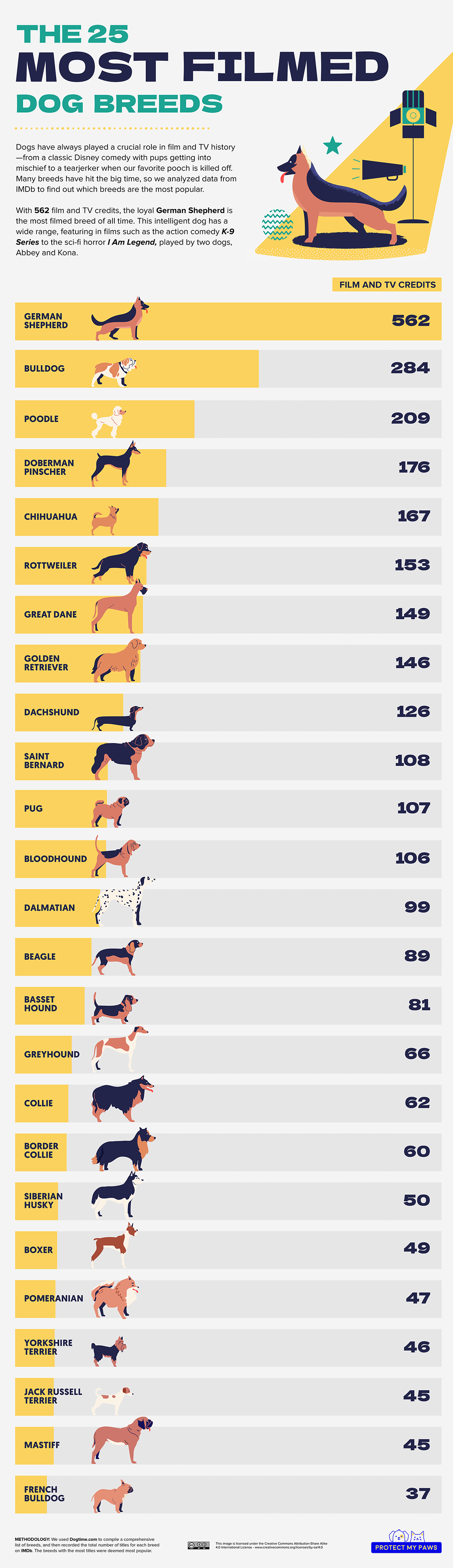
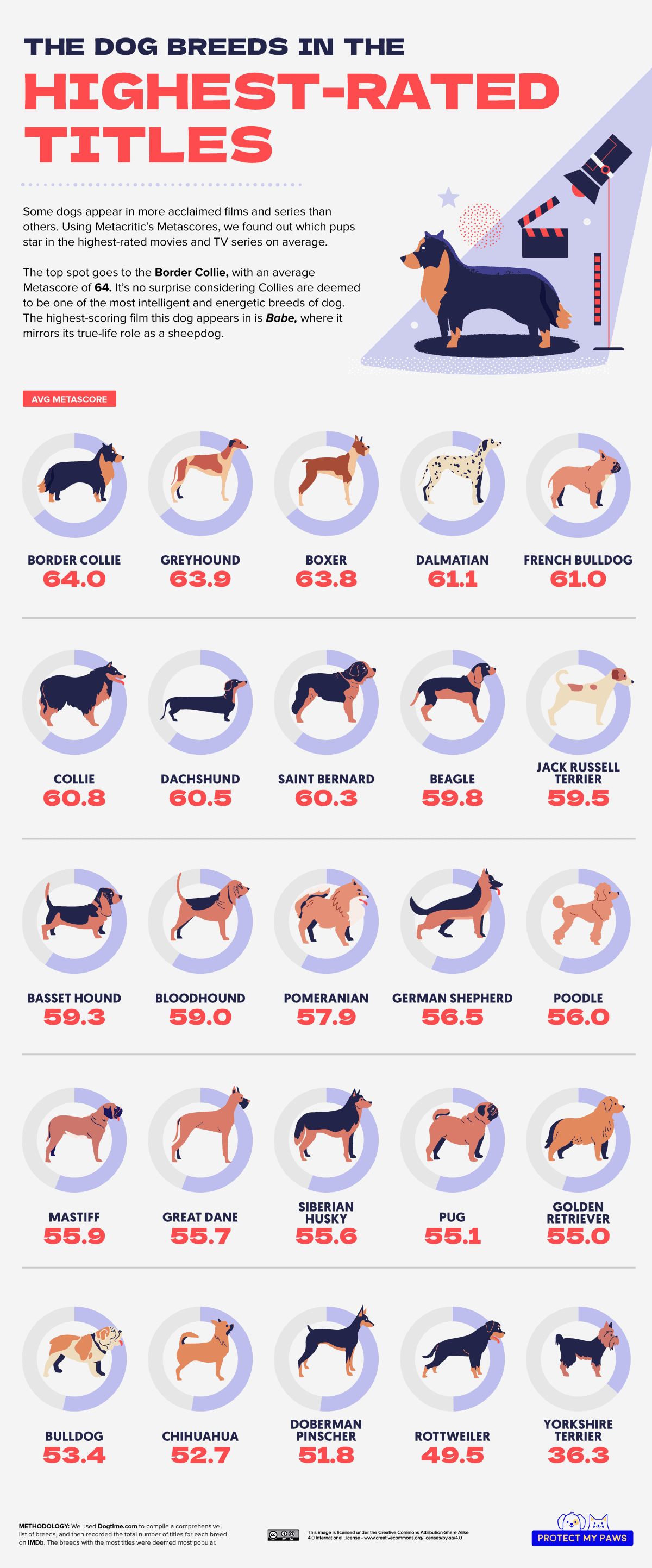
Protect My Paws used IMDb data to identify the breeds that appear in the most films and TV shows of the past century-and-a-bit. We found some stuff that will change what you thought you knew about dogs in movies.
Today we present our guide to the Michael Caines and Samuel L. Jacksons of the canine world: the dog breeds that never turn down a role.
The German Shepherd Appears in More Movies Than Any Other Breed
With the dependability of a four-legged James Stewart and the ruggedness of a young Steven Seagal, the mighty German Shepherd is the canine king of Hollywood. German Shepherds – also known as Alsatians – have collected nearly twice as many credits as the second most active dog breed, the bulldog.
The Saint Bernard tends to be a limelight grabber with its James Belushi-esque presence in pictures such as Beethoven and Daddy Daycare. But nine other breeds, including the poodle and the Chihuahua, have more films to their name. And the Dalmatian? Since we counted number of films, not number of dogs, the Dalmatian is two movies short of achieving 101 credits, and does not even make the top 10.
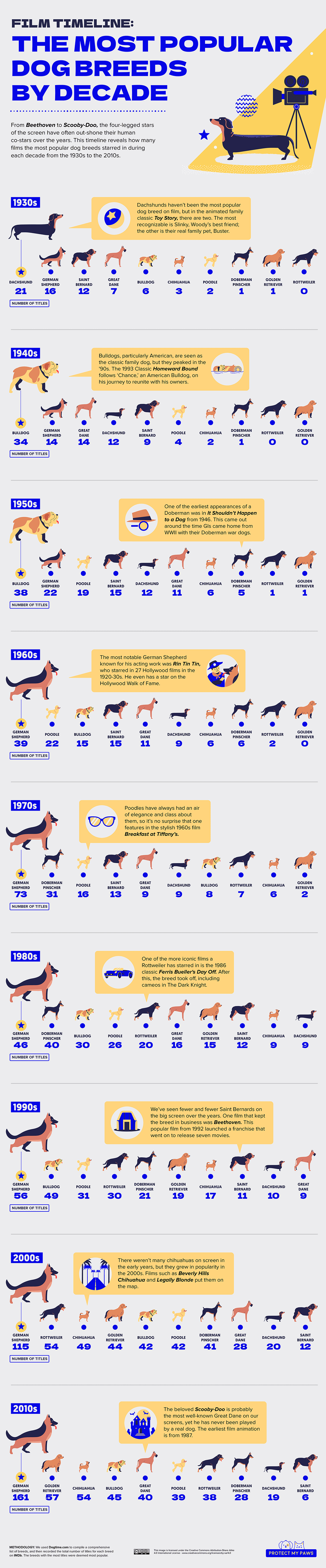
Cinema’s ‘Funny Dogs’ dominate 1930s, ‘40s, ‘50s
How have audiences’ preferences for dog talent changed over the years? Well, the original Alsatian superstar, Rin Tin Tin, racked up the credits during the ‘Rinty’ craze of the 1920s. But his descendants and namesakes worked with only sporadic success.
It was not until the 1960s that the German Shepherd became the most-cast breed once again. The long-beaked hound was spotted in seminal zombie flick Night of the Living Dead (1968) and arthouse classic The Diary of a Chambermaid (1964), among more than 50 titles in the 1960s. But his most iconic role was as The Littlest Hobo, a homeless dog who walks the Earth solving problems for strangers.
The German Shepherd has dominated every period since the 1960s. But Hollywood’s golden age was an era of bulldogs. This wrinkle-faced bruiser can claim 34 titles in both the 1940s and the 1950s. The bulldog played alongside Judy Garland in Meet Me In St. Louis (1944) and raised laughs with Abbott and Costello and the Three Stooges. But most of the bulldog’s golden age credits are due to appearances in cartoons, particularly as Spike – a canine foil to Tom and Jerry.
That just leaves a surprise winner for the 1930s: the dachshund, or wiener dog. Why a surprise? Because the dachshund is clearly a better fit for either widescreen or CinemaScope, and neither were commonplace until the 1950s. Sure, there was a role in Hitchcock’s Secret Agent and all-star drama Grand Hotel – but most of the wiener dog’s 1930s roles came from cartoons. While bulldogs tickled 1950s audiences, in the 1930s people found dachshunds hilarious.
Sheepdog Breed Is Most Critically Acclaimed Dog
Next, we used Metacritic to find the average rating each dog breed has across their whole back catalog. From this perspective, finally the German Shepherd’s Hollywood crown starts to look wonky. With an average rating of 56.5, the German Shepherd is only the 14th most critically acclaimed dog breed.
But the critic’s darling, our lifetime achievement nominee, is the border collie. As sharp as Joan Crawford, as tenacious as Sigourney Weaver, as adorable as Heath Ledger, the border collie picks their roles carefully. Choice cuts include supporting parts in Babe (1995) and The Lobster (2015), while the collie has also played the ‘quintessential dog’ in dog movies, including A Dog Year (2009), Hotel for Dogs (2007), and Duke (2012).
As a final note, never see a film with a Yorkshire terrier in it. With an average rating of 36.3, they are all stinkers.
The Start of a Beautiful Friendship
This year was a big year for dogs in movies. The coveted Palm Dog (the canine answer to the prestigious Cannes Palme d’Or) was won not by one but three springer spaniels. All three belong with their co-star, the actor Tilda Swinton, who didn’t win a thing.
Could Rose, Dora, and Snowbear usher in a new era of springer spaniel domination in Hollywood? Could multiple dogs in the billing mean cinema is finally shaping up to fulfill its destiny – as a medium for actors who are longer than they are tall and who shout their lines in short, loud bursts, like furry Al Pacinos?
Methodology
Our initial list of dog breeds was compiled usingDogtime.com. Each dog breed was then looked up onIMDB custom search engine in two variations: with and without “dog,” e.g., “German Shepherd” and “German Shepherd dog,” recording a total number of unique titles (films and tv series), as well as their year of release, and their Metascore, where available.
Dog breeds with the highest number of unique titles they appeared in were deemed the most popular. Dog breeds with the highest average Metascore of the titles they appeared in were deemed the highest rated.











 DoggyMom.com