Category Archives: dog care

PETNet – new pet food incident tracking system

This week the US Food & Drug Administration and the Partnership for Food Protection launched a new web-based system to enable real-time information sharing about pet food incidents.

‘Incidents’ are those occasions that appear to be related to defects in pet foods or illnesses brought on because of the consumption of pet foods.  The concept is that federal, state and local authorities that are responsible for regulation of the pet food industry and the tracking of outbreaks of disease in companion animals will register information on the voluntary system.  If they suspect a trend or suspicious connection with pet foods, they’ll register their information on the PETNet system.

In 2007, there was the huge recall of pet foods contaminated with melamine and when the events were debriefed, it showed that veterinarians were picking up on a trend but had no readily available platform to share their concerns.  Regulatory authorities were slow to react.  Through the internet, email systems and professional networks, veterinarians were able to get the word out that there was a problem with pet foods, but not in as quickly as they would have if there was a platform such as PETNet.

The Partnership for Food Protection was established in 2008 by the FDA bringing together federal, state, local, territorial and tribal representatives with expertise in food, feed, epidemiology, laboratory, animal health, environment and public health.

This is a list of PETNet project members.

Source:  US Food & Drug Administration media statement, 1 August 2011

Dogs and grief

Dogs are emotional creatures and they often form strong bonds to their owners, extended family, and other dogs in the household.  This, of course, is one of the many benefits of having a dog (or more) as members of your pack.   Because of these emotional connections, dogs also experience grief when a loved companion dies.

Symptoms of grief can include lethargy, loss of appetite and weight loss.  With the grief comes a depression of the immune system, possibly leaving your dog vulnerable to problems like kennel cough (even if they are vaccinated).  Being aware of these symptoms is important and when a loss is experienced, extra care and attention are needed to help the dog manage their grief.  Things like extra outings to new parks can help stimulate brain activity and keep the dog happy.   Ensuring the dog has a solid routine they can rely on is also very comforting.   I have even been called in to give grieving dogs a relaxation massage to provide them extra stimulation and help them feel better.

One of the most ‘celebrated’ cases of a dog’s loyalty to its dead master is the story of Greyfriars Bobby.  Bobby was a Skye Terrier owned by John Gray, who worked in Edinburgh, Scotland as a night watchman.    In February 1858, John Gray died from tuberculosis and his body was buried in the Greyfriars Kirkyard.  According to legend, for the next 14 years, Bobby spent most of his time at the grave mourning his master.  In 1872, following Bobby’s death, a statue of the dog by William Brodie was erected outside of the gates of the Kirkyard with funds from a local patron.

The Greyfriars Bobby statue located in Edinburgh, Scotland

For more recent stories about dogs who have grieved for their owners, read The phenomenon of grieving dogs.

Pet insurance support for employees

The Kimpton Hotel chain based in the United States regularly makes it onto the list of Fortune magazine’s 100 Best Companies to Work For list.

Why?

Well one reason that distinguishes this employer apart from others is that they offer a benefit programme that includes pet insurance at reduced rates.  The hotel chain has chosen Pet Assure as its insurance provider.

“At Kimpton, we respect and care for all canine companions,” said Steve Pinetti, senior vice president of sales and marketing at Kimpton Hotels & Restaurants.   “We want to make sure every member of the Kimpton family is well taken care of, and that includes making sure our pets are safe and happy.”

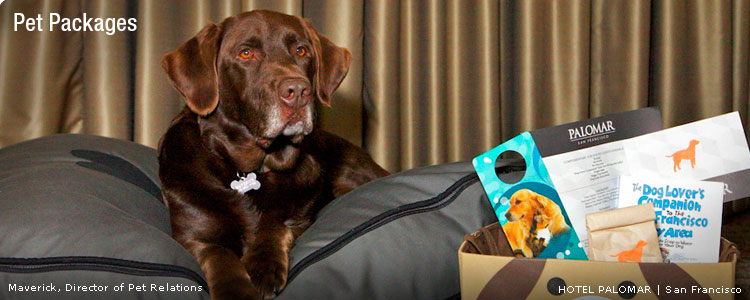
copyright Kimpton Hotels

The Kimpton chain offers pet packages at each of its locations; these pet packages include gourmet dog treats, dog walking and dog massage services.

Pet parks at Phoenix Sky Harbor International Airport

In May, I featured an item about the pet relief area at the Maui airport.

Did you know that in 2008, the US Department of Transportation passed a law called the Air Carrier Accessibility Act?  This Act requires airports to have relief facilities available to service dogs.

Many airports have since realised the value of catering to their customers who are traveling with their dogs and opened up these facilities not only to service dogs but all dogs.  One airport that is leading the way is the Phoenix Sky Harbor International Airport.  This airport has pet parks at all three of its passenger terminals.  They are:

  • The Bone Yard (Terminal 4)
  • The Paw Pad (Terminal 3)
  • The Pet Patch (Terminal 2)

If you are traveling through Phoenix, remember that the Airport offers these facilities and, if you’re not, here’s a great video of the Airport’s pet parks for you to enjoy:

Top 10 medical conditions for dogs

VPI™ Pet Insurance is the largest insurer of pets in the United States.  Each year, the company compiles statistics on the most common conditions that policy holders submit claims for.

The purpose of compiling this list is to show dog owners how some of the problems that their dog may have had in the past could be covered by pet insurance.  It’s a marketing exercise, of course, but it is useful.

In 2010, the top ten conditions for dogs were:

1)      Ear infection

2)      Skin allergy

3)      Skin allergy or hot spots

4)      Gastritis/vomiting

5)      Enteritis/diarrhoea

6)      Arthritis

7)      Bladder infection

8)      Soft tissue trauma

9)      Non-cancerous tumour

10)   Hypothyroidism

Pet insurance is an individual choice and you need to consider your dog’s risk profile, your ability to pay premiums, weighed up against your ability to fund medical bills in the future and your preferences for types of medical or specialist care for your dog.

The best way to make a decision about purchasing insurance is to do your homework.  Information such as this list put out by VPI can help inform your decision.

For my New Zealand readers, see my earlier blogs on coverage of massage/physiotherapy by New Zealand pet insurers.

Will my dog’s massage be covered by our insurance, Part I (Pet n Sur)

Will my dog’s massage be covered by our insurance, Part II (Petplan)

Will my dog’s massage be covered by our insurance, Part III (Ellenco)

Will my dog’s massage be covered by our insurance, Part IV (Petprotect)

Kathleen Crisley, specialist in dog massage, rehabilitation and nutrition/food therapy, The Balanced Dog, Christchurch, New Zealand


Choosing a veterinarian

As a dog owner as well as a canine massage therapist, I can honestly say that one of the most important things you can do for your dog is to have a good veterinarian.    However, many people I have met through my practice seem to move from vet practice to vet practice – never really giving a vet the chance to get to know their dog.

Of course, sometimes the moving around can’t be helped – people change jobs or other circumstances happen that require them to move house and location.  However, in other cases, it seems the owner is looking for the ‘best deal’ in a consultation fee or they have had a bad experience with an office (not necessarily the vet) and don’t want to return there.

So, here’s my advice on finding a good (and possibly great) veterinarian:

  • Ask your friends who own dogs who they use and why
  • Similarly, ask other dog owners you meet through obedience classes, dog park, etc.
  • Phone around and enquire about consultation fees and office hours that fit your schedule and lifestyle
  • Book a single, short consultation appointment to allow your dog to visit with the vet – see how he/she reacts to the vet and whether you like your experience at the practice.  If not – keep looking!
  • Most vet practices have more than one veterinarian; most owners and dogs develop a favourite vet.  However, it is always a good idea to have an appointment with the alternate vet once in a while so they have some  experience with your dog.  If you have an emergency on a day when your favourite vet isn’t on duty, you’ll understand the importance of having done this!
  • Ask about the staffing arrangements at the practice.  How many qualified nurses/technicians are there at any given time?  Is there a dedicated receptionist (because the best receptionists get to know the patients very well!)?
  • Is the facility set up for surgery if your pet needs it or will you have to go elsewhere to a ‘sister’ clinic?
  • What options are there for after-hours care or emergencies?
  • If you may want to pursue complementary therapies for your dog, how receptive is the vet to these?  Is the vet trained in homeopathy, for instance?
  •  Do other specialists work from the practice or, at a minimum, are they available through referral?
  • What type of payment options are offered at the practice?
  • Does the practice charge extra for filing insurance paperwork (if you choose to have pet insurance)?
  • Will the vet write a script for medicine that you choose to buy from a (reputable, of course) online pharmacy?

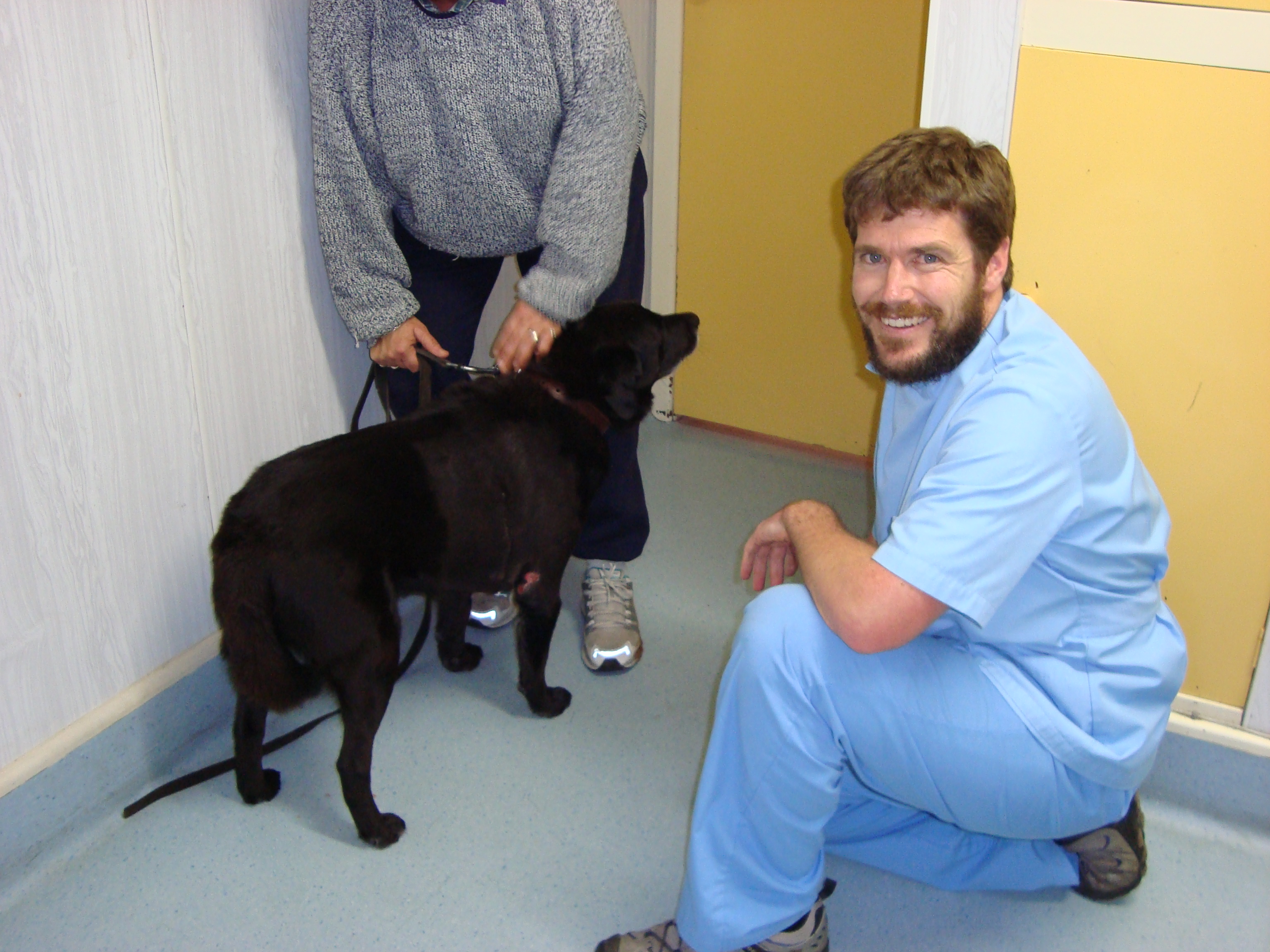
Dr Tim Nottage of Merivale-Papanui Veterinary Clinic with a happy client

Finally, if you have been using a veterinary practice for some time but have become concerned that the treatment and level of care/attention is no longer up to par – I advise you to raise it with the veterinarian.  All businesses need feedback.  For example, I had one client who felt that the changes in staff at her local veterinary practice meant that the standard of care had gone down.  The nurses were all new, young, and inexperienced.  She still liked the vet, however.  A short discussion to share her concerns didn’t solve the problem overnight, but it started the vet thinking that the staff needed more training particularly in the area of customer service.   My client’s next experience at the office improved and she didn’t have to go in search of another vet.

Kathleen Crisley, Fear-Free certified professional and specialist in dog massage, rehabilitation and nutrition/food therapy, The Balanced Dog, Christchurch, New Zealand
Providing for your dog in your will

News has broken this week that Trouble, the Maltese previously owned by Leona Helmsley (‘The Queen of Mean’), died in December.  Helmsley left a US$12 million trust fund when she died in 2007 for the care of Trouble.  This amount was later reduced to US$2 million when relatives challenged the will.

If you are thinking about providing for your dog in your will – there is a right way and wrong way to do it.

Right way:  Check into the regulations in your area about establishing trust funds for the benefit of your pet’s care and open the trust fund now, making regular contributions.   Make sure you nominate someone to care for your dog after you have died, using the funds in the trust.

If pet trusts are not allowed in your area, you need to nominate a carer for your dog and then leave them money to support your dog’s care.

Wrong way:  Don’t leave money to your dog in your will.  Whether we like it or not, dogs are considered property and this status means that they cannot inherit money.  The money you leave to your dog will likely be re-distributed to other beneficiaries.

Here’s a good (and brief) article about providing for your dog in your will.

Kathleen Crisley, Fear-Free certified professional and specialist in dog massage, rehabilitation and nutrition/food therapy, The Balanced Dog, Christchurch, New Zealand
Importing veterinary medicines and supplements into New Zealand

In my NZ Dog World column this month, I promised to include more information about the importing requirements if you are considering buying a supplement or medicine from overseas.  Here’s that information…

I’ll caution you again – this is not an easy area to work in or understand!  (Although the NZ Food Safety Authority recommends using a consultant for importing applications, I tried to contact two consultants from the consultants list to clarify a few points for my research.  Neither have replied.)

Until this month, the NZFSA used something called the Register of Allowable Nutrients with Known Therapeutic Uses in Exempt Oral Nutritional Compounds.  Glucosamine, for example, was included on the register.  The NZFSA website has recently announced:

“The register of allowable nutrients with known therapeutic uses in exempt oral nutritional compounds is no longer in use. Nutrients formerly listed on that register will now be evaluated solely on safety and pharmacological thresholds as applicable. Products with expressly stated or obviously implied therapeutic and/or pharmacological claims will still require registration. The limitations on species uses or pure supplements will no longer be applied.

I asked NZFSA what this means for the average pet owner who many want to buy a glucosamine supplement from an overseas supplier that was previously allowed into the country.  I got a very prompt reply from Linley Thorburn, an Advisor at the NZFSA (which was much appreciated).

She says:

There must be a clear nutritional claim made on the label for the product to be considered exempt.  If the product is making a claim to treat arthritis, then the product would require registration and be supported by efficacy data. Also, safety thresholds will be established for oral nutritional compounds that contain ingredients like, glucosamine, chondroitin etc.

Products currently registered containing these ingredients that have a clear nutritional claim will no longer require registration.

It sounds like the work to establish the safety thresholds hasn’t happened yet, but the fact that products that are currently registered that contain the ingredients will no longer require registration means that direct importing should become easier.

As I mentioned in my article, the best thing to check before considering purchasing a product from overseas is the ACVM register.  Look for the product by name and if it is registered, chances are you won’t be able to import it directly unless it falls under the new requirements.

In addition, this month MAF announced new rules for “Registration by Reference”   In some circumstances, the NZFSA will allow determinations made by the Australian Pesticides and Veterinary Medicines Authority (APVMA) to carry weight in New Zealand – reducing the time and costs for the registration process.   This change only pertains to products for non-food producing animals (i.e., pets).

MAF says that this move could encourage a greater range of products to be registered in the New Zealand market, particularly for products with a limited demand.  If this open doors to more product selection, dog owners and veterinary professionals will have a wider range of choices for animal care.

My fingers are crossed that suppliers and veterinary medicine companies will take advantage of this change!

Kathleen Crisley, specialist in dog massage, rehabilitation and nutrition/food therapy, The Balanced Dog, Christchurch, New Zealand

Pet relief areas in US airports

In 2009, the US Government passed legislation requiring service animals that are flying to have indoor and outdoor relief facilities.

Here’s what the facility at Maui’s Kahului Airport looks like:

This slideshow requires JavaScript.

Kathleen Crisley, specialist in dog massage, rehabilitation and nutrition/food therapy, The Balanced Dog, Christchurch, New Zealand
D.A.P. for stressed dogs

D.A.P.™ (Dog Appeasing Pheromone) is a great product for dogs who are having problems managing stress.

A pheromone is a natural chemical that animals, especially mammals, secrete which can have an effect on behaviour or development of animals of their species.  D.A.P. is the pheromone that bitches secrete when they have puppies and are lactating.  Within 3-5 days of giving birth, the bitch secretes this pheromone and it has a calming effect on her puppies.

Scientists have isolated this chemical compound and re-created it in the lab, creating the D.A.P. product.   I can speak from experience that this product helps to manage temporary behavioural and anxiety problems.   Things like separation anxiety, the anxiety brought on by a change of home,  having to go to a boarding kennel, or fear of thunderstorms are all situations where D.A.P. can be used.

8-10 sprays of the product (pictured)  are recommended, to be sprayed in the dog’s environment 15 minutes before they are introduced to it.   D.A.P. is also available in a plug-in diffuser that consistently delivers it to the environment.  There is a slight alcohol smell when you first spray the product, this quickly disappears.

You can buy D.A.P. from veterinarians; shop around for the best price!

Kathleen Crisley, specialist in dog massage, rehabilitation and nutrition/food therapy, The Balanced Dog, Christchurch, New Zealand