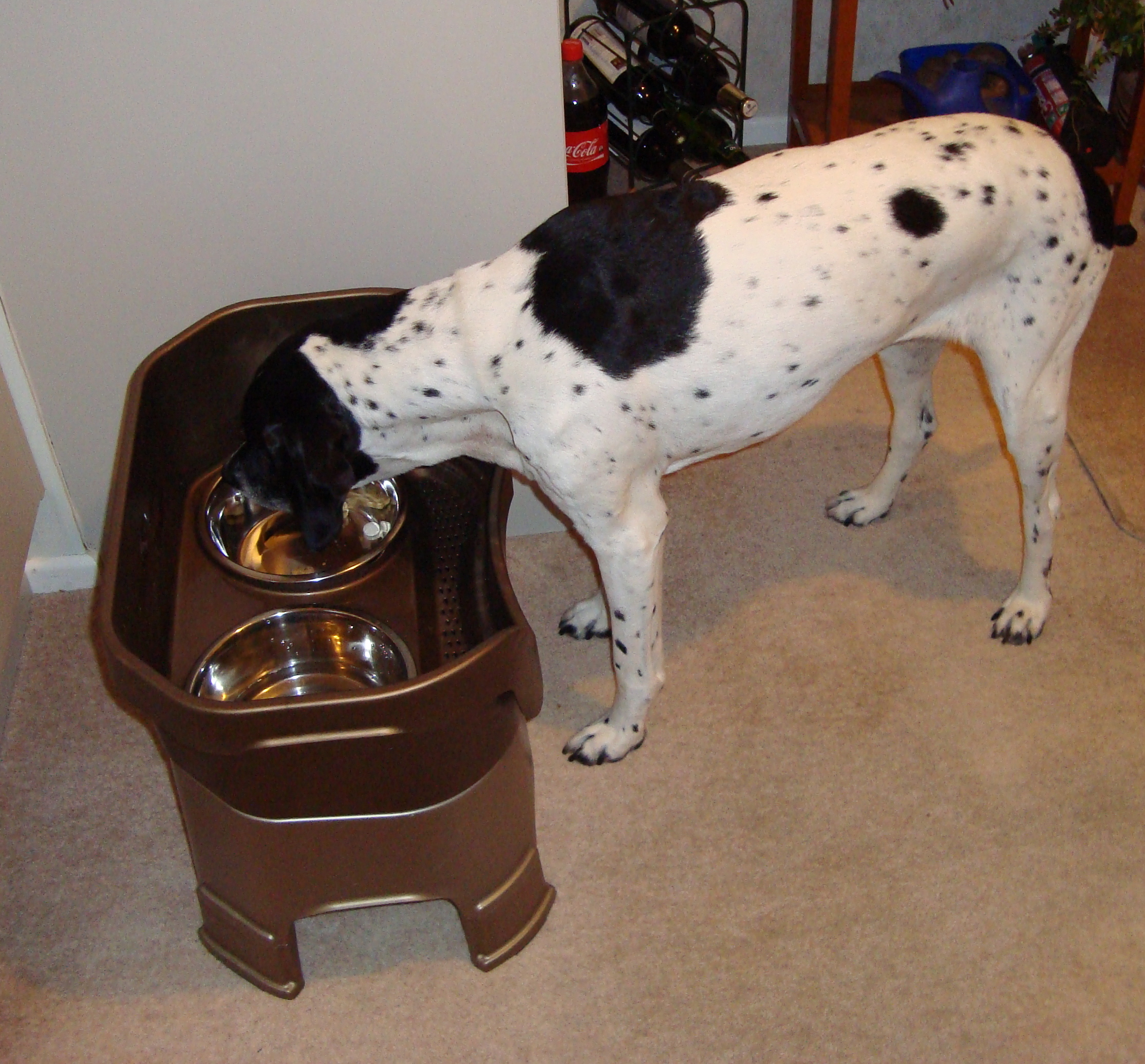
Here’s the Fox 5 story of rescue dog ‘Red’ – one of the last surviving rescue dogs from the 9/11 attacks. Red has arthritis and degeneration in her back and has undergone stem cell therapy at a Virginia clinic.
This week, the world will commemorate the 100th anniversary of the Titanic’s maiden voyage and sinking in the North Atlantic. As with many moments in history, dogs were part of this event.
Dogs were among the passengers of the Titanic and the ship had dedicated kennel facilities. A dog show had been planned on board the ship for Monday 15th April. When the ship was sinking, it was reported that a passenger went to the kennels and released the dogs to save them from drowning in their cages.
According to (mixed) records, between 10 and 12 dogs were on board the ship. The Astors (perhaps the richest passengers on board) were traveling with their Airedale named Kitty. Each day a member of Titanic’s crew would exercise the dogs on deck.
The Astors with their dog
A photo (unattributed) reported to be staff of the Titanic taking dogs for a walk on deck.
Three dogs survived the sinking. There was a Pomeranian owned by Miss Margaret Hays of New York; the pair escaped in lifeboat Number 7. Elizabeth Rothschild escaped in lifeboat Number 6 with her Pomeranian. The other dog was Pekingese named Sun Yat Sen owned by Henry Sleeper; owner and dog escaped in lifeboat Number 3.
The Titanic Museum in Branson, Missouri has established the world’s first tribute to dogs of the Titanic. Mascots Molly and Carter greet guests each day from Wednesday to Sunday and show them the kennel facilities of the ship, along with stories of dogs aboard. This creative commercial for the exhibit is found on YouTube:
Not to be confused with actual history, a book by Marty Crisp for young adults tells the story of White Star: A Dog on The Titanic. In this fictional story, a 12-year old named Sam Harris is traveling from England to America. Sam volunteers to help out in the Titanic’s kennels and meets Star, an Irish Setter. The boy and dog live through the sinking.
Robert WilliamsDaniel, 27,
a banker traveling alone
1) French bulldog“Gamin de Pycombe”
Southampton
Philadelphia
Went down with the ship and was pulled aboard by a lifeboat
Daniel- yes; Bulldog- no, although it was seen in the water by R.N. Williams
Henry SleeperHarper, 48,a publishing scion traveling with his wife, Myra, 49, a manservant, and an Egyptian dragoman
2) Pekinese“Sun Yat Sen”
Cherbourg
New York City
D-33
Lifeboat 3 wife, servant and companion all escaped in LB3
Harper-yes; Pekinese-yes
Helen Bishop, 19,newlywed, honeymooning with Dickinson H. Bishop
3) small, unknownbreed“Frou Frou”
Cherbourg
Dowagiac, Michigan
B-49
Lifeboat 7
Bishop and her husband- yes; Frou Frou- no, left locked in cabin
Harry Anderson, 47,stockbroker, traveling alone
4) Chow
Southampton
New York City
E-12
Lifeboat 3
Anderson- yes; Chow- no
William ErnestCarter, 36,traveling with his wife, Lucile, 36, daughter, also Lucile, 14, and son, William the II, 11. Also traveling with a maid and manservant
5) and 6) twosmall dogs.One was a King Charles Spaniel and the other breed is unknown.
Southampton
Bryn Mawr, PA.
B-96 and B-98
Collapsible C; wife and children left the ship in Lifeboat 4; servants were both lost
All members of family- yes; dogs- no
Margaret Hays, 24,traveling alone
7) Pomeranian
Cherbourg
New York City
C-54
Lifeboat 7
Hays-yes; Pomeranian-yes
Col. John JacobAstor, 47,real estate tycoon traveling with his pregnant wife, Madeleine, 19, and a maid and a manservant
8) and 9)Airedale, “Kitty,”and a second dog,probablyalso an Airedale,per a report from survivor Edwiga Goldenberg
Cherbourg
New York City
C-62
Astor went down with the ship and was crushed by a falling funnelManservant was lost. Wife and maid survived on Lifeboat 4.
Astor- no; Airedales- no; wife- yes
William CrothersDulles, 39,attorney, traveling alone
10) unknownbreed,listed in channel crossing records simply as “dog.” Possibly a Pomeranian or a fox terrier
Cherbourg
Philadelphia
A-18
Went down with the ship
Dulles- no; dog- no
Ann Isham, 50,spinster expatriate who had been living in Paris with her sister for the previous nine years (Isham is a possible, not a verified, dog owner.)
11) Great Dane(could also have been a Saint Bernard or a Newfoundland)
Cherbourg
Paris and New York City
C-49
Refused to get in a lifeboat without her dog.
Isham- no; dog-no. A woman was spotted by passengers on the German liner “Bremen” two days after the sinking, floating in her lifejacket with her arms wrapped around a large dog.
Elizabeth BarrettRothschild, 54,wife of leather magnate Martin Rothschild, traveling with her husband
12) Pomeranian
Cherbourg
New York City
Lifeboat 6
Rothschild- yes; Pomeranian-yes Mrs. Rothschild and her dog were on the same boat as the famously unsinkable Molly Brown. Martin Rothschild went down with the ship.
FICTIONAL Sam Harris, 12,returning to the U.S. after three years of boarding school in England.
Irish setter,”White Star,” owned by J. Bruce Ismay, president of the White Star Line and also a passenger on the Titanic.
Southampton for Sam; Queenstown, Ireland for the dog
Lancaster, PA.
B-47
Lifeboat 4
Sam- yes; Star- yes. Boy and dog were rescued from the water right after Lifeboat 4 was lowered.
The benefits of dogs in the workplace are the subject of new research published in the March issue of the International Journal of Workplace Health Management.
Researchers at Virginia Commonwealth University found that the presence of dogs in the workplace may buffer the impact of stress during the work day in both their owners and the people that they come into contact with.
In this YouTube video, principal investigator Dr Randolph T Barker (no pun intended) talks about the costs of stress to employers through lost work time and the benefits of increased productivity.
Although Dr Barker is a Professor of Management, he collaborated with specialists in psychiatry and biostatistics for this study. The researchers emphasise that their results are preliminary and that the next step is to expand the study to a larger sample size in an organisational setting.
I wonder which firm will put their hand up for that study?
News broke this week that Megan Leavey, a former corporal with the US Marines, has won her fight to be reunited with her ex-partner Rex. Rex, her comrade-in-arms in Iraq, is a bomb-sniffing dog who is retiring at the age of 11.
Leavey originally asked to adopt Rex five years ago and was refused.
Both Megan and Rex were injured in 2006 when a bomb exploded in Ramadi. Corporal Leavey was awarded a Purple Heart and subsequently discharged in 2007. After her request to adopt Rex was declined, she followed the dog and his progress from afar. When it became clear that Rex was to be retired from duty and likely to be put down, Leavey lobbied again for her chance to take care of Rex.
These photos, courtesy of Megan Leavey, show the pair together.
Doctoral research by Randi I. Krontveit at the Norwegian School of Veterinary Science has revealed that environmental factors play a larger role in the development of hip dysplasia than previously thought.
The critical period is from birth to the age of three months. Activities such as walking up steps on a daily basis during this critical period increased the risk of developing hip dyplasia.
The study group consisted of 500 dogs in four breeds: the Labrador Retriever, the Newfoundland, the Leonberger and the Irish Wolfhound.
Randi I. Krontveit with two of her study subjects. Photo courtesy of the Norwegian School of Veterinary Medicine
Environmental factors were assessed by questionnaires filled out by breeders and owners alongside examinations by veterinarians. Dogs were followed for a period of ten years, making the findings of the study particularly robust.
Puppies born in the spring or summer and at breeders’ who lived on a farm or small holding had a lower risk of developing hip dysplasia. After about eight weeks, the puppies began to live with their new owners. The opportunity to exercise daily in parks up until the age of three months reduced the risk of hip dysplasia.
Overall, it would appear that daily exercise out in gently undulating terrain up until the age of three months has a positive impact when it comes to preventing the disease.
The journal PLoS ONE has published research this week by Professor Hannes Lohi of the University of Helsinki. Professor Lohi and his research team have isolated a gene linked to epilepsy in Belgian Shepherds.
The gene is found on canine chromosome 37. The research team isolated the gene by comparing the genome of dogs with epilepsy against those of dogs that were in a healthy control group. The gene could increase the risk of epilepsy by a factor of 7.
Genetic epilepsy is also referred to as ‘idiopathic epilepsy.’ A co-author on the article has said that as many as 20% of the Belgian Shepherd breed is estimated to have epilepsy and so the research could underpin the development of a genetic test for the disease.
Seizures can result in abnormal movements, usually on one side of the body, followed by cramping in the limbs. Drooling and vomiting are other symptoms.
This research group is responsible for other genetic discoveries in dogs. Through their research, the group has developed a canine DNA bank in Finland containing 40,000 samples from 250 different breeds of dogs. They have previously identified the epilepsy gene EPM2B in Miniature Wirehaired Dachshunds and a gene LGI2 in Lagotto Romagnolos and collaborated with other researchers in the discovery of an epilepsy gene in Tibetan Terriers.
Source: Helsingin yliopisto (University of Helsinki) (2012, March 23). New epilepsy gene located in dogs. ScienceDaily. Retrieved March 25, 2012, from http://www.sciencedaily.com /releases/2012/03/120323205337.htm?utm_source=feedburner&utm_medium=email&utm_campaign=Feed%3A+sciencedaily%2Fplants_animals%2Fdogs
+%28ScienceDaily%3A+Plants+%26+Animals+News+–+Dogs%29
Several weeks ago, Daisy and I met a little dog when we were out for our afternoon walk. From his tag, I knew his name was Louie. He was obviously lost and happy to follow us, but also lacked car sense (running across roads without stopping to look for traffic). So, I encouraged him to come along with us and picked him up when we were approaching streets to cross.
I think together Daisy and I have ‘rescued’ three dogs in the last year who have lost their way from their homes. In Louie’s case, matching him with his owner was not difficult because Louie’s owner had secured a name tag with her phone number to Louie’s collar (a move which I applaud and endorse).
Louie
Now, Daisy is an older girl and she is very congenial to all dogs and humans. But, she prefers her routine and very young Louie was a little too much for her. On arrival at home, she went to bed. I went for the phone to call Louie’s owner who, as it turns out, was out of town. She’d left Louie with a friend and he’d escaped. Help was on the way within the next hour or so….
Daisy couldn’t help herself. She had to come out and see what was happening in her house. Louie wanted to play; Daisy wasn’t so sure. Here’s a video of their encounter (latin dance music courtesy of the film that was playing on the tv at the time)…
Louie was picked up by his owner’s flatmate.
Today, my doorbell rang and Anna (owner) was there to thank me. Louie, a Bichon/Poodle cross, decided to jump out of the car and say hello too, to both Daisy and I. We were given a bottle of wine for our efforts (Daisy won’t indulge). All’s well that ends well.
But Daisy is still glad we are a one-dog household…