Author Archives: DoggyMom.com

Training dogs for bomb detection

Unfortunately, we live in a world where people still build bombs to kill and maim.  Dogs have traditionally been trained to detect explosive devices by learning to detect specific odours and then to signal their handler.

A detection dog in action

A detection dog in action

The process of training a bomb detection dog is slow because the dog is trained to identify each scent individually.  In countries like Afghanistan and Iraq, homemade devices are made using mixtures of explosives.

With a grant from the Office of Naval Research, researchers at the University of Lincoln (UK) will investigate whether explosive detection dogs are capable of learning by categorisation, a cognitive process that is thought to play a major role in the way humans and animals naturally process new information.

The study will explore whether dogs can be trained to recognise the significance of a group of odours, rather than having to learn each scent individually.

Researcher Helen Zulch says, “In this study we will be testing whether a dog can be taught a general rule for a group of odours and then apply that knowledge to a new situation, involving scents it has never encountered. We know dogs can categorise visual stimuli, so the aim of this study is to find out whether dogs are able to categorise odours in a similar manner.”

If successful, the research will underpin new training approaches that will accelerate the process of training detector dogs.

Source:  University of Lincoln media release

Benefits of having a dog in your life

Daisy portrait

Some of the great benefits of owning a dog are:

  1. Reduction of stress
  2. They make you exercise
  3. They provide unconditional love
  4. And on top of this, they boost self esteem (even after a bad day at work, they love you!)
  5. When life is hard, they teach you the value of play
  6. Because they love you, they provide safety & security
  7. They provide a sense of belonging – you’re packmates!
  8. On top of everything, the act of petting a dog is proven to lower blood pressure and heart rate

Enjoy your weekend.  Have you hugged your dog today?

Image

Doggy quote of the month for August

Dalai Lama quote

Old dogs and quality of life

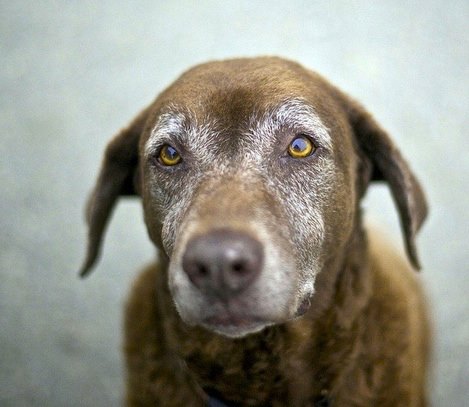
Old Dog
As our dogs age, we have to face the fact that they are likely to have special needs and health concerns that need following up on.  In my massage and rehab practice, I see a lot of older dogs and most still enjoy life.  Some need some help getting around, which may be having some ramps installed around the house or perhaps they need a wheelchair for getting outside.

The important thing about older dogs is creating a life for them that accommodates any limitations they have.

For owners, it is important to work with your healthcare team on what constitutes ‘quality of life.’  Some questions to consider in a quality of life assessment are:

  1. Is your dog eating and drinking normally?
  2. Is your dog ambulatory?
  3. Does your dog have normal elimination habits and are they continent?
  4. Does your dog interact with other people or animals in the household?
  5. Has your dog secluded itself in an area of the house on a regular basis?
  6. On balance, does your dog have more good days than bad?

Dogs often surprise us with their acceptance of physical limitations, but it is up to us to monitor their quality of life.

Cleaning your dog’s ears

Bath time in our house is combined with a check of Daisy’s ears and teeth.  It makes sense when she’s already in the tub (and usually, looking pretty miserable)…

Bath time

When I adopted Daisy, she came down with an ear infection with days of arriving (her immune system was depressed – she’d just finished weaning her sole surviving puppy, and she was recovering from a cesarean section).  At that time, I purchased a commercial ear cleaner from the vet.

Since then, however, I’ve refilled the bottle with my own mixture of cider vinegar and water.  It’s easy:  50% vinegar to 50% water.

I never (and I mean never) introduce the liquid into Daisy’s ears.  I apply the solution with a soft wash cloth that is wrapped around my finger to clean around the ear.

This video produced by VetVid is a good explanation of how to clean your dog’s ears.

Do you check your dog’s ears regularly? What ear cleaning solution do you use?

The ancestral roots of your dog

A genetic study by Peter Savolainen, a researcher in evolutionary genetics at KTH Royal Institute of Technology in Stockholm, has found that dog breeds from North and South America have Asian ancestry.

The Chihuahua definitely has Mexican heritage

The Chihuahua definitely has Mexican heritage

The native breeds have 30 percent or less modern replacement by European dogs.  It had been thought, prior to this study, that when Europeans settled in the American continent their dog breeds successively replaced the genetics of the native breeds.

Savolainen’s research group, in cooperation with colleagues in Portugal, compared mitochondrial DNA from Asian and European dogs, ancient American archaeological samples, and American dog breeds, including Chihuahuas, Peruvian hairless dogs and Arctic sled dogs.

They traced the American dogs’ ancestry back to East Asian and Siberian dogs, and also found direct relations between ancient American dogs and modern breeds.

The research confirmed conclusively that the modern day Chihuahua has Mexican roots.  The breed shares a DNA type uniquely with Mexican pre-Columbian samples.

The team also analysed stray dogs, confirming them generally to be runaway European dogs; but in Mexico and Bolivia they identified populations with high proportions of indigenous ancestry.

Source:  AlphaGalileo Foundation news release

Chandi

Chandi book cover

I have just finished reading Chandi:  The Rescue Dog Who Stole a Nation’s Heart by Tina Humphrey.  Chandi is the story of Humphrey’s rescue dog who she trained for Heelwork to Music.  Published in 2012, the book opens when Humphrey meets her first dog, Pepper, in 1994.  Chandi is adopted from a shelter in 1998 and, for a time, Humphrey trains and competes with both dogs in Heelwork to Music and Freestyle competitions.

Tina, who teaches piano and violin, has a natural ear for music and is able to choreograph routines for her dogs that emphasize the stories behind the music.

Chandi is a love story.  It is about the bond that Tina shares with both of her dogs and the devotion she has for both of them.  She is an advocate for a raw diet and natural health care (no wonder I was attracted to the book),  in part inspired by her mother who fought cancer for many years using natural therapies.  (Part of the book tells the story of how Tina suffers the loss of both of her parents, at separate times, with her dogs there as emotional support).

We also share in Tina’s heartache when, in 2007, she and Chandi suffer the loss of Pepper.  Anyone who has had to say goodbye to their beloved dog understands Tina’s pain when it is time for Pepper to be put to sleep.

Chandi and Tina win many competitions in their years together including several trophies at Crufts.  In 2010, after almost 12 years of competing and sharing their lives, they audition for Britain’s Got Talent and go all the way to the finals, ultimately finishing in fourth place.  By then, they are celebrities and enjoy a nationwide tour of the show’s finalists plus other interviews and promotions.  And that’s where the book finishes…on a high note.

On 26 April 2013, Chandi died at the age of 14 years 10 months.  She developed a condition that was thought to be pyometra.  However, during surgery to remove her uterus and spleen, it was discovered that Chandi’s body had many other tumours that could not be removed.   Tina made the heart-breaking decision that it was time for Chandi to go and was there when she was put to sleep on the surgical table.

Today, Tina is training a new puppy named Grace and is blogging about her experiences with her new canine companion.    You can follow them on Facebook.

 And through the wonders of YouTube, here are Tina and Chandi’s performances on Britain’s Got Talent:

Auditions

Semi-Finals

Finals

Kathleen Crisley, specialist in dog massage, rehabilitation and nutrition/food therapy, The Balanced Dog, Christchurch, New Zealand

Using dog hair for diagnosis

Dog hair is used to diagnose hyperadrenocorticism (Photo: Ouschan/Vetmeduni Vienna)

Dog hair is used to diagnose hyperadrenocorticism (Photo: Ouschan/Vetmeduni Vienna)

Many dogs suffer from hyperadrenocorticism, more commonly known as Cushing’s Disease.   The disease is characterised by excessive amounts of hormones known as glucocorticoids that are produced by the adrenal glands.  The disease is more common in older dogs.  Most cases result from a tumour in the pituitary gland but some are caused by tumours in the adrenal glands.

The symptoms of a dog with Cushing’s Disease often ‘creep up’ on the owner and vet.  Common symptoms include excessive drinking (and urination) and overeating, leading to a pot-bellied appearance, as well as with loss of hair.  Since all of these symptoms can stem from a number of disorders, it is difficult to be certain.  The methods traditionally used to diagnose the disease are complicated and costly and usually give information about the hormone concentrations at the time a sample is taken.  Since most dogs are stressed by veterinary examinations, their hormone levels will peak  because of the stress – making it difficult to rely on the analytical results.

Researcher Claudia Ouschan and colleagues at the University of Veterinary Medicine, Vienna decided to look for a way to monitor the long-term levels of glucocorticoids in dog hair that would also offer a diagnostic option that was less stressful to the dogs.   She compared the levels of cortisol, corticosterone and cortisone in the hair of twelve dogs with hyperadrenocorticism and ten healthy dogs.  The results were striking:  all three hormones were found at far higher levels in the hair of dogs with Cushing’s Disease than in the control group, with the increase in cortisol particularly pronounced.

She concludes, ‘we think it (our findings) have real promise for use as a rapid and non-invasive method to diagnose hyperadrenocorticism.’

Her research has been published in the journal Veterinary Dermatology.

Source:  University of Veterinary Medicine, Vienna media statement

Joint supplements

I get a lot of questions about supplements from dog owners whose dogs are aging and entering ‘the senior years.’

Three of the main supplements for joint support are glucosamine, chondroitin and hyaluronic acid.

Hyaluronic acid, or hyaluronan, is a major component in synovial fluid and has been found to increase the viscosity of the fluid.  In older dogs, the synovial fluid becomes thinner and less able to support the joints.  Originally given in injectable form, increasingly hyaluronic acid is found in oral supplements.

Glucosamine is naturally produced in the body and is a constituent of synovial fluid and cartilage, both of which help to support and stabilise the joints. Glucosamine is made of a sugar and an amino acid and is involved with the body’s production of joint lubricants and shock absorption necessary to maintain healthy cartilage and joint function.

Glucosamine sulfate is also one of the building blocks of articular cartilage and it aids in the rebuilding of damaged cartilage.  Glucosamine sulfate is also involved in the formation of nails, skin, eyes, tendons, bone and ligaments.

Glucosamine supplementation enhances the body’s ability to manufacture collagen and proteoglycans, which are essential for rebuilding joints and supporting synovial fluid.  Glucosamine in the sulfate form seems to be absorbed best by the body.

Chondroitin, or more appropriately chondroitin sulphate, is usually found in supplements containing glucosamine.  Chondroitin sulfate may actually help the body to repair damaged cartilage and help restore joint integrity. It may also protect existing cartilage from premature breakdown as well as keep cartilage tissue hydrated and assist in cushioning impact stress.

If considering giving your dog a joint supplement, it pays to discuss dosage with your veterinarian or complementary health professional.  Some dog food brands are adding glucosamine and chondroitin to foods and so supplementation dosage has to be considered in light of this.

Kathleen Crisley, specialist in dog massage, rehabilitation and nutrition/food therapy, The Balanced Dog, Christchurch, New Zealand

Your dog understands ‘Just Do It’

New research helps to confirm the cognitive abilities of our dogs.

Claudia Fugazza and Adám Miklósi, from Eötvös Loránd University in Hungary have shown that dogs can learn, retain and replay actions taught by humans after a short delay.   Because the dogs were able to undertake the actions after a delay (during which they were purposely distracted), the research proves that dogs have an ability to ‘encode’ and ‘recall.’

photo courtesy of Springer Select

photo courtesy of Springer Select

The study involved eight adult pet dogs who were trained by their owners with the ‘Do as I do’ method and then made to wait for short intervals (5-30 seconds) before they were allowed to copy the observed human action, for example walk around a bucket or ring a bell.

The researchers observed whether the dogs were able to imitate human actions after delays ranging from 40 seconds to 10 minutes, during which time the dogs were distracted by being encouraged to take part in other activities. The researchers were looking for evidence of the dogs’ ability to encode and recall the demonstrated action after an interval.

The tests show that dogs are able to reproduce familiar actions and novel actions after different delays ̶ familiar actions after intervals as long as ten minutes; novel tasks after a delay of one minute. This ability was seen in different conditions, even if they were distracted by different activities during the interval.

Because dogs were able to reproduce the novel actions after a delay and without earlier practice, the researchers believe that dogs have a specific type of long-term memory capability – called ‘declarative memory.’    These are memories involving facts or knowledge which can be consciously recalled.

This study is published in the journal Animal Cognition.

Source:  Springer Select media statement