Author Archives: DoggyMom.com

Aggressive dog? How agreeable is the owner?

Research from the University of Leicester’s School of Psychology  has revealed that young people who are more disagreeable are likely to own an aggressive dog.

‘Agreeableness’ means being less concerned with the needs or well-being of others.  Such people may be suspicious, unfriendly and competitive as well.

Participants were given personality tests and  indicated their preference for different types of dogs  . The dogs were independently rated according to how aggressive people perceived them to be. Bull terriers were rated as most aggressive, followed by boxers; retrievers and cocker spaniels were seen as least aggressive.

The study’s results also show a small effect suggesting that those who liked aggressive dogs showed signs of conscientiousness – being careful, reliable and thoughtful about their actions.

Whilst this finding (about conscientiousness) contradicts a long-held perception that owners of aggressive dogs are always irresponsible, Dr Vincent Egan, the study’s lead researcher suggests caution before reading too much into the conclusion:

“These results with Conscientiousness were unexpected, but the effect is a small one, and needs to be repeated in a different group of people. Studies of this kind tend to only look at a restricted age ranges, which may exaggerate findings which do not occur across the entire lifespan, so we believe a stereotype is always true, whereas it may only be true under certain conditions. Our study employed a broader age range.”

Dr Egan’s study has been published in the journal Anthrozoos.

Here we go again – pet food recalls in USA

This time, the cause of concern is salmonella contamination.   Salmonella is a zoonotic infection, meaning it can be transferred to humans too.

Salmonella infection in dogs causes gastroenteritis, septicemia, and spontaneous abortions.  Humans usually experience vomiting, diarrhea and fevers.  It’s not pleasant.

The best prevention is to wash surfaces in the kitchen after feeding your dog and to ensure you wash your hands after handling pet foods.

The brands currently under recall are:

Solid Gold Health Products for Pets, Inc.

  • Solid Gold WolfCub Large Breed Puppy Food
  • Solid Gold WolfKing Large Breed Adult Dog Food

Wellpet LLC

  • Wellness Complete Health Super5mix Large Breed Puppy

Canidae Pet Foods

  • Canidae Dog, All Life Stages
  • Canidae Dog, Chicken Meal & Rice
  • Canidae Dog, Lamb Meal & Rice
  • Canidae Dog, Platinum

Apex Pet Foods

  • Apex Chicken and Rice Dog, 20lb and 40lb bags

Natural Balance Pet Foods

  • Natural Balance Sweet Potato & Venison Dog
  • Natural Balance Lamb Meal & Brown Rice Dog
  • Natural Balance Sweet Potato & Bison Dog
  • Natural Balance Vegetarian Dog
  • Natural Balance Lamb Meal & Brown Rice Dog Large Breed Bites
  • Natural Balance Lamb Meal & Brown Rice Dog Small Breed Bites
  • Chicken Soup for the Pet Lover’s Soul
  • Country Value
  • Diamond
  • Diamond Naturals
  • Premium Edge
  • Professional
  • 4Health
  • Taste of the Wild

The Kirkland Signature products included in the recall are:

  • Kirkland Signature Super Premium Adult Dog Lamb, Rice & Vegetable Formula
  • Kirkland Signature Super Premium Adult Dog Chicken, Rice & Vegetable Formula
  • Kirkland Signature Super Premium Mature Dog Chicken, Rice & Egg Formula
  • Kirkland Signature Super Premium Healthy Weight Dog Formulated with Chicken & Vegetables
  • Kirkland Signature Super Premium Maintenance Cat Chicken & Rice Formula
  • Kirkland Signature Super Premium Healthy Weight Cat Formula
  • Kirkland Signature Nature’s Domain Salmon Meal & Sweet Potato Formula for Dogs

It’s hard to know if some of these foods are available in New Zealand (Canidae definitely is) because some foods are imported in smaller quantities.  If you are feeding one of these foods, stop immediately and check with your supplier for more details on the recall.

This website from the FDA gives all the latest information on pet food recalls.

Nelson City responds to dog owners

Here’s an example of democracy in action in the city of Nelson on the South Island of New Zealand.

The Council consulted on revisions to its dog bylaws and dog owners responded about the unnecessary restrictions.

On 3 May, the Council announced “Nelson City Council has responded to submissions on its Dog Control Policy and Bylaw Review by developing a new proposal based on feedback from submitters.”

Deputy Mayor Ali Boswijk said, “Ultimately, the dog bylaw we are proposing will take a default position where dogs can be off-leash everywhere, except areas which are identified as prohibited or on-lead.

“Hindsight is a wonderful thing and perhaps we should have spent more time talking with the wider community before we drafted the original Statement of Proposal. This is a good learning for us and something we will take on board in future.”

The new summary of Council’s preferred direction for the Dog Control Policy and Bylaw:

  • Dogs to be prohibited from the part of Marsden Valley Reserve to the east of the Barnicoat Walkway
  • Retain Girlies Hole and Black Hole as swimming holes for dogs during summer (December to March) and allow dogs in all holes during the remainder of the year
  • Add Sand Island to the list of dog prohibited areas
  • Dogs to be prohibited from the Maitai Cricket Ground during the cricket season but they can exercise there from April to September.
  • The shared pathways (Railway Reserve and Atawhai Shared Pathway) will become off-leash areas
  • The Maitai Walkway to remain an off-leash area for dogs
  • Seventeen neighbourhood reserves will remain on-lead areas for dogs as requested by submitters
  • The Good Dog Owner Policy will be amended with input from the Dog Owner’s Group and other interested parties.

In addition, Council is looking at establishing a dedicated dog park at Saxton Field where dogs can exercise off-lead.

Well done to the Nelson City Council for recognising that its constituents wanted something else for dogs and their owners and well done to all who submitted on the dog control bylaw.

If you don’t participate in your local community to represent your interests and the interests of dog owners in general, be prepared for restrictions that will inhibit your ability to socialise your dog and enjoy their company in public places.

Perhaps a lesson for dog owners elsewhere in NZ and overseas?

What is your dog thinking? Researchers are on the case!

Researchers at Emory University have published new research into canine cognition.  Entitled Functional MRI in Awake Unrestrained Dogs, the paper outlines findings of research that required two dogs to remain motionless in an MRI machine.

Yes – that’s right. Motionless.  The two dogs were outfitted with special ear muffs to protect them from the noise of the MRI and trained to rest their heads on a chin rest inside the machine.   As the MRI took scans of the dog’s brain activity,  hand signals were used to show the dogs whether there was or wasn’t a food reward.

This is a first-ever study on awake dogs, rather than those that have been sedated.  Importantly, part of the animal ethics of the study was to ensure the dogs were willing participants.

The findings show a definite brain activity response when the hand signals indicated a food reward.  Those dogs are paying attention!

The lead researcher, Professor Gregory Berns, says “We hope this opens up a whole new door for understanding canine cognition and inter-species communication. We want to understand the dog-human relationship, from the dog’s perspective.”

Professor Bern’s dog Callie in training in a mock-up of the MRI scanner (copyright Emory University)

Listen to Professor Berns talk about this project in the Emory University YouTube video:

Source:  Emory University press release 4 May 2012

Protecting K-9 cops

The Vest-A-Dog Network is actively working to outfit police dogs with protective vests.  Started in 1999, with funds were raised by a local girl for Tiko who was a replacement dog for another who was killed in action, the movement has grown.

You can donate directly  via the Vest-A-Dog website to support the featured canine protector or you can read about how to start your own local network on the site.

The program funds a K-9 One™ vest to sponsored police dog units.  These vests are made with Dupont Kevlar, the same material found in protective vests for human police officers.  The vests are designed to be bulletproof, stabproof and to protect against blunt force trauma.

A vest for protection against stabbing and bullets currently costs US$825 which is why many local units have difficulty finding the funds to protect their canine officers.

The New Zealand Police have stated (on their website) that they looked at an Australian vest in 2008/09 and decided that the vest would not have protected dogs that were previously injured on the line of duty.

However, I wonder that if with shootings like that of police dog Gage in Christchurch in July 2010, if the NZ Police should look at alternatives.  I’ve emailed them with details of the Vest-A-Dog project.

Kathleen Crisley, specialist in dog massage, rehabilitation and nutrition/food therapy, The Balanced Dog, Christchurch, New Zealand

The Beagle

Since I have Beagles in my massage practice, I thought it would be useful to profile this medium-sized breed.

Teddy

Beagles regularly feature on the most popular breed list in the United States.    Using American Kennel Club registrations from 2011, the Beagle is the third most popular dog.

The Beagle originated in the United Kingdom where they were used as hunting dogs for rabbits and other prey animals because of their keen sense of smell and ability to track.  As a pet, owners have to watch their Beagle because he/she will easily follow its nose to track interesting smells – potentially wandering far from home.

Beagles are classified as being tri-colour (black, white and tan) or lemon (yellow) and sometimes even red or white.  An average life span is 15 years.

This breed is prone to hip dysplasia, intervertebral disc disease, and allergies.  Some develop seizure disorders and hypothyroidism.  Regular ear cleaning is recommended because their long, floppy ears (which are very appealing) help to create an ideal environment to hold moisture and bacteria in the ear canal.

The Beagle is a hound and can be extremely vocal, so good training is needed.  Beagles are also known for their appetites and so to keep the weight off, a balanced and healthy diet is needed with careful attention paid to how much the dog is eating during the day (treats, ‘finds’ on walks, etc.)  Plenty of exercise is also needed.

Owners of Beagles tell me that since they were bred as pack dogs (for hunting), they don’t do well as a solo dog in a household.  They need companionship and can become depressed if left alone for long periods of time.  (This depression can lead to problem barking problems, too.)

Beagles are often spotted at airports, cruise ship terminals and postal depots because they are widely used as agriculture and drug detector dogs.  That’s because they can be trained to put their keen noses to good use!  I even came across this YouTube clip from the television show The Doctors where Beagles and Dachshunds are being used as detector dogs for bed bug infestations:

Sadly, because of their size and temperament, they are often used in laboratories for animal testing.  In November 2011, I covered a story about 40 laboratory Beagles who had been rescued.

Perhaps the most famous Beagle is Snoopy (the cartoon by Charles Schulz).  Snoopy was obviously a white Beagle.

If you are looking for a lively pet with minimal grooming requirements and generally a good temperament, then the Beagle may be right for you!

Doggy quote of the month for May

“A lot of shelter dogs are mutts like me.”

– Barack Obama

Tiny Beyonce – a poster dog for Mother’s Day

Beyonce was born on 8 March 2012  to Casey, a pregnant dog that was scheduled to be euthanised.  She claimed the title of the World’s Smallest Puppy because she could fit into a teaspoon!  She wasn’t expected to survive but proved everyone wrong.

Beyonce was saved because of the efforts of The Grace Foundation of Northern California, an animal rescue and rehabilitation facility.  Her story was picked up widely in media outlets including CBS, The Washington Post, the Associated Press and Reuters.  Now The Grace Foundation is using Beyonce’s celebrity status in a new fundraising campaign for Mother’s Day.

Named the  I’m a Survivor Fund (after the Beyonce song), funds will be used to save healthy mums and their puppies.   Many of these dogs are euthanised in shelters across California and the wider United States (3.4 million in total each year) because of a lack of facilities and adoptive families.

The messages from the Tiny Beyonce campaign are simple:

1.  Spay and neuter your pets to prevent overpopulation of our furry friends

2.  Adopt from rescues and shelters to save animals in need

3.  Help a rescue or shelter save lives. Volunteer or donate services, resources, or money

All moms (and mums) deserve recognition on Mother’s Day.  Why not make a donation to the I’m a Survivor Fund as part of your Mother’s Day gift?

Lessons from a Freethinking Dog

I have just finished reading Merle’s Door (Lessons from a Freethinking Dog) by Ted Kerasote.  This book was published in 2007 and became a national bestseller.  That’s not a surprise.

Mr Kerasote is an accomplished author.  He has written for publications including National Geographic, the New York Times, and Science.  And he has other books to his name.

Merle’s Door, however, has to be one of Mr Kerasote’s top literary accomplishments and something that will be remembered as a hallmark of his writing career.  Buy it (don’t just download it into your Kindle).

Merle’s Door is a biography of Merle, a dog adopted by Kerasote when they met totally by accident in 1991.  Merle was ‘living rough’ in the Utah desert and Ted was on one of his many trips with friends to enjoy nature.

“You need a dog, and  I’m it” says Merle.  And so begins a lifetime of 13 years together where Ted learns to translate Merle’s thoughts, to give him free reign to learn about life and his surroundings and, in turn, Ted learns many things from Merle.

Using his dog door and the freedom that Ted allowed him, Merle becomes the unofficial mayor of Kelly, Wyoming and makes many friends.  Along the way Ted establishes a ‘dedicated quadruped couch’ in his house and Merle leaves lasting footprints in the varnish of the balcony of the house they built together (and where Kerasote still lives).

Merle’s Door is Merle’s biography.  Lovingly written by Ted, we learn about Merle’s trademark “Ha ha ha” as he would converse with Ted in a language all his own.  He’d go hunting for elk, but was gun-shy when hunting birds  (and we find out why later in the book).  He has his scraps with other dogs and comes out learning valuable life lessons.

Later in life, Merle’s back end starts to deteriorate and Ted employs the use of acupuncture and massage to help his dog recover (no wonder why I like this book!).  With respect, he lets Merle define what will be a good day and a bad day and they enjoy one another’s company to the end.

Mr Kerasote does a wonderful job in depicting the human-dog bond that so many of us dog lovers have appreciated in our lives.  And he does it with the flair of an accomplished writer.

Like all true dog stories, be prepared for the end of Merle’s life in 2004 which is  obviously written by someone who has lived through the last days of their dog’s life.  Have a box of tissues handy – you’ll need it.  (I did)

This is a book I intend on keeping and adding to my dog book collection.  I’m grateful for Mr Kerasote’s writing talent because, not only is this Merle’s story, but it is well referenced with footnotes to key pieces of dog research (15 pages of references in total).

Through Mr Kerasote’s writing, Merle’s story lives on for all of us to share.  A wonderful dog that walked this earth for almost 14 years and left pawprints on many hearts….

Caesar the Anzac Dog

Today around New Zealand, people have stopped their daily activities to commemorate another Anzac Day.

Did you know that New Zealand has its own special dog hero from World War I?  His name was Caesar.

A Bulldog, Caesar led the grand parade down Auckland’s Queen Street as the NZ Rifle Brigade left for the war.  Caesar was trained as a Red Cross dog and worked at the Battle of the Somme in 1916.  Dogs were particularly valuable to rescuers in No Man’s Land, as they helped to locate wounded men at night.

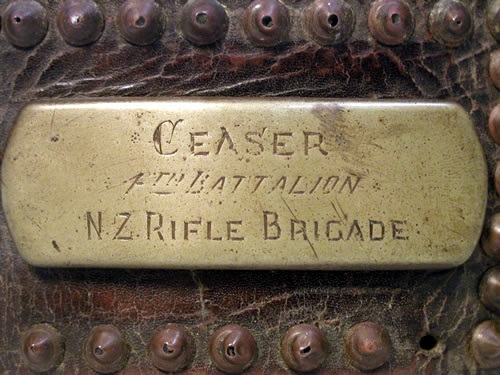
Caesar was killed in action.  His collar (which has his name spelled incorrectly) is on display at the Auckland War Memorial Museum.

Caesar's collar, with his name spelled incorrectly

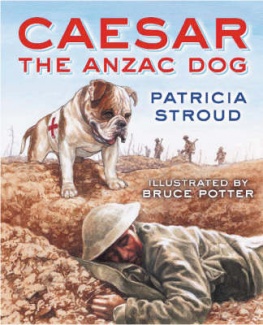
Author Patricia Stroud has written about Caesar in her book, Caesar the Anzac Dog.  Illustrated by Bruce Potter and published by Harper Collins, the book is useful for teaching schoolchildren about the war.  The publisher also offers a study guide for teachers.