How dogs detect explosives

Photo courtesy of Indiana University-Purdue University Indianapolis

Photo courtesy of Indiana University-Purdue University Indianapolis

A research team at Indiana University-Purdue University Indianapolis (IUPUI) has helped determine the science behind how dogs locate explosives such as Composition C-4 (a plastic explosive used by the U.S. military). The study found the dogs react best to the actual explosive, calling into question the use of products designed to mimic the odor of C-4 for training purposes.

These findings are the culmination of a four-year contract funded by the U.S. Department of Defense (DOD).

“Appropriately, dogs that are trained to find real explosives are going to find real explosives and not much else,” said John Goodpaster, Ph.D., associate professor of chemistry and chemical biology and director for the Forensic and Investigative Sciences Program in the School of Science at IUPUI.

The effectiveness of trained detector dogs is well established, but the study sought to determine which chemical compounds cause a dog to recognize a particular explosive and alert to it. Previous studies have suggested that certain non-explosive chemicals emitted by Composition C-4 cause dogs to alert, and that these specific chemicals could be used as mimic substances to train the dogs in place of real explosives.

The research team discovered that the non-explosive chemicals given off by C-4 mimics also are present in a variety of everyday plastic objects. Objects tested included PVC pipes, electrical tape, movie tickets, a plastic grocery bag and plastic food wrapping. Several of the tested items emitted appreciable levels of a mimic compound recommended by some vendors for training dogs.

The second phase exposed 33 trained canines from the DOD, Department of Justice, Amtrak and other agencies to these vapors to see if the dogs would respond. The field trials demonstrated that the dogs failed to respond in any significant way to specific odor compounds found in C-4. The results indicate that if the dogs are trained on the full scent, they will only detect real explosives.

The study findings have been published in the March 2014 edition of the journal Forensic Science International.

Source:  IUPUI media release
How dogs were trained for functional MRI research

I’m an absolute advocate for positive reinforcement training.  Here’s how Professor Gregory Berns and his research team trained dogs to remain still in a noisy MRI scanner.

You can also read my other blogs about functional MRI research and dogs:


Image

Wordless Wednesday, part 27

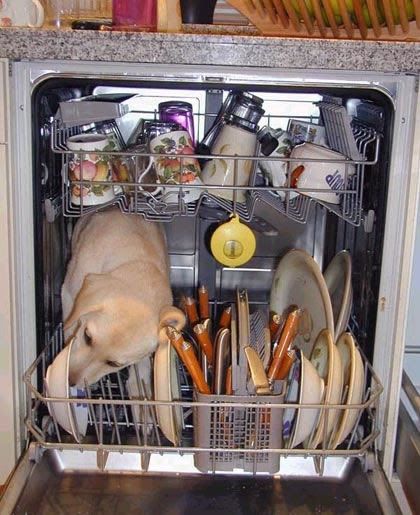
Dog in dishwasherBP_Wordless_wed_Hop_Logo_2014

Singing in the rain

It’s raining and blowing a gale in Christchurch today.  So I thought I’d share this little video to cheer everyone up!


Understanding what is higher value

Researchers have now proven what dog trainers have known for some time: dogs have a sense of quality when it comes to treats and they will seek out the higher value ones.

Kristina Pattison and Thomas Zentall of the University of Kentucky tested the principle by feeding baby carrots and string cheese to ten dogs of various breeds

Dog eating cheeseThe research was conducted on dogs that would willingly eat cheese and baby carrots when offered, but showed a preference for the cheese. However, when given a choice between one slice of cheese, or the cheese together with a piece of carrot, nine of the ten dogs chose the cheese alone. That is, they chose less food over more food.

People, for instance, tend to place greater value on a set of six baseball cards that are in perfect condition, than on the same set of six perfect cards together with three more cards in fair condition.

In cases where rapid decisions must be made, quick solution-driven heuristics such as the “less is more” effect may come in handy. For instance, it is helpful when members of the same species, such as a pack of dogs, feed together. The one that hesitates may lose food to faster-choosing competitors.

But the fact that one in ten dogs did choose the cheese-and-carrot combination suggests that levels of motivation may play a role in this effect. The outlier dog, for instance, had a history of living in shelters and fending for himself.

Source:  Springer media release

The puppy and the magpie

Just received this link from a friend – a cute puppy and an Australian Magpie playing in the yard. Great pals.

Happy Friday!

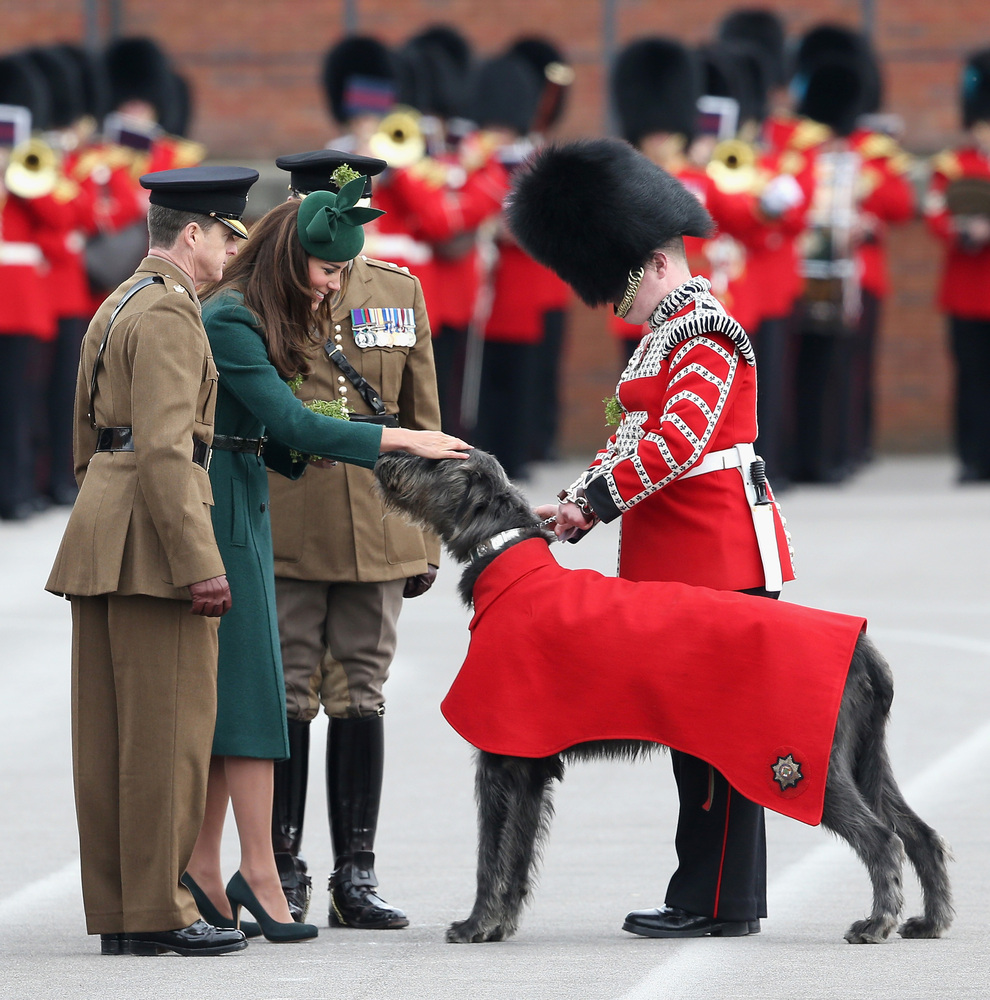
The Duchess and the Wolfhound

This week, the Duchess of Cambridge visited the Irish Guards to present sprigs of shamrocks to the regiment’s members. That included Domhnall, the Guards’ mascot. Domhnall is an Irish Wolfhound (how appropriate!)

(Photo by Chris Jackson/Getty Images)

(Photo by Chris Jackson/Getty Images)

Wordless Wednesday, part 26

copyright Bill Buelow

copyright Bill Buelow

BP_Wordless_wed_Hop_Logo_2014

What is it about dogs and car advertising?

The folks at Land Rover are using a black Great Dane in their latest ad for the Range Rover Evoque:

What is it about using dogs in car advertising?  I think it is that most dogs enjoy car travel and being in the company of their family whether it is running the weekly errands or on a family vacation.

What do you think?

Read my earlier blogs on dogs and car advertising:

Olympian Hero Brings Home More Than a Medal

Well done to Olympic skier Gus Kenworthy for helping to save some of Sochi’s stray dogs.  Don’t forget to click through on the link in this article to the Today Show interview where Kenworthy and his friend talk about the challenges they faced in saving the dogs.

Olympian Hero Brings Home More Than a Medal.