Tag Archives: dogs

Megaesophagus

Megaesophagus is a condition where the muscles of the esophagus fail, similar to a limp balloon that has inflated several times and lost its elasticity:Limp balloonWhen the condition is present, the esophagus doesn’t contract normally and food can’t make it down into the stomach to be digested.  Food can ‘pool’ in the esophagus causing regurgitation.  Worse, the undigested food can be inhaled leading to a condition called aspiration pneumonia.  Megaesophagus can affect puppies and adult dogs.

Vets normally have to diagnose the condition from its range of symptoms which include:

  • Regurgitation of water or food
  • Loss of appetite
  • Weight loss that is sudden
  • Frequent clearing of the throat
  • Sour smelling breath
  • Difficulty in swallowing or frequent swallowing
  • Aspiration pneumonia

Megaesophagus is a condition that can be managed, but it does take a dedicated and vigilant dog parent to do this.

Dogs with the condition have to eat and drink in a device called a Bailey Chair.  The chair allows the dog to sit in an upright position for an extended period of time.  A megaesophagus dog needs to be fed in the chair and kept upright for at least 20 minutes to allow gravity to take the food and water into the stomach.

Dogs with megaesophagus have special nutritional needs, too.  Since dogs with this condition can’t drink normally, they often need water added to their meals and to receive high moisture treats that are thickened with gelatin or other ingredients.

A megaesophagus dog needs a diet that is calorie rich and nutritious but without too much fibre.  Raw foods are a special risk to these dogs because of their sensitive digestive systems.  There’s also a risk of bacterial contamination, particularly if even small amounts of raw food are aspirated.

Prescription medications like Carafate liquid can also help these dogs because it provides a protective coating for the esophagus.

It’s also important to think holistically for these dogs, with support with Bach flower remedies, herbs and supplements.   In my practice, I work with the dogs to keep their digestive systems healthy through massage and acupressure and nutrition.  The spleen, liver and stomach all need support when a dog has megaesophagus.

In older dogs with arthritis, having to sit in a Bailey Chair presents additional challenges that require holistic veterinary care.

The good news is that megaesophagus doesn’t mean a death sentence.  It does mean that your special dog will need special care and attention to maintain its health throughout its lifetime.

Kathleen Crisley, specialist in dog massage, rehabilitation and nutrition, Canine Catering Ltd, Christchurch, New Zealand

Dogs are people, too

In this New York Times opinion piece, Professor Gregory Berns discusses the MRI findings of brain activity in dogs, the evidence for ‘sentience’ and the reasons why dogs’ rights should go beyond consideration of animals as property.

For anyone involved in animal welfare advocacy, it is essential to have animal welfare laws that recognise dogs as sentient beings – with the ability to experience emotions like love and grief – because abuse and harm done to sentient beings carries a higher penalty in law than if an item of property is damaged.  (In many areas, dogs are considered nothing more than property.)

Jane Evelyn Atwood/Contact Press Images

Jane Evelyn Atwood/Contact Press Images

Short dog syndrome

You’ve probably heard about Short Man Syndrome.  (In fact, many of us (including me) have experienced it firsthand!)

Did you know that there is growing evidence of Short Dog Syndrome?

Researchers at the University of Sydney have published their research into this topic in the online journal PLoS One.  Professor Paul McGreevy is the lead author of the study and says, “the shorter the dogs the less controllable their behaviour is for their owners.”

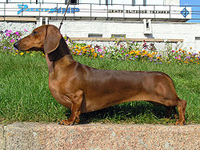
Dachshunds and other short breed dogs may be more difficult to train and control

Dachshunds and other short breed dogs may be more difficult to control

The study used owners’ reports on the behaviour of over 8,000 dogs from across 80 breeds and related them to the shape of 960 dogs of those breeds, revealing strong relationships between height, bodyweight, skull proportions (relative width and length) and behaviour.

33 out of 36 undesirable behaviours were associated with height, bodyweight and skull shape

As a breed’s average height decreased, the likelihood of behaviors such as mounting humans or objects (humping), owner-directed aggression, begging for food and attention-seeking increased.

“The only behavioral trait associated with increasing height was ‘trainability’. When average bodyweight decreased, excitability and hyperactivity increased,” said Professor McGreevy.

The researchers admit that there is an aspect here of nature vs nurture.  If aggressive and ‘bad’ behaviours were present in larger dogs, the results could be more dangerous.  Poor behaviour in small dogs is likely to be tolerated more.  Over time, breeding has resulted in the patterns observed by the research team.

Source:  University of Sydney media release

Beefcake (not beef bones) to benefit dogs

Christchurch based animal welfare charity K9 Rescue and Rehoming has paired well-muscled men with dogs available for adoption in their 2014 calendar.

K9 Rescue and Rehoming calendar

Entitled Dogs and Dudes, this fundraising calendar includes photographs of New Zealand actors and other local celebrities who were willing to bare their bodies to support dog adoption.

The best way to organise a purchase is to contact Trisha through the organisation’s Facebook page.  Calendars cost NZ$25

And dog owners get to enjoy a little beefcake all year long, combined with some really beautiful dog photos, too!

Why breed specific legislation does not protect the public from dangerous dogs

Photo courtesy of University of Lincoln (UK)

Photo courtesy of University of Lincoln (UK)

The latest research on breed specific legislation formalises a lot of the information that I already suspected or knew from other sources:  that BSL doesn’t work and is a flawed concept.    Read more below:

Research conducted by animal behaviour experts challenges the basis of breed specific legislation designed to protect the public from ‘dangerous’ dogs.

A team from the University of Lincoln, UK, concluded that rather than making people safer, current legislation could be lulling them into a false sense of security. Their findings were recently published in the journal Human Animal Interaction Bulletin published by the American Psychological Association, in a freely available paper “Acculturation – Perceptions of breed differences in behavior of the dog (Canis familiaris)”.

Dr Tracey Clarke and Professors Daniel Mills and Jonathan Cooper from Lincoln’s School of Life Sciences set out to discover the source of people’s perceptions about ‘typical behaviours’ associated with different breeds of dog.

Professor Mills said: “This work provides good scientific evidence to explain why the pursuit by governments of breed specific legislation to reduce the risk of harm to citizens is not only doomed to failure, but also giving people a false sense of security, which may actually be making the situation worse.”

The researchers applied a theory known as the ‘contact hypothesis’ – used by sociologists to understand the origin of racial stereotyping and other forms of prejudice.

They surveyed more than 160 people to examine if their contact with dogs influenced their tendency to believe populist and negative breed stereotypes.

They found significant variations in attitudes between people who owned dogs or had regular contact with them, and those who did not. More than half (54%) of respondents who identified themselves as “experienced or knowledgeable” of dogs disagreed with the statement that some breeds are more aggressive than others. Only 15% of respondents who said they had little or no experience of dogs held the same view.

Similarly, more than half of the “experienced” respondents felt there was no valid reason for breed specific legislation, whereas less than 1 in 10 of the inexperienced respondents felt the same.

The results were consistent with the prediction that not just the level but also the quality of contact with dogs are major influences on the tendency to believe populist breed stereotypes, despite scientific evidence which challenges the validity of such generalisations.

The variability within a breed is nearly always greater than the variability between breeds for behavioural traits, meaning while there may be differences on average, when it comes to assessing the likelihood that a particular individual will behave in a certain way generalisations are often unsound. The type of person attracted towards certain breeds and encouraging certain behaviours may be a much better predictor.

It was discovered that a dog’s visible characteristics informed strong attitudes, resulting in over-generalisation. Not only bull-breeds but also those with much more superficial characteristics such as being well-muscled, or even short-haired, were stigmatised more often as dangerous by those with less experience or knowledge of dogs.

Attraction to certain types on the basis of their appearance, can then lead to these being preferred for use as a weapon or status dog, creating a self-fulfilling prophecy about their behaviour through environmental rather than genetic effects.

The team suggest that further scientific research is needed to improve understanding of the origins and basis of negative breed stereotypes, and that this in turn should be used to inform future legislation.

Source:  University of Lincoln media statement

Picking up the scent on the road to bliss

As a woman with a long history of enjoying life with canine company, I found this article, by Tatjana Soli, particularly good.

What do you think?

Is the chocolate labrador a Volkswagen fan?

Dogs have been used in advertising for a long time – it’s not a new trend.  Anyone who likes dogs will spot the ads that use a dog and they are more likely to remember the product or service.

Today I spotted this ad on a local website for a car dealership.

Is the Chocolate Labrador a Volkswagen fan?

Miles Continental banner

Image

Wordless Wednesday, part 3

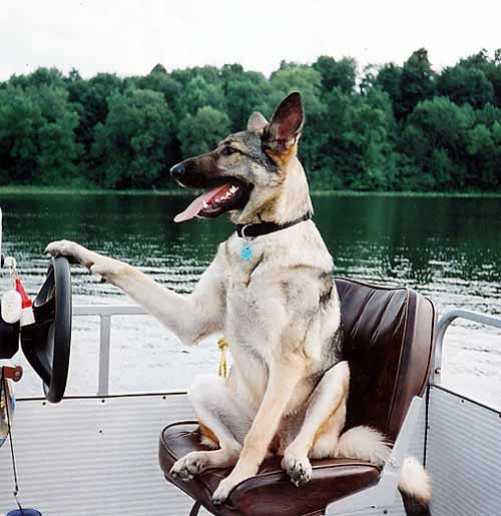
Dog steering boat

Doggy quote of the month for September

Once when I had remarked on the affection quite often found between cat and dog, my friend replied, ‘Yes.  But I bet no dog would ever confess it to the other dogs.’

–  C.S. Lewis

Cat-and-Dog

Dog-inspired cocktails for Memorial Day

It’s a big holiday weekend in the United States since Monday is Memorial Day.

As spring turns into summer, more people are outside entertaining and using the barbeque.  Here are some dog-inspired cocktails that you might like to make for your next party…

Bloodhound Cocktail 1/3 cup Gin 1/3 cup French Vermouth 1/3 cup Italian Vermouth 2 or 3 Strawberries

Bloodhound Cocktail
1/3 cup Gin
1/3 cup French Vermouth
1/3 cup Italian Vermouth
2 or 3 Strawberries

Salty Chihuahua Coarse salt, (optional) - wet rim of 4 glasses and dip in salt 4 ounces tequila, divided  2 ounces orange-flavored liqueur, such as Cointreau, divided  3 cups grapefruit juice, divided  Mix the tequila, liqueur and grapefruit choose in each glass and then add a grapefruit slice for garnish

Salty Chihuahua
Coarse salt, (optional) – wet rim of 4 glasses and dip in salt
4 ounces tequila, divided
2 ounces orange-flavored liqueur, such as Cointreau, divided
3 cups grapefruit juice, divided
Mix the tequila, liqueur and grapefruit choose in each glass and then add a grapefruit slice for garnish

The Greyhound     2 oz vodka     4 oz grapefruit juice     Mix and then add a lemon or lime wedge for garnish

The Greyhound
2 oz vodka
4 oz grapefruit juice
Mix and then add a lemon or lime wedge for garnish

The Great Dane 2 oz. gin 1 oz. cherry brandy 1/2 oz. dry vermouth 1 tsp. kirsch Mix and garnish with a lemon peel

The Great Dane
2 oz. gin
1 oz. cherry brandy
1/2 oz. dry vermouth
1 tsp. kirsch
Mix and garnish with a lemon peel

The Regal Beagle 1/3 shot Canadian whiskey 1/3 shot peach schnapps 1/3 shot sweet and sour mix Mix over ice and pour into a shot glass

The Regal Beagle
1/3 shot Canadian whiskey
1/3 shot peach schnapps
1/3 shot sweet and sour mix
Mix over ice and pour into a shot glass

There are probably other cocktail recipes with dog-inspired themes.  If you know of others, why not add a comment with your favourite?