Stevenson Companion Animal Life-Care Center

In the United States alone, it is estimated that 500,000 animals are surrendered to shelters each year because their owners have passed away without leaving instructions or plans for their care.

The Stevenson Companion Animal Life-Care Center is based at Texas A&M University.  Entirely privately funded, the Center operates with the support of endowments and private gifts.  Animals that are enrolled with the Center come to live there when their owners are no longer able to care for them.  It’s a rest home of sorts for pets whose owners want their animals to live out the remainder of their lives in a social atmosphere with quality veterinary care.

This YouTube video gives you an introduction to the Center:

The Center opened in 1993 and is named after Mrs Madlin Stevenson who donated 50% of the start up funds for the facility.  The Luse Foundation donated the other half.

This video provides a tour of the facility:

Admittedly, not everyone will be able to send their dog for care at the Stevenson Center.  Enrollments are based on the owner’s age at the time of enrollment and may either be paid in advance or through a bequest in the will.  This is the current chart of fees for a dog (or cat or bird) in US dollars.

Age Minimum Endowment by Bequest Minimum Amount for Paid-up Endowment
30 – 39 $100,000 $10,000
40 – 49 $85,000 $20,000
50 – 59 $70,000 $30,000
60 – 69 $60,000 $40,000
70+ $50,000 $50,000

Want to know more?  Visit the Stevenson Companion Animal Life-Care Center’s website.

Dogs and the Super Bowl

I’ve never been much of an American football fan, but I tip my hat to the people at Volkswagen who are airing a new commercial during this weekend’s Super Bowl.

Volkswagen has paired dogs with a Star Wars  The Empire Strikes Back theme to announce their latest offering.

Two weeks ago they launched this ‘teaser’ on the YouTube site:

And then they’ve followed it up with the full commercial:

Volkwagen of course isn’t the first car company to use dogs in advertising.  Subaru has been using dog-themed commercial for several years to market its SUV-style models to dog owners.

William, Kate and Cocker Spaniel make three

People magazine speculated several weeks ago that Prince William and his wife, the Duchess of Cambridge, had expanded their family to include a puppy.  “The dog beside William and Kate’s side is most likely a black cocker spaniel.”

It’s now been confirmed.  The Prince and his wife are owners of a male cocker spaniel whose name hasn’t been released.  The pup will be company for Kate, who is home alone for the next six weeks as Prince William takes up his military posting in the Falkland Islands.

For my part, it’s nice to see the Royals confirm that they are dog people.  (As we know, the Queen has always been partial to the Corgi – read my previous blog posting on this breed).

May Kate, William and their little bundle of joy enjoy a happy life together!

Doggy quote of the month for February

Beauty without Vanity,

Strength without Insolence,

Courage without Ferocity,

and all the Virtures of Man

without his Vices.

– Lord Byron in memory of his dog Boatswain (a Newfoundland)

Flavours Vineyard Cafe – a dog friendly cafe that’s close to home

My readers know that I am passionate about supporting dog-friendly establishments.  Dog-friendly accommodation and shopping are in short supply in New Zealand and so any establishment that embraces dogs and their owners gets my attention.

I’ve been driving by Flavours Vineyard Cafe for months but never had the opportunity to stop until we were on holiday (vacation for you overseas readers).  The cafe is located on the corner of West Coast Road (SH73) and Sandy Knolls Road, approximately 3 km from West Melton,  and has just celebrated its first anniversary.

A purpose-built American-style barn houses the cafe; the land was purchased specifically with a boutique vineyard in mind.  The cafe makes an effort to source and sell local products and best of all – it’s dog friendly!

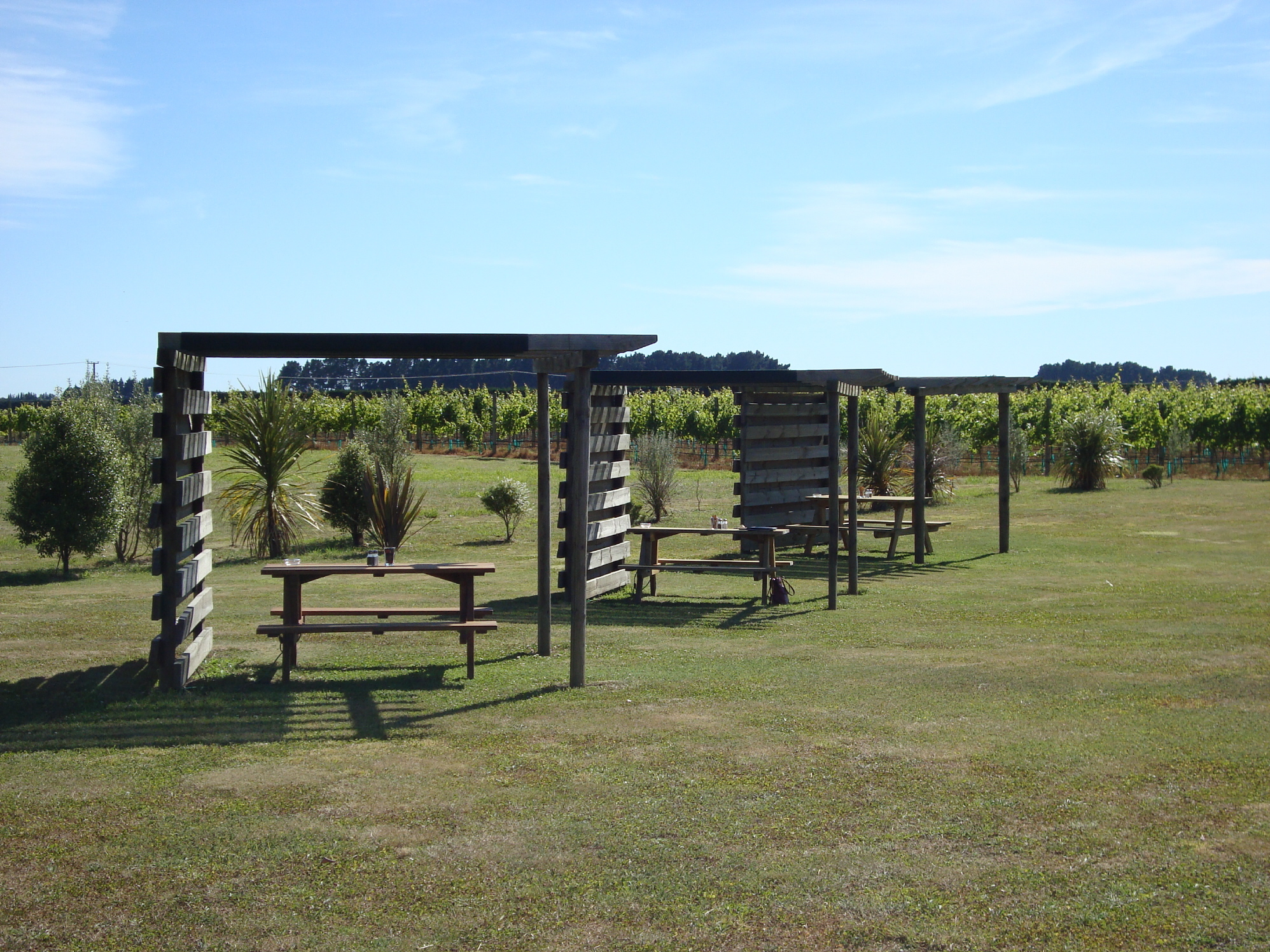
The outdoor picnic tables have been covered with shade cloth and water is available for visiting dogs.  Horses are also welcome with room in the adjacent paddock.  Cafe manager Sam Judson says, “We get more dogs than horses, but all are welcome.”

Open every day except Wednesdays, a breakfast and daytime menu are available which include salads, pizza, fresh muffins and coffees.  On Fridays the cafe offers Pizza Night from 5:00 pm to 8:30 pm for dine-in or takeaway.

We loved it, as these photos show.  Help support local Christchurch businesses and take your dog out to Flavours Vineyard Cafe today.

This slideshow requires JavaScript.

Weight gain and obesity are not only human conditions

We live in modern times, and in western societies such as ours, obesity and weight gain are consistent problems.  And not just for people.

36 million pets in the United States are obese, according to the Association for Pet Obesity Prevention.  In dog population terms, that’s 55% of the dog population.  The Association does a pet obesity survey each year, timed with National Pet Obesity Prevention Day (in October), where it asks pet owners to fill out a survey about their pet’s size, breed and eating habits.

Veterinarian Ernie Ward is a co-founder of the Association and he says that the focus on reward-based training has helped to contribute to the obesity problem.  Simply put, owners are not adjusting their dog’s daily intake of food at mealtime to compensate for treats being given as a reward.

And once a dog is fully trained, the rewards seem to keep coming for sometimes very basic tasks.  Like pooping, for example.

(Ask yourself:  once your child is potty-trained, do you keep praising him/her each time they use the toilet? – even into their teenage and adult years?)

And I’ve found that delivering the news to a client that their dog could lose some weight can often be a reason for not being asked to return for another massage treatment.  According to a recent article in The Boston Globe, I’m not alone.  Vets that deliver the news that a pet is overweight may find that the owner becomes defensive or, worse, takes their business elsewhere!

However, when I am dealing with a dog with arthritis or other mobility disorder, I am looking for ways to relieve their pain.  If they are carrying around extra weight, their sore joints and muscles are pulling double-duty.  I remember a client with a Pug, for example, who was easily twice its normal body weight.  Sure, the dog had arthritis, but it was so fat that it didn’t want to exercise and so weight loss was going to be a challenge and something the owner had to a) recognise and b) act on.

The Globe article also discusses the wide range of calorie content amongst commercial dog foods.    People may change their dog’s food, but continue feeding the same number of cups per day.  Weight gain is insidious and many people don’t recognise that their dog has put on weight until a vet or someone else points it out to them.

I do nutritional assessments for this reason.  I ask questions about the dog’s lifestyle, exercise habits and eating.  And I can run caloric calculations based on the dog food label to give advice on how much to feed.

There are many health professionals including your vet that have your dog’s best interest at heart.  Don’t be afraid to ask if they think your dog is overweight and be humble enough to make changes.

P.S.  When I take Daisy to her acupuncture treatments, my vet asks me to weigh her prior to each consultation.  This keeps me very disciplined to ensure that Daisy remains in her ideal weight range.

Some full-service pet shops and veterinary practices are happy for you to drop in to use their scales.  Why not make it a habit of walking your dog to these places for a weigh-in?  It’s a new routine that will keep you focused on your dog’s weight in a more positive way.

More about spinal cord injury

This video, courtesy of the University of California San Francisco,  shows the gait effects of  spinal cord injury and a very good close up of the proprioception test that is used by vets.   (See my previous blog about prioprioception here.)

Spinal cord research benefits dogs

Last week, the University of California San Francisco issued a press release about the promising research of Dr Linda J Noble-Haeusslein and her collaborators at Texas A&M  University.

The US Department of Defense has granted $750,000 over three years to develop a drug that helps to mitigate the secondary damage associated with spinal cord injury.  When an injury occurs, there is a cascading chemical reaction that damages nearby cells and that means – essentially – that more damage happens than that caused by the immediate injury.

It is thought that the drug, a protein-blocking agent, will successfully interfere with that cascading process and preserve sensitive neurological pathways.

Other neurological researchers have shown that movement in the spine can be preserved if as little as 18-20 percent of nerve fibre tracts remain intact.

Dogs such as Dachshunds, Corgis and Beagles (dogs with a long torso) are known to be susceptible to disc ruptures.   When a dog presents with a disc rupture at the Small Animal Hospital at Texas A&M University, their owner will be asked to consent to the experimental treatment.

And why is the funding coming from the Department of Defence?  Well, sadly, there are many wounded soldiers returning from overseas war zones with spinal injuries.

Source:  University of California, San Francisco (UCSF) (2012, January 18). Saving dogs with spinal cord injuries. ScienceDaily. Retrieved January 25, 2012, from http://www.sciencedaily.com­ /releases/2012/01/120118155338.htm

Betty – A Special Seeing Eye Dog

This week, actress Betty White celebrated her 90th birthday.  It’s quite a milestone.   She’s received a lot of attention over the years and not just for her acting.  Ms White has a long history of animal advocacy work and many charities have benefited from her support.

The Seeing Eye, Inc., an organisation founded in 1929, has named a puppy after Betty.  Based in Morristown, New Jersey, the Seeing Eye is the oldest existing guide dog school in the world and it has trademarked the term “seeing eye” so that only dogs from its school can be called seeing eye dogs.  That’s why guide dog puppies here in New Zealand are called guide dogs whereas folks from the United States often call them seeing eye dogs.

Betty, the Seeing Eye dog named after actress Betty White

Ms White first recorded a radio public service announcement for The Seeing Eye in the 1980s in which she helped remind everyone about the requirement to allow guide dogs access to public transport.  You can listen to that announcement here.

In 1987, the American Veterinary Medical Association gave Betty its Humane Award for charity work for animals.  Ms White has a bronze plaque at the Los Angeles Zoo (near the gorilla exhibit) which also honours her work for animals.  In 2010, she was even granted the title of honorary forest ranger by the US Forest Service!

Happy birthday Betty!  And may Betty the Seeing Eye Dog have a long career!

Kathleen Crisley, specialist in dog massage, rehabilitation and nutrition/food therapy, The Balanced Dog, Christchurch, New Zealand

Digital dog success for Weta

The Wire-haired Fox Terrier is the big winner in The Adventures of Tintin film.  New Zealand’s Weta Workshop has worked its magic in creating a digital version of Snowy, Tintin’s loyal dog.

Tintin is a young reporter with a nose for news.  He was created by Georges Remi under the pen name of Hergé in 1929, appearing in a series of children’s stories/comic books that particularly appealed to young boys.  Investigating crime and finding the culprits were everyday activities for Tintin and Snowy.

It is great to see another dog take center-stage in the film world this year.  This official movie trailer, courtesy of YouTube, gives you an introduction to Snowy (and Tintin) and the wonderful work of Weta Workshop.